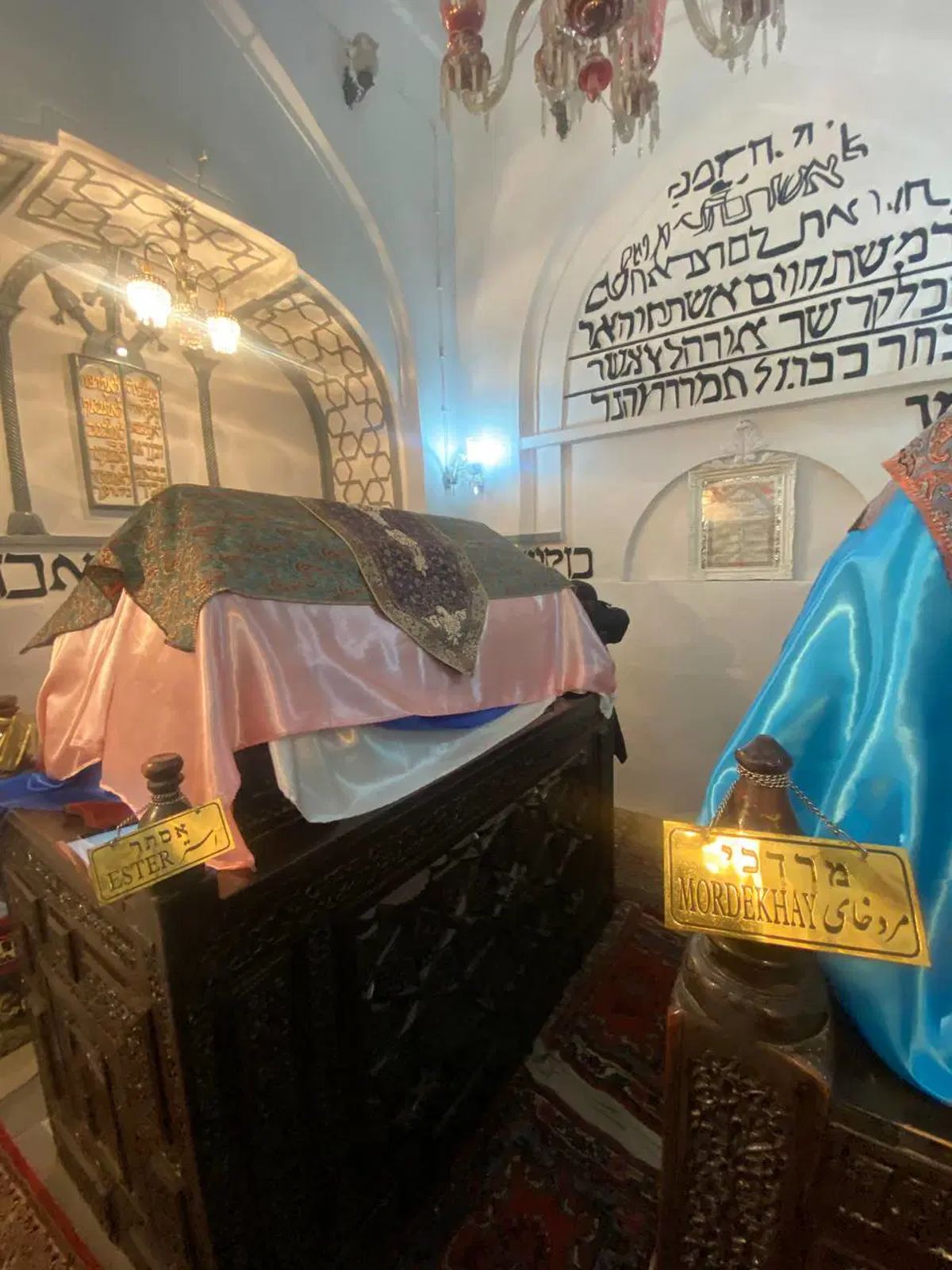
Iran's Jewish community issued an unusual public notice this week announcing the closure of the Tomb of Esther and Mordechai in Hamadan, one of the holiest sites in Iranian Jewish tradition, officially citing ongoing renovations. Sources familiar with the matter, cited by the Israeli outlet Kikar HaShabbat, allege the real reason is threats from extremist elements within Iran, though this has not been independently confirmed.
The notice, distributed through the community's official channels, stated that due to continued repairs and improvements at the tomb complex, visits to the site would not be possible until further notice. Community members had previously been required to coordinate any trip to the Hamadan site with Tehran's Jewish association; the new notice states that even this coordination is not currently possible.
Sources close to the matter dispute the official renovation explanation, alleging instead that the closure stems from security concerns tied to threats from extremist factions. The outlet noted that community members are being told not to attempt visits at all, rather than being offered a process for requesting access as in the past, which those sources say points away from a routine construction closure.
Iran's Jewish community, the largest in the Middle East outside Israel, has lived under the Islamic Republic for decades, and members face particular sensitivity around any perceived ties to Israel or the United States. Amid recent Israel-Iran tensions, reports have emerged of arrests within Iranian Jewish communities on suspicion of collaboration with Israel, with opposition sources reporting that rabbis and community leaders were detained in Tehran and Shiraz, in some cases along with family members, though JFeed has not independently verified these reports.
The Hamadan tomb, believed by Iranian Jewish tradition to hold the remains of the biblical Esther and Mordechai, has drawn Jewish pilgrims for generations, particularly around Purim. The site has been targeted before: it was set on fire by unknown assailants in 2020, and hand grenades were thrown at the structure in 2013, though no major damage was reported at the time.
It remains unclear when the closure will be lifted. Iran's Jewish community has not addressed the alleged threats publicly and continues to describe the closure officially as renovation-related.