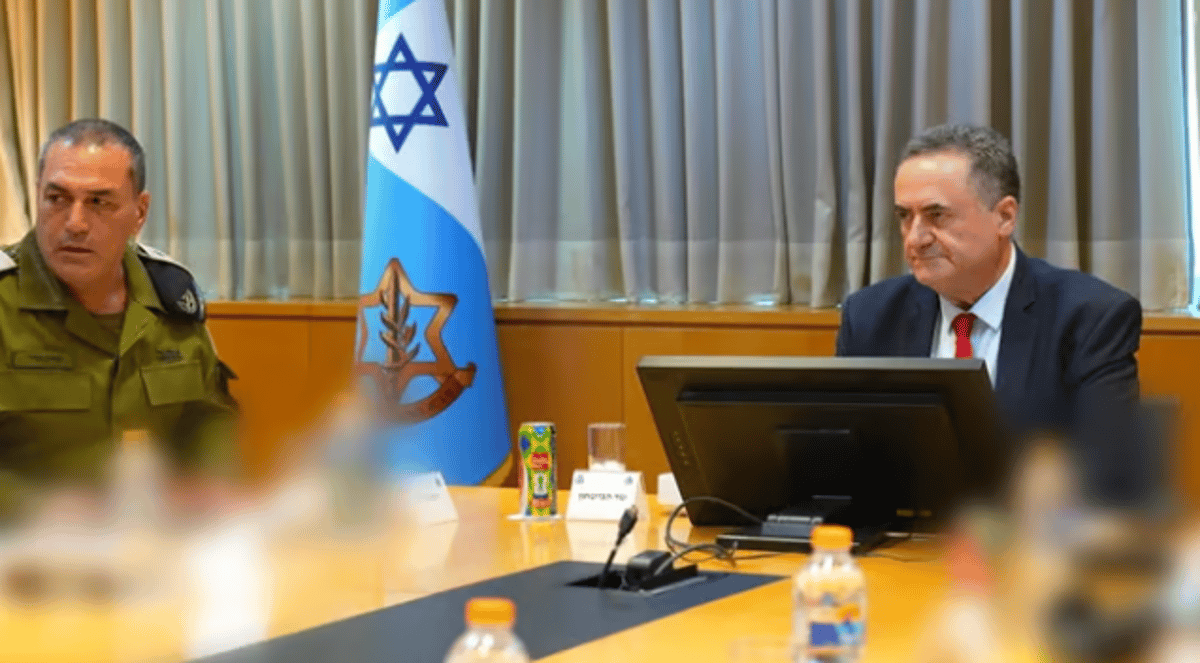
Defense Minister Israel Katz ordered the IDF to maintain full troop deployments in the Gaza security zone on Tuesday, blocking planned force reductions that military leadership had flagged as necessary due to budget shortfalls, according to Srugim reporting. The decision came following appeals from Gaza-area residents requesting enhanced security presence and amid a broader military readiness crisis stemming from unfunded personnel commitments.
Katz instructed the military to preserve "extensive defense arrangements" currently in place and to avoid any reduction in deployed force levels or operational readiness across the Gaza operational area, according to the directive issued following a situation assessment held last week by senior military leadership.
The decision reveals internal tension between political commitment to permanent Israeli military presence in Gaza and the military's stated inability to sustain current force levels without additional budget authorization.
The Funding Crisis
The troop maintenance order arrives as the IDF's Deputy Chief of Staff and Chief of Staff Eyal Zamir have warned Israeli leadership that the absence of a financial agreement between the Defense Ministry and Finance Ministry is creating cascading consequences for military readiness, according to reports Tuesday evening from Israeli media.
Zamir forwarded a letter to Defense Minister Katz emphasizing that "the absence of a financial agreement and the failure to implement the prime minister's directive are having severe consequences for the 'Israeli' military's readiness." The letter, drafted by the Deputy Chief of Staff and backed by Zamir, warned that border and peripheral troop levels face immediate reduction without budget authorization, according to Islam Times reporting.
The Finance Ministry has reportedly withheld funds pledged to the Defense Ministry over recent months, creating a cash-flow crisis that restricts the military's ability to maintain current deployment levels without additional authorization.
Gaza Force Posture and Political Context
Prime Minister Benjamin Netanyahu said on August 4 that Israel will not withdraw "from our current lines" in Gaza "until Hamas is completely disarmed," apparently going against the disarmament plan, which requires Israel to pull back to the original Yellow Line in Gaza.
Katz's troop maintenance directive operationalizes that political position by preventing force reductions that would signal tacit acceptance of eventual withdrawal timelines. The order also responds to security concerns from Gaza-border residents, who have petitioned the Defense Ministry directly to maintain protective force levels given ongoing Hamas rearmament and the fragility of ceasefire arrangements.
Operational Constraints and Soldier Morale
The IDF faced an additional personnel challenge over the weekend when approximately 80 soldiers deserted their bases in apparent protest against extended deployment or service conditions. The IDF said that around 80 troops who later returned were required to stay on their base over the weekend, and 14 troops who led the desertion were jailed for 30 days and removed from combat roles.
The incident underscores morale and retention pressures on personnel facing extended Gaza deployments without clear end-date timelines or rotation schedules.
The Board of Peace Standoff
Katz's order to maintain troop levels stands in direct tension with the Trump administration's "Board of Peace" disarmament framework, which was accepted by Hamas on August 2. Trump announced on July 31, 2026 that his Board of Peace had reached an agreement to disarm Hamas and other militant organisations in Gaza. A senior Hamas leader stated that disarmament would be dependent on Israel's withdrawal from Gaza and progress on reconstruction.
The plan requires Israeli forces to withdraw to the Yellow Line, a security demarcation that marks the boundary between occupied and Palestinian-administered Gaza territory. However, Netanyahu's public statements and Katz's operational directives signal that Israel intends to maintain current force positioning regardless of disarmament plan requirements.
Political and Military Misalignment
Israel's political leadership instructed the military not to carry out assassination strikes in Gaza without the IDF chief of staff's approval, allowing troops to strike without such approval only in cases of "imminent danger." This restriction, imposed August 4, represents a constraint on operational autonomy that military planners view as complicating efforts to prevent Hamas rearmament within the security zone.
Defense Minister Katz has become a focal point for right-wing and settlement advocates in recent days, with multiple sources indicating his positioning for a likely Likud primary challenge to Netanyahu. His troop maintenance order addresses the security anxieties of Gaza-border residents who constitute his core political constituency.
Unresolved Budget Standoff
The Finance Ministry's withholding of pledged defense funds reflects a broader political standoff over resource allocation between coalition partners. Without formal resolution of the budget dispute, Katz's order to maintain troop levels without corresponding budget authorization creates an operational contradiction: forces are ordered to remain deployed without confirmed funding for personnel costs.
Military sources have indicated that if the budget crisis extends beyond the current quarter, force reductions will become inevitable regardless of political directives, as the military cannot sustain payroll commitments without Finance Ministry funding authorization.