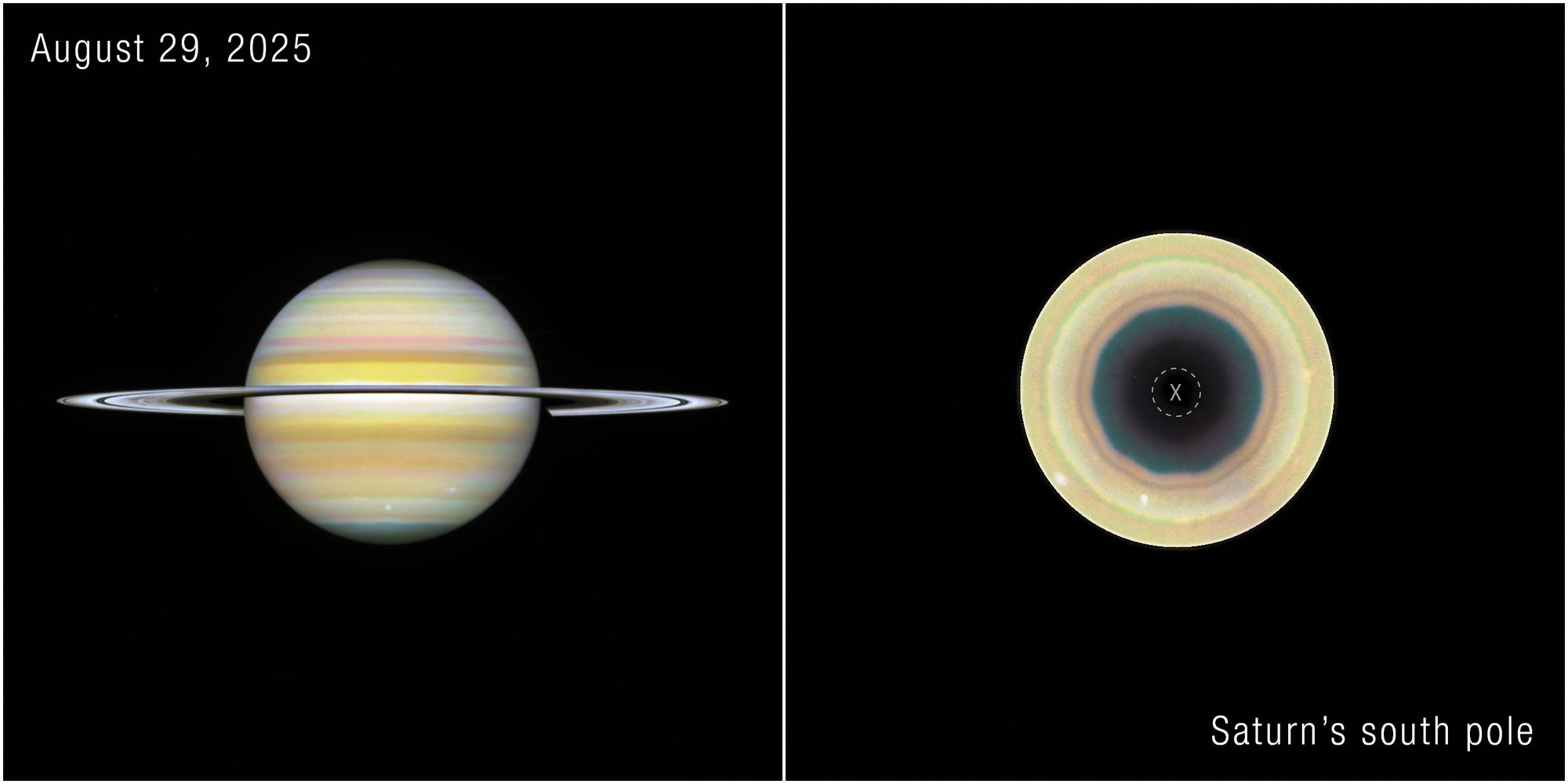
The Hubble Space Telescope has uncovered a fascinating new phenomenon in Saturn's atmosphere: a massive ten-sided structure encircling the planet's south pole. The formation, dubbed a "decagon," bears some resemblance to Saturn's famous northern hexagon, but researchers say this is something fundamentally different, far younger and far more dynamic.
Celestial Geometry
Saturn's New Ten-Sided Mystery
After decades of studying the famous hexagon at Saturn's north pole, astronomers have spotted something entirely new and unexpected at the opposite end of the planet
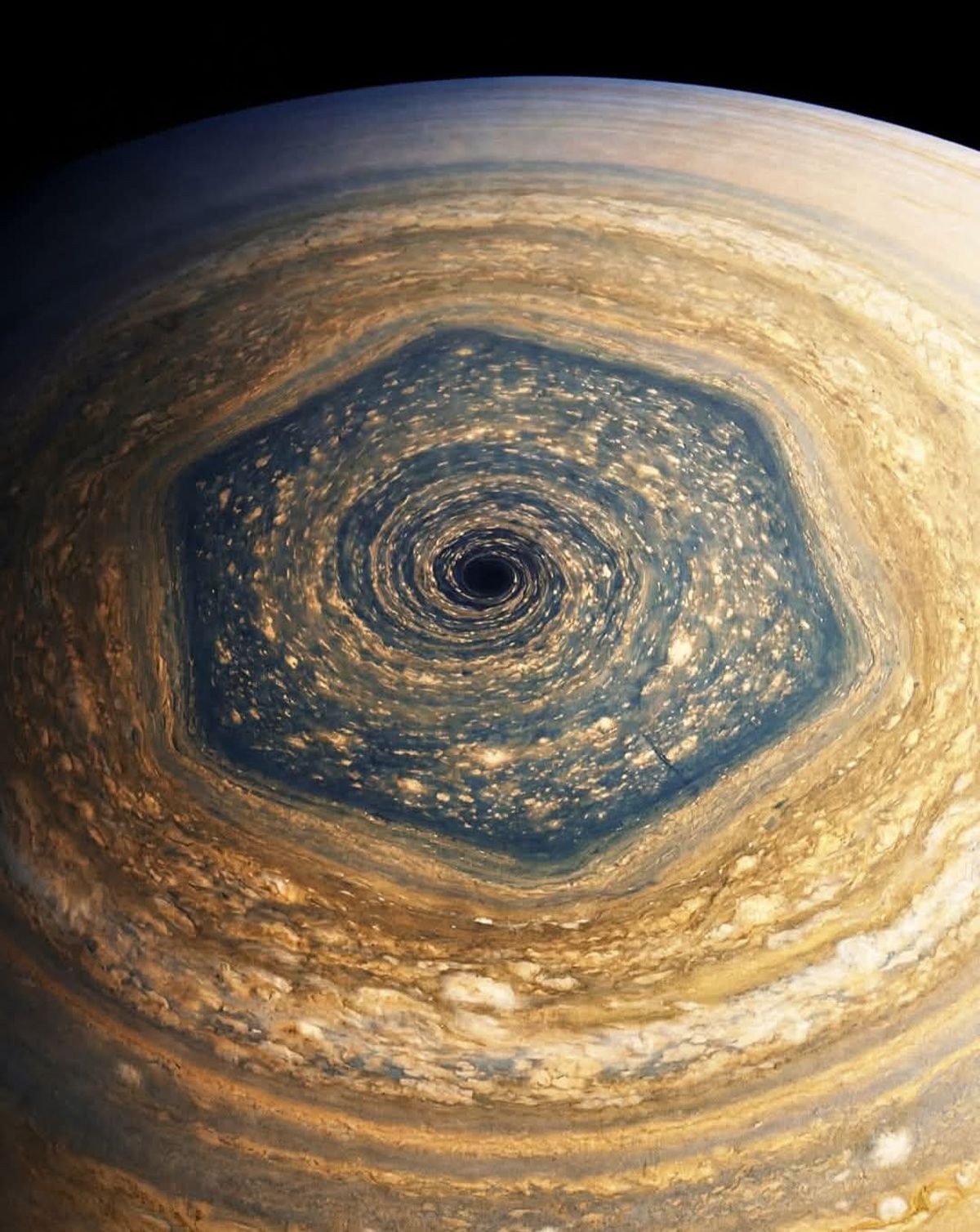
The discovery was published on September 2, 2026, in the journal Science Advances, following research led by astronomer Agustín Sánchez-Lavega of the University of the Basque Country. Hubble's observations clearly show a ten-sided pattern stretching around the south pole and penetrating multiple layers of Saturn's atmosphere.
Saturn's northern hexagon has been known to scientists for decades. It was first identified in observations by the Voyager spacecraft in the early 1980s and has been observed repeatedly since. The hexagon is an enormous atmospheric jet stream, not a solid structure, and its six-sided shape has remained stable for decades.
This time, however, scientists are witnessing something relatively new. Initial signs of the southern structure were detected in observations from 2023, and it became clearer and more defined in later observations. Researchers believe the formation may have begun during a period when Saturn's south pole was difficult to observe from Earth, suggesting the process could have started even earlier.
The dimensions are staggering. According to the scientific reports, the structure measures approximately 168,000 kilometers in diameter, with each of its ten sides stretching more than 16,000 kilometers. For comparison, Earth's diameter is only about 12,742 kilometers.
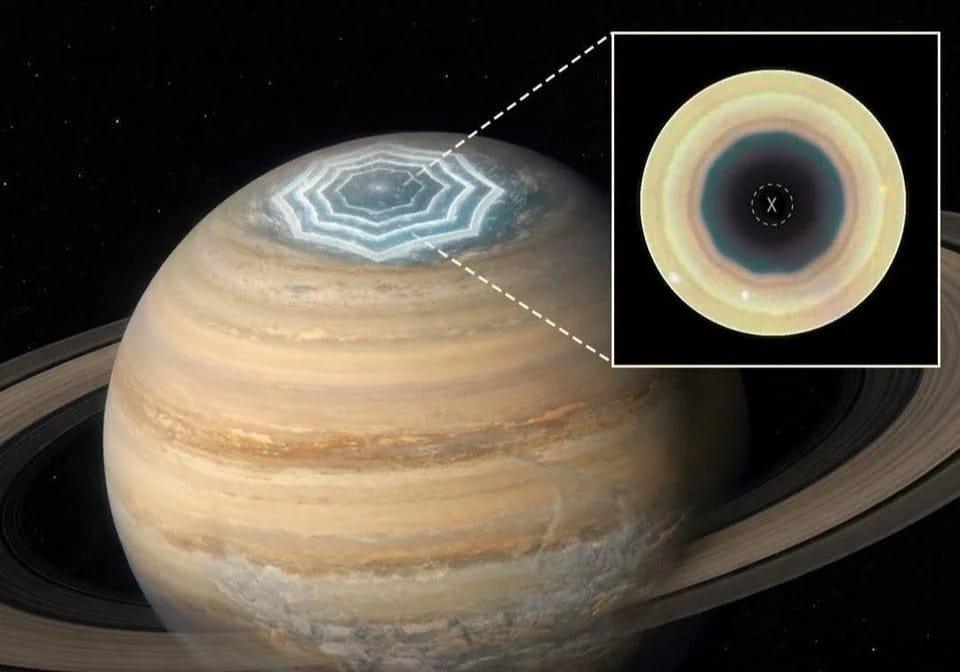
Its movement also differs from that of the northern hexagon. While the northern hexagon is considered relatively stable in position, the southern structure is moving through Saturn's atmosphere, and researchers describe it as an evolving phenomenon. According to the study, it is drifting eastward at approximately 10 kilometers per hour, even though the atmospheric currents around it are moving much faster.
This may be the most intriguing aspect of the discovery: unlike the northern hexagon, which scientists have studied after decades of stability, here they have a rare opportunity to observe a major atmospheric phenomenon as it develops and changes in real time. Additional observations by Hubble and other telescopes may help decode how giant planets generate such precise geometric patterns within their turbulent atmospheres.
Saturn as seen from Earth| צילום: Photo: Social media