Yemen's Iran-backed Houthi movement has intensified military operations against Saudi Arabia, launching ballistic missile strikes on oil tankers, attacking military bases, and declaring a maritime blockade of the kingdom. The escalation prompted Saudi Arabia to formalize a mutual defense alliance with Pakistan and Turkey on Friday, a move that transforms decades of informal security ties into a collective-defense arrangement comparable to NATO's Article 5.
The Houthi campaign, announced July 20 and accelerating through the first week of August, represents the armed group's most sustained push against Saudi Arabia since mid-2022. After sitting out most of the five-month U.S.-Iran war, the Houthis are now actively reopening a secondary front at a moment when Saudi Arabia faces deepening regional instability.
The Attacks: Scope and Casualty Toll
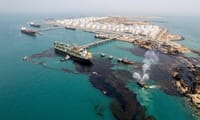
On August 5, Houthi military spokesman Brigadier General Yahya Saree claimed ballistic missile strikes on two Saudi oil tankers: the Wafa near Yanbu, the kingdom's Red Sea energy hub, and the Daisy in the Gulf of Aden. The United Kingdom Maritime Trade Operations Centre independently reported hearing loud explosions near tanker positions in the region, though Saudi Arabia has not officially confirmed the strikes—a pattern consistent with Riyadh's practice of not detailing attacks from Iranian proxies.
The same day, Saree also claimed responsibility for a "large-scale" military operation targeting government forces in the provinces of Marib and Hadramawt. Yemeni government sources confirmed that at least 30 soldiers were killed and 15 wounded when Houthis fired eight ballistic missiles at three separate military positions on August 6. Casualty figures were expected to rise as recovery operations continued.
On August 6, a Saudi attack on Houthi positions in southern Saudi Arabia wounded 11 civilians, including a child, according to a Saudi official.
The Houthis claimed responsibility Friday for launching an unmanned aerial vehicle against an Aramco oil refinery in the Jizan region of southern Saudi Arabia, according to military spokesman Yahya Saree. The group stated the strike was in retaliation for Saudi incursions into Yemeni airspace using UAVs in the Saada and Hajjah districts.
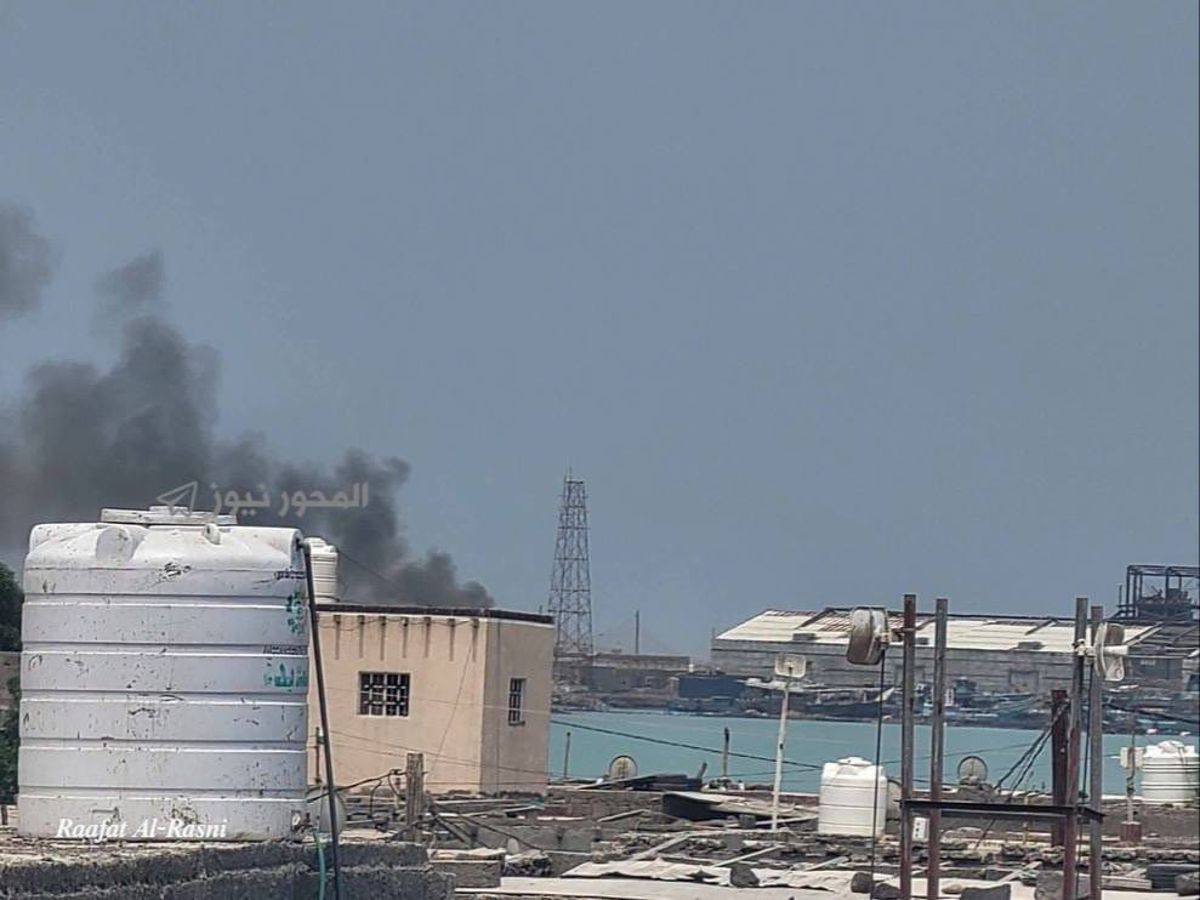
Today, Houthi forces launched rocket and drone attacks on Saudi backed forces at the Al Mukha port, west of Taiz, Yemen.
The "Siege for a Siege" Justification
The Houthis are framing their maritime blockade of Saudi Arabia as a legitimate response to Saudi-led restrictions on Yemen. They argue that Saudi Arabia imposes air and maritime restrictions on Yemen at the request of the internationally recognized Yemeni government in order to prevent Iranian weapons supplies and material support. The Houthis' counterblockade, they argue, is proportionate retaliation.
This framing exists in sharp tension with documented Houthi dependence on Iranian military support and direct IRGC supervision of operations. A senior Saudi official told Reuters that intelligence indicates the Houthis and Iraqi armed groups are launching attacks under Iranian Islamic Revolutionary Guard Corps supervision, with explicit targeting of Saudi energy infrastructure.
Saudi Arabia's Regional Alliance Response
On Friday, August 8, Saudi Arabia, Pakistan, and Turkey signed a mutual defense agreement in Mecca, Islam's holiest city. The pact establishes that an attack on any signatory constitutes an attack on all, mirroring NATO's Article 5 collective-defense principle. The agreement transforms three countries' longstanding security ties into a binding collective-defense framework at a moment of heightened regional tension.
The agreement represents Riyadh's strategic calculation that deepening alliance structures with major Muslim-world military powers (Pakistan possesses the Islamic world's only nuclear arsenal; Turkey commands NATO's second-largest military) would deter further Houthi and Iranian proxy escalation. Iranian Foreign Minister Abbas Araghchi responded to the pact by calling for Muslim unity, without directly acknowledging it as a response to Houthi actions.
Why the Houthis Are Escalating Now
The Houthis' resumption of direct attacks on Saudi Arabia comes after a five-month pause during the U.S.-Iran war, when the group largely confined itself to supporting Iranian operations indirectly and maintaining positions in Yemen. With the acute phase of U.S.-Iran combat cooling and Iran regrouping, the Houthis have moved to exploit strategic opportunity: reopening the Saudi front while Riyadh is simultaneously managing tensions across the region.
The timing also reflects Iran's broader strategy of maintaining forward pressure through proxy networks even as direct Iranian military capacity faces degradation from U.S. and Israeli strikes. The Houthis, as Iran's most capable proxy in the western Indian Ocean, offer a mechanism for sustained pressure on a U.S. ally without requiring direct Iranian military commitment.
Strategic Implications for Energy Markets and Regional Stability
The blockade announcement and subsequent tanker attacks signal potential disruption to Saudi energy exports and Red Sea shipping. Saudi Aramco's energy infrastructure remains a high-value target for Houthi missiles. The combination of Houthi maritime interdiction and direct attacks on inland military positions creates a two-front vulnerability for the kingdom: air/sea power projection and territorial security.
The U.S. Joint Chiefs of Staff, according to CNN sources, has privately communicated to policymakers that the United States needs to find an off-ramp from the broader Iran war, as military options to escalate further "could backfire." The Houthi escalation introduces new pressure points in that calculation and complicates de-escalation timelines already complicated by Israeli and Iranian strategic posturing.