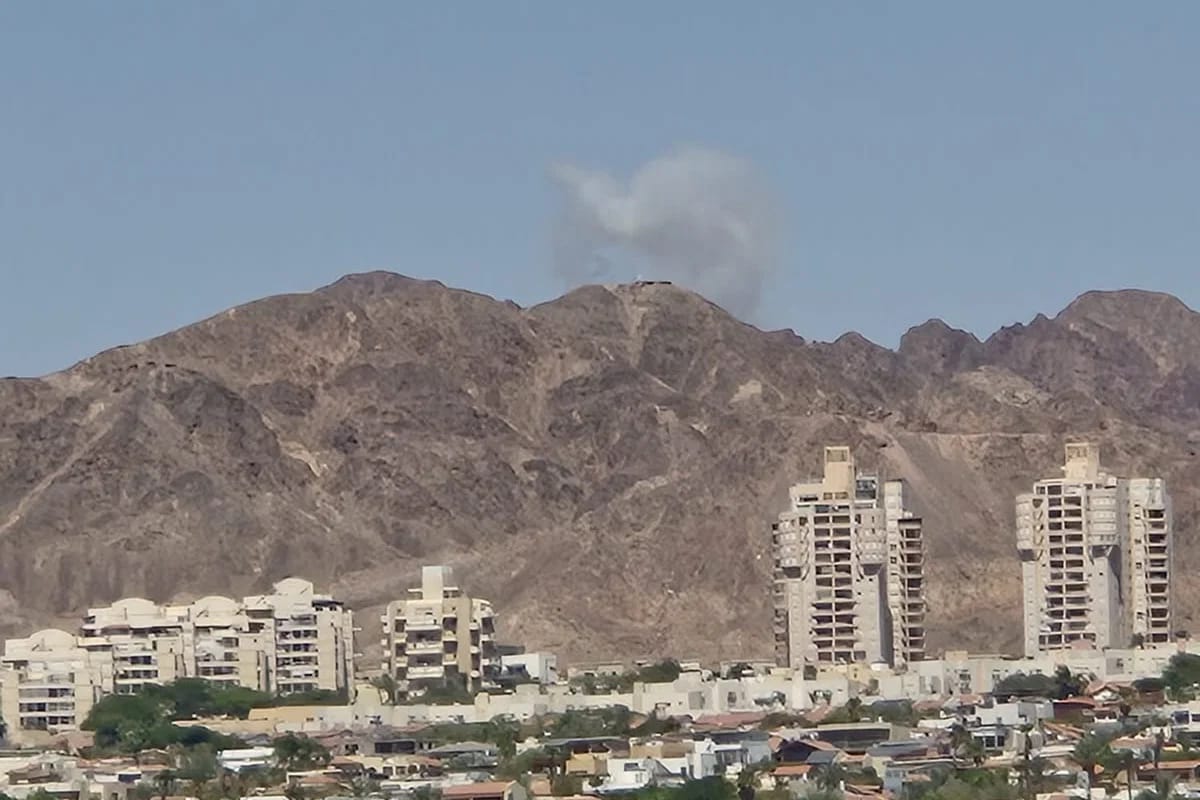
Iran launched missiles toward the Jordanian city of Aqaba on Wednesday morning, triggering air raid sirens there and sending explosions echoing across the narrow gulf into Eilat. The IDF said it identified the launches and warned that fragments could spill over into Israeli territory, though as of this writing no fall of debris has been confirmed inside Israel and no interceptors were fired on the Israeli side.
Residents documented what appeared to be falls on the Jordanian side of the border, close to Eilat, and a domestic Arkia flight bound for the city was forced to circle in the air until it received clearance to land. Eilat's municipality said security forces are searching open areas near the border to rule out falling shrapnel, and that as of now no impacts or casualties have been located.
This is the second time in three days that Aqaba has come under Iranian missile fire. On Sunday, Iran launched a wave of missiles at the city that Jordanian forces said intercepted three of the projectiles, with a fourth falling in an open area and causing no casualties or damage. That earlier attack also triggered interceptions over Eilat, with the IDF firing Iron Dome interceptors at falling debris and Israeli sirens ultimately not sounding, even as US defense systems intercepted the missiles aimed at Jordan itself. The US embassy in Amman had warned at the time of a specific and credible threat prompting evacuation of Aqaba's airport and seaport, an account Jordanian officials disputed, saying both facilities continued operating normally.
Why Aqaba Keeps Coming Under Fire
Aqaba sits directly across the gulf from Eilat, separated by only a few miles of water, which is precisely why any Iranian strike on the Jordanian port city carries direct security implications for southern Israel. Israeli defense officials have repeatedly warned that the short distance between the two cities makes spillover, whether from missile debris, interceptor fragments, or a stray projectile, a persistent risk even when Israel itself is not the intended target.
Wednesday's launch comes against the backdrop of Iran's broader missile campaign against US and allied positions across the region since the current round of fighting began, a campaign that has already struck American assets in Jordan and prompted repeated air defense activations across the Gulf states. Israeli officials have said that while Israel has so far not been directly targeted in this exchange, both Prime Minister Netanyahu and Defense Minister Israel Katz have reiterated that Israel will respond forcefully to any direct Iranian attack on its territory.