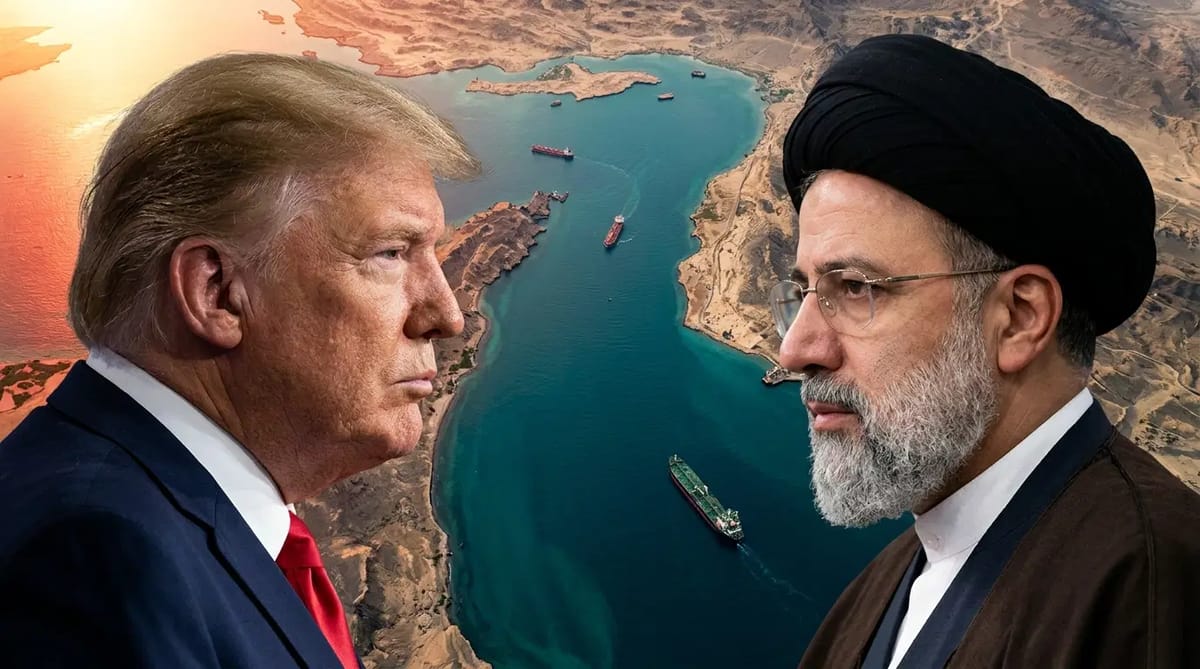
US President Donald Trump faces a pivotal decision in the coming days as senior American officials confirm he must choose between accepting a temporary ceasefire or dramatically expanding military operations against Iran. Mediators from Qatar and Oman submitted proposals for a temporary 10 day ceasefire aimed at resolving shipping disruptions in the Strait of Hormuz, an option Tehran appears willing to consider. However, White House insiders indicate that Trump dislikes short term fixes, viewing them merely as temporary bandages on a deeper structural issue.
The Iranian regime believes that Trump will ultimately back down, allowing Tehran to maintain control over the critical Strait of Hormuz maritime corridor. Disruption of shipping lanes in the strait has already created a massive maritime traffic jam, severely impacting global energy markets. Security sources noted that Mojtaba Khamenei also favors alternative proposals, even though observers believe existing terms lean heavily toward Iranian positions.
During a tense six hour security cabinet meeting in Jerusalem, Prime Minister Benjamin Netanyahu briefly stepped out to hold an extended phone conversation with US Secretary of State Marco Rubio. The two leaders discussed aligning American and Israeli strategic interests under various escalation scenarios. Israeli leadership remains concerned about entering a military campaign only to be ordered to halt operations prematurely after a few days.
A senior Israeli official emphasized that national involvement depends entirely on the fundamental nature of the campaign, stating, "Our interest in the campaign depends on its nature alone. We do not want to reach a situation where we enter another campaign, and then we are told to stop after a few days." While Israeli officials note that Trump has not finalized his decision, intelligence indicates he leans heavily toward imposing a severe price on Iran, pushing the likelihood of escalation significantly higher.
Strategic attention remains focused on Pickaxe Mountain, a heavily fortified underground facility built over 100 meters into solid rock. Israeli intelligence confirmed that Iran transferred several thousand centrifuges for storage inside the mountain site during previous operations, though they remain non operational. Concerns persist regarding whether standard bunker buster munitions can penetrate the deep mountain structure, making a purely aerial bombardment difficult.
Defense officials in Israel held joint evaluations with US Central Command to coordinate for worst case scenarios. Chief of Staff Eyal Zamir personally approved a refreshed, high quality target bank across Iran, preparing the Israeli Air Force for a response far beyond previous operations. Security officials warned that a direct attack on the Israeli home front would draw an unprecedented response, while also noting that Hezbollah might exploit an escalation with Iran to open fire against Israel.