Secret Evacuation Operation

Iran Plotted to Down Trump's Plane at NATO

New details reveal how U.S. officials smuggled President Trump out of Turkey in a catering truck after Israeli intelligence uncovered an imminent Iranian threat to Air Force One

President Trump

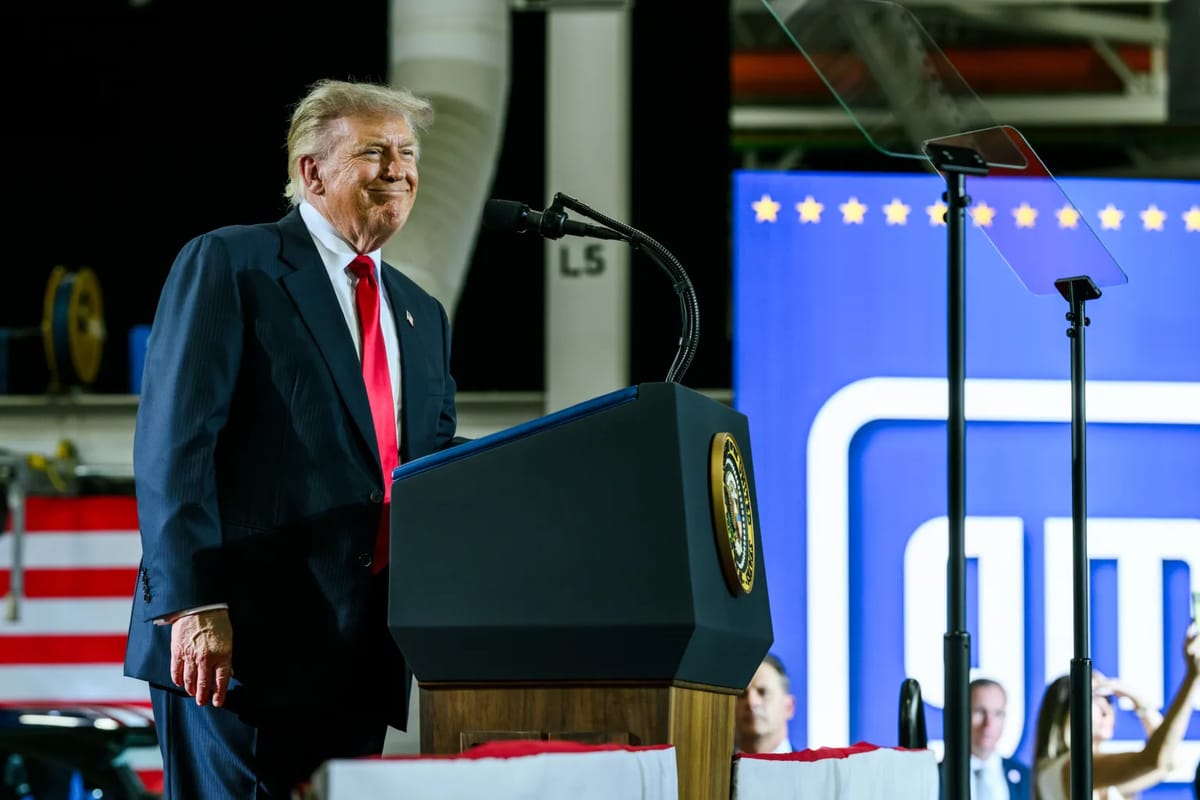
Dramatic new information has emerged about a secret operation to evacuate U.S. President Donald Trump during last month's NATO summit in Ankara, Turkey, according to reports in The New York Times, The Washington Post, and The Wall Street Journal.

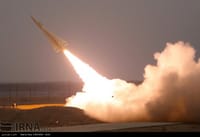
American intelligence services executed an emergency extraction plan after receiving warnings of a specific and immediate Iranian threat against the president's life. Israeli intelligence—identified by The Wall Street Journal as originating from the Mossad—alerted U.S. counterparts that Tehran was planning to shoot down Air Force One with a surface-to-air missile as it departed the Turkish capital. The intelligence indicated a concrete and imminent danger.
According to The New York Times, the level of Iranian surveillance was particularly alarming. Tehran's operatives possessed highly detailed information about Trump's location in Ankara, including the specific floor of the building where he was staying during the summit.

During a security assessment in the area surrounding the summit venue, authorities identified an individual armed with a shoulder-fired anti-aircraft missile, transforming the threat from theoretical to immediate.

The gravity of the intelligence led the president and his senior advisers to authorize an extraordinary evacuation operation. The Secret Service and U.S. military made an unprecedented decision: to smuggle the president away from both Iranian surveillance and the traveling press corps.

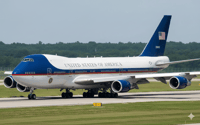
The covert operation unfolded in three precisely coordinated stages. First, Trump was filmed boarding the familiar Air Force One in a completely routine manner, designed to project business as usual. Minutes after the doors closed, however, the president was spirited out the opposite side of the aircraft directly into a container on an airport catering truck.

The truck transported Trump away from journalists' view to a smaller military transport aircraft, a C-32A. The alternative plane took off for a military base in Britain using a routine call sign to disguise the president's presence aboard.

Trump
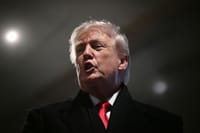
Trump (Photo: The White House)

While the president made his way safely to Britain, the original Air Force One departed Ankara as scheduled, effectively serving as a decoy aircraft intended to draw potential Iranian fire if necessary. Dozens of passengers aboard the decoy plane had no idea of the unfolding drama.

Among the passengers were numerous senior administration officials, including Secretary of State Marco Rubio, Treasury Secretary Scott Bessent, senior advisers Stephen Miller and Steven Cheung, as well as communications staff and journalists. To maintain secrecy, crew members instructed reporters seated in the rear of the aircraft to keep their window shades closed throughout the entire flight to Britain.

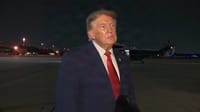
When both aircraft landed in Britain, the operation continued with meticulous precision. Trump was secretly transferred back aboard Air Force One, and when the doors opened before cameras, he descended the traditional stairway as though he had been there the entire journey. To justify Air Force One's arrival at the British base, officials claimed that American servicemembers had requested to photograph the famous aircraft.

The operation remained completely secret for several weeks, but once revealed, it sparked controversy and sharp criticism in Washington. Former White House officials expressed outrage at the decision to use an aircraft filled with senior administration members and journalists as what critics called a "sitting duck."

Security experts and former senior officials argue that leaving civilians and high-ranking officeholders aboard an aircraft believed to face imminent threat sets a dangerous precedent. They contend that even under heavy secrecy and operational necessity, senior passengers should have been informed, at least in general terms, of the life-threatening danger they faced, allowing them to decide whether to board the flight.

Ready for more?

Join our newsletter to receive updates on new articles and exclusive content.

We respect your privacy and will never share your information.

Enjoyed this article?

Yes (5)
No (0)
Follow Us:

Unmissable content


Loading comments...

Also of Interest