Historic Discovery

Nazi Skeletons Found on Motorcycle in Danube

Severe drought in Budapest exposes WWII-era motorcycle with two German soldiers' remains and intact identification tags after 80 years underwater

Nazi Soldiers' Skeletons Found on Motorcycle in Danube River

A severe drought in Hungary has led to a haunting discovery near Budapest's Parliament building. As water levels in the Danube River dropped to historic lows following extreme heat and prolonged dry conditions, the riverbed revealed a piece of World War II history that had remained hidden in the mud for more than eight decades.

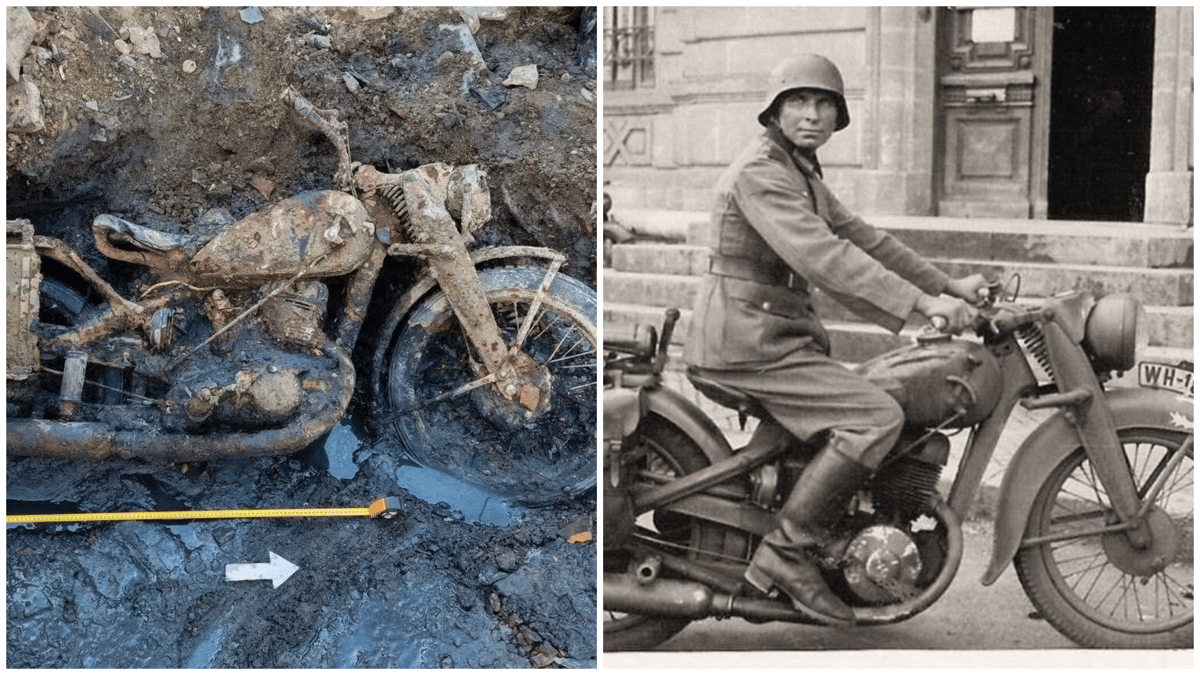
Passersby first noticed a metal fork from a motorcycle protruding from rocks and sediment along the riverbank. When experts from the Museum of Military History and the German War Graves Commission (Volksbund) arrived to investigate, they uncovered a remarkably preserved Wehrmacht motorcycle, likely a DKW NZ 350-1 model that began production in 1944 for military use.

Beneath the metal remains of the vehicle, excavators discovered human skeletal remains belonging to two individuals. Personal items found alongside the bones have provided crucial clues about their identities.
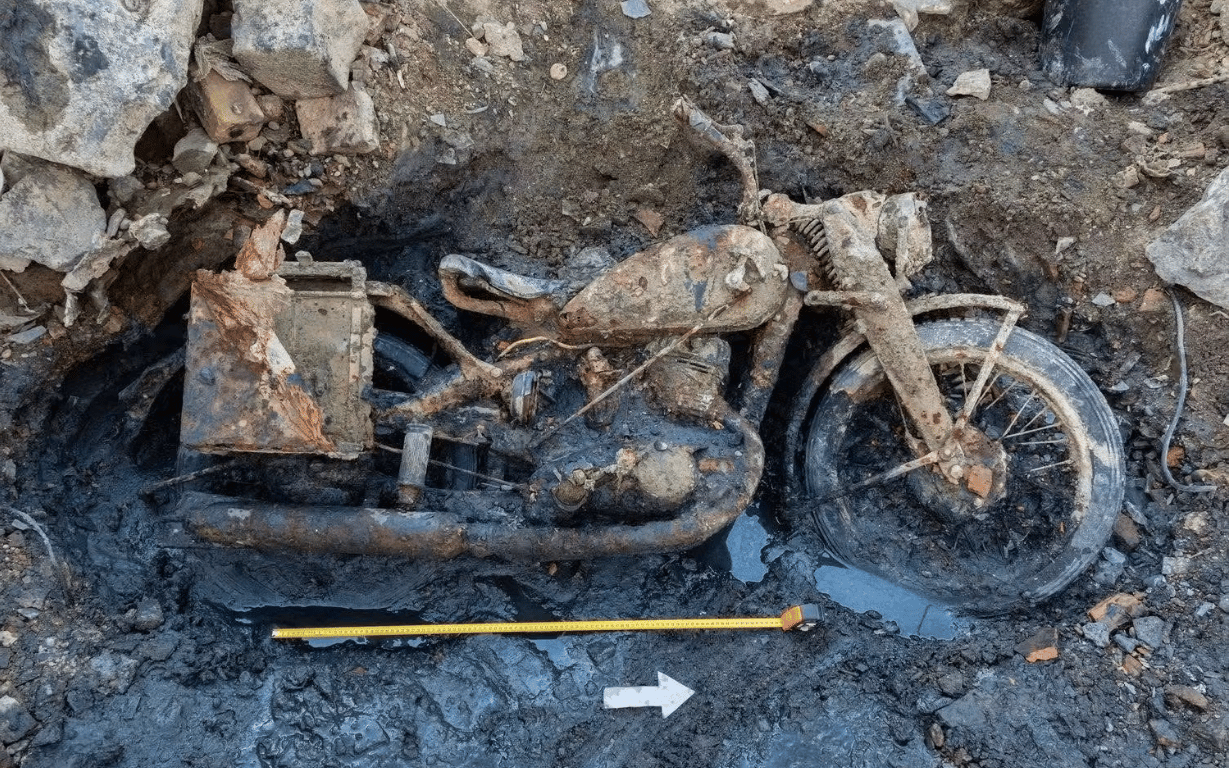

Motorycycle on the bottom of the Danube River
Motorycycle on the bottom of the Danube River (Photo: The Institute and Museum of Military History of Hungary)

The river mud, mixed with diesel fuel, acted as a natural preservative and kept the identification tags completely legible. Significantly, the tags were found intact rather than broken in half—the standard practice when reporting a soldier's death in the field. This suggests that the families of these soldiers likely never learned what happened to them.

One of the soldiers was found with a "Kuban Shield," a decoration awarded to fighters who participated in difficult battles in the Caucasus region. Additional equipment discovered at the site included a fuel canister belonging to the unit.

Historians believe the soldiers died during the siege of Budapest in February 1945. They may have been motorcycle couriers attempting to deliver messages between positions under fire. Researchers are considering various scenarios for their final moments: Were they trying to cross the frozen river while fleeing the Red Army? Did they fall from a bombed bridge, or were they caught in an artillery ambush?

Despite the passage of time, the motorcycle itself showed no signs of bullet or shrapnel damage. German specialists are now working to definitively identify the remains using data from the identification tags and anthropological examination of the bones and teeth, hoping to provide closure for any surviving family members. The discovery has also generated significant interest among museums in Germany and Hungary, which have expressed interest in the rare motorcycle preserved beneath the earth.

Ready for more?

Join our newsletter to receive updates on new articles and exclusive content.

We respect your privacy and will never share your information.

Enjoyed this article?

Yes (36)
No (1)
Follow Us:

Unmissable content


Loading comments...

Also of Interest