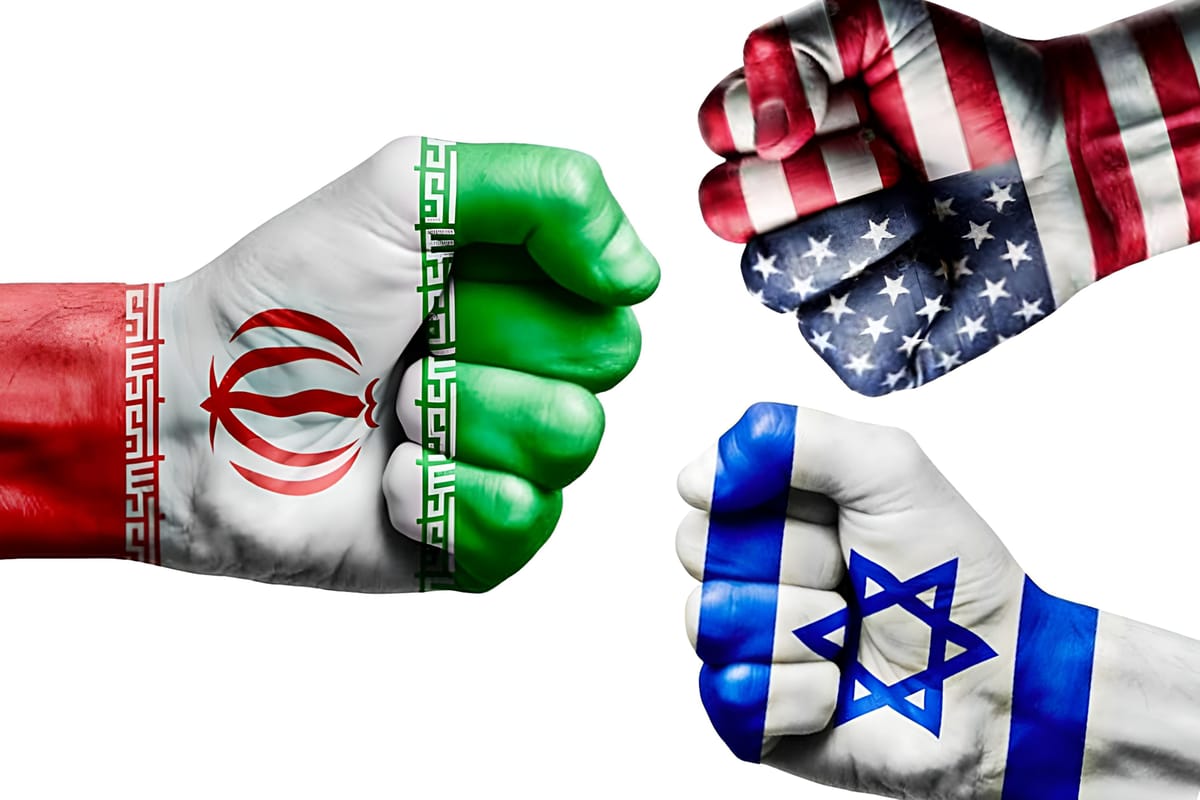
Likud Knesset member Moshe Saada said Monday that Israel's defense establishment is operating on the assumption that a confrontation with Iran will occur within days, in an interview with Israeli radio station 103FM. Saada, a former deputy head of the Police Internal Investigations Department, said none of Israel's leaders wants a war in mid-August, but stressed that the country is in the midst of a complex security situation and that Israel's safety takes priority over political timing.
Saada said the working assumption is that an event with Iran will take place this week, pointing to the sounds Israelis are already hearing and the visible buildup of refueling aircraft as evidence. He said the open question is not whether the United States will expand its strikes on Iran, but whether the fighting will spill over into direct confrontation with Israel. For now, he said, it has not, because Iran is deterred and is firing missiles at Jordan instead, out of what he described as deep fear of Israel.
His assessment lines up with what Israel's defense establishment has been saying through official channels. A senior Israeli official said Sunday that the likelihood of a broader confrontation with Iran has risen sharply over the past 24 hours. The IDF remains on high alert, is formulating operational options, and continues preparing for a range of scenarios, even as the United States reinforces its own military presence in the region. Defense sources say Israel is building immediate operational options in case of Israeli involvement or an unexpected Iranian move.
That assessment followed a fast-moving 24 hours in which four missiles were fired from Iran toward Jordan, with Jordanian officials saying American defense systems intercepted three of them while a fourth landed in open territory. Explosions were subsequently reported in the southwestern Iranian city of Abadan, and American refueling aircraft were evacuated from Ramon Airport in southern Israel following the missile fire. The IDF said it had launched several interceptors at missile debris to rule out the possibility of shrapnel falling inside Israeli territory, and that interceptor fragments were later found in an open area near Eilat, causing no damage or injuries. No emergency sirens were activated in Israel over the incident.
The same Israeli official noted that internal divisions within Iran run deep and pose a threat to the survival of the Islamic Revolutionary Guard Corps, and said Washington does not want Tel Aviv to take part in operations even if Israel itself comes under Iranian fire. The official also alleged that Iran had been planning to assassinate Israeli figures in Tel Aviv in retaliation for the killing of Ali Khamenei.
The interview with Saada came against the backdrop of remarks by Prime Minister Benjamin Netanyahu, who has said that if the security situation escalates, Likud's internal primaries would be canceled and the party's Knesset list would instead be finalized by committee. Saada addressed that political backdrop as well, arguing that Israel's political system needs to reflect the post-October 7 reality, including greater representation from reservists, hostage families, and residents of communities near the Gaza border.