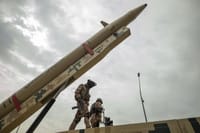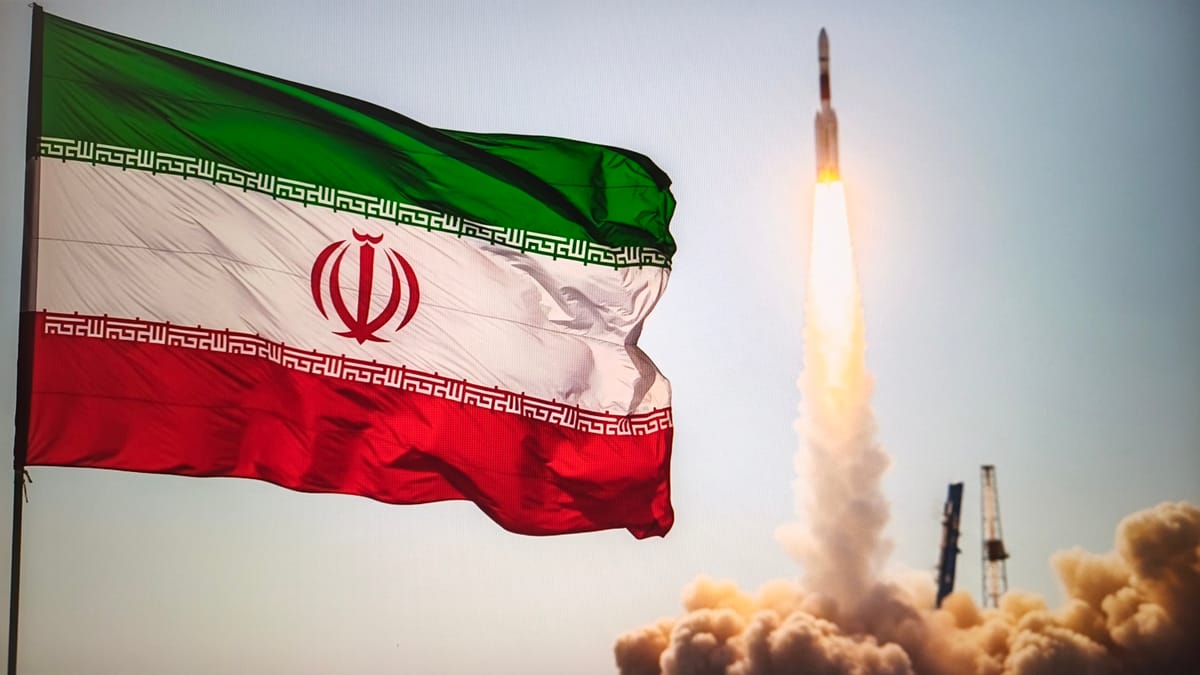
Israel is taking steps to prevent a surprise attack as it tracks Iran's latest ballistic missile and drone tests, an Israeli defense official told Kan News.
Arutz Sheva reported that the defense establishment has tightened its watch on Iran and its proxies across the region in recent days. Officials fear a military confrontation could erupt during the most sensitive stretch before Israel's general elections and the US midterms. According to the outlet, no concrete intelligence points to plans by Iran or Hezbollah to strike Israel. The IDF is nonetheless closely following regional developments, chiefly the missile and drone tests Iran has been running since last week.
The same report noted that Knesset elections are expected in 12 days and that the American midterms will be held on November 3.
The report said the main concern is unintended escalation, not a calculated Iranian decision to start a war. One fear is that a limited move by Iran, the Houthis or another proxy would provoke a strong Israeli response and set off a wider wave of fighting. A second is mutual misreading, in which Israel and Iran each treat the other's defensive preparations as proof of an imminent attack and strike first.
Israel's Channel 12 News reported that Iranian forces have carried out multiple missile launches at several sites in recent days. The broadcaster said the launches are part of a drive to rebuild ballistic capabilities damaged in the war. Israeli intelligence assessments cited by Channel 12 describe that rebuilding as limited and slow. Officials believe the tests may be designed to prove Iran can still strike and to warn off Israel and the United States. The broadcaster also reported Israeli officials' fear that Iran, under international pressure and severe economic hardship, could decide that a new confrontation is unavoidable and launch a preemptive surprise attack.
Prime Minister Benjamin Netanyahu issued a warning in an interview with Channel 14 on Thursday:
"If Iran attacks us, it will make the mistake of its life. We also have the ability to act independently, and I would not advise any of our enemies to test us. In any way."
IDF Chief of Staff Lt. Gen. Eyal Zamir addressed the tensions at a situational assessment held at Central Command this week. "In light of the large number of alerts across all arenas and the sensitivity of this period, the potential for escalation has increased," Zamir said.
Matzav reported that Zamir has warned American counterparts that another round of fighting could bring heavy Iranian missile fire on Israel. He reportedly cautioned that it could also force the October 27 election to be postponed.
Netanyahu's office rejected suggestions that the prime minister was pushing for an attack before the elections. "The prime minister maintains ongoing dialogue with President Trump and senior officials in the American administration and does not comment on the contents of their conversations," the office said.
Matzav also reported a claim by Mohammad Reza Naqdi, an adviser to the commander of Iran's Islamic Revolutionary Guard Corps. Naqdi asserted that Iranian forces fully control the Strait of Hormuz and threatened to shut the sea lanes that oil shipments are still able to use.