When Maklev noticed this practice and asked about it, Rabbi Kook downplayed his behavior. "It's good for my health," he replied briefly.
Only later, Maklev explained, did he understand this wasn't a health matter. The vinegar was part of the self-mortification practices Rabbi Kook had adopted even in his youth, using it to prevent himself from enjoying the taste of food. All of this, Maklev emphasized, was done privately—he tried to hide it even from the friends around him.
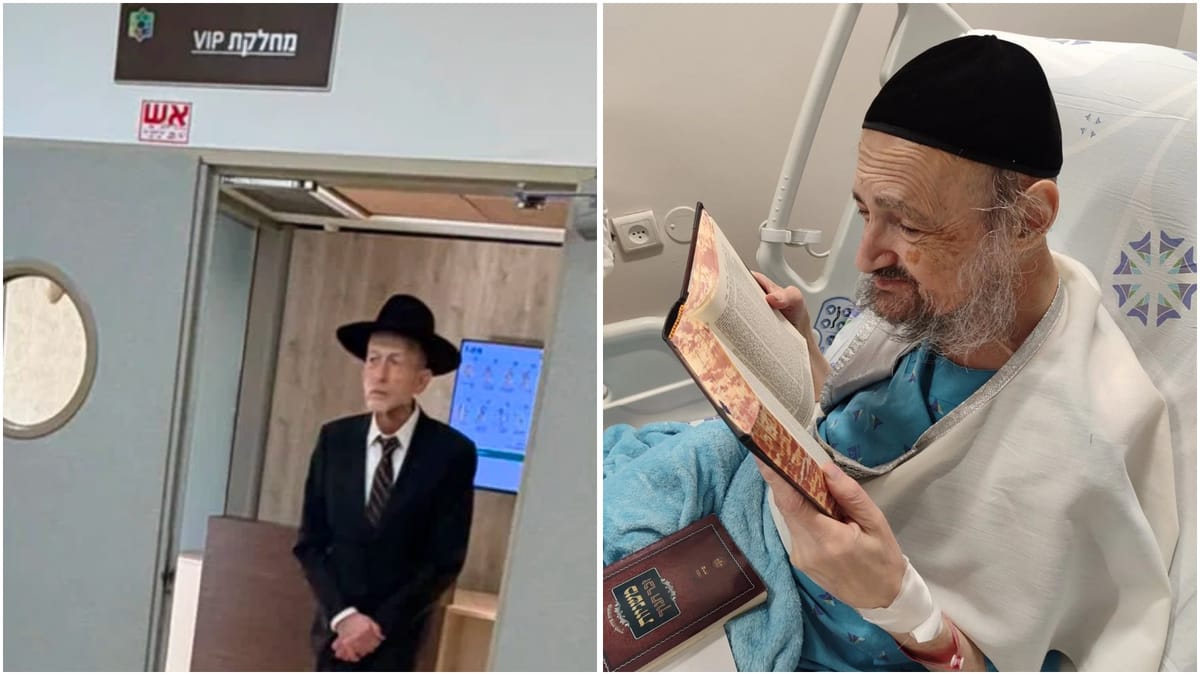
As Maklev told these stories, Rabbi Kook listened intently. He nodded, responded with facial expressions and movements, and those close to him who were in the room were moved to see his level of engagement in the conversation, particularly given his condition in recent times.
Later in the visit, Maklev turned to words of Torah. He chose to share with Rabbi Kook a teaching he had heard from the late Rabbi Yosef Shalom Elyashiv, who was the grandfather of Rabbi Kook's wife, Rebbetzin Leah Kook.
"For an individual, we see that the order is first forgiveness, then healing," Maklev began, citing Rabbi Elyashiv. "In the Amidah prayer, we say 'Forgive us' before 'Heal us.' Similarly, the verse states, 'Who forgives all your iniquities, Who heals all your diseases.'"
"But for someone engaged in communal needs," he continued, "the order reverses. In the 'Mi Shebeirach' blessing for those involved in public service, we say first 'may He heal their entire body' and only afterward 'may He forgive all their sins.'"