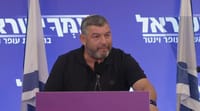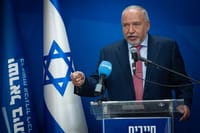
A prominent Israeli pollster has delivered a concerning (and dismal) assessment of former IDF general Ofer Winter's electoral prospects, suggesting that his independent political campaign may mark the end rather than the beginning of his career in public life.
Political analyst and pollster Shlomo Filber, speaking on Channel 14's "Israel This Morning" program with host Tal Meir, offered a sharp critique of Winter's declining poll numbers and his party "Amcha Yisrael" (Your People Israel). Filber suggested that Winter's uncompromising solo run, refusing to commit to joining a right-wing coalition, is alienating the very voters who once saw him as a rising star.
Filber addressed recent moves by Winter's campaign, particularly the placement of Yoseph Haddad, a prominent Christian Arab Israeli activist, in the number-two spot on his list. He characterized this as an attempt to reach beyond Winter's natural base, but one that has failed to generate the desired impact.
"Let's say that when Winter placed Yoseph Haddad in his second spot and went with him together, it was as if he wanted to reach out to other audiences that Yoseph Haddad brings, which he himself doesn't bring," Filber said. "But if we look not at the personal side but at the process itself... we have seen this and we're seeing it in the polls, that a person alone doesn't drag behind him a party or people to where he wants to take them."
To illustrate the problem with Winter's approach, Filber drew comparisons to past campaigns by other senior figures in Israel's national camp. "You can look perhaps at the other side --- look at Yuli Edelstein and Gilad Erdan, both of whom set out when they came and said: 'We're right-wing, we're from Likud... we hold our right-wing views, but now we're going to a new agenda and new audiences.' They hoped that many Likud members who appreciated their work would follow them, and it didn't happen."
According to Filber, despite Winter's recent status as a particularly popular figure among Religious Zionist and right-wing voters, his refusal to commit to a bloc is causing electoral backlash. "In the past year, Winter was the hottest name among right-wing and Likud voters. Everyone wanted to see him integrated into the next right-wing government... and what happened anyway? It turns out that the right-wing public comes and says: 'I see the integrity of the bloc and the victory of the right above everything, before individuals and before parties.' And therefore if a person goes as an independent party or doesn't declare that he will certainly complete what the bloc needs—people at that moment stop supporting."