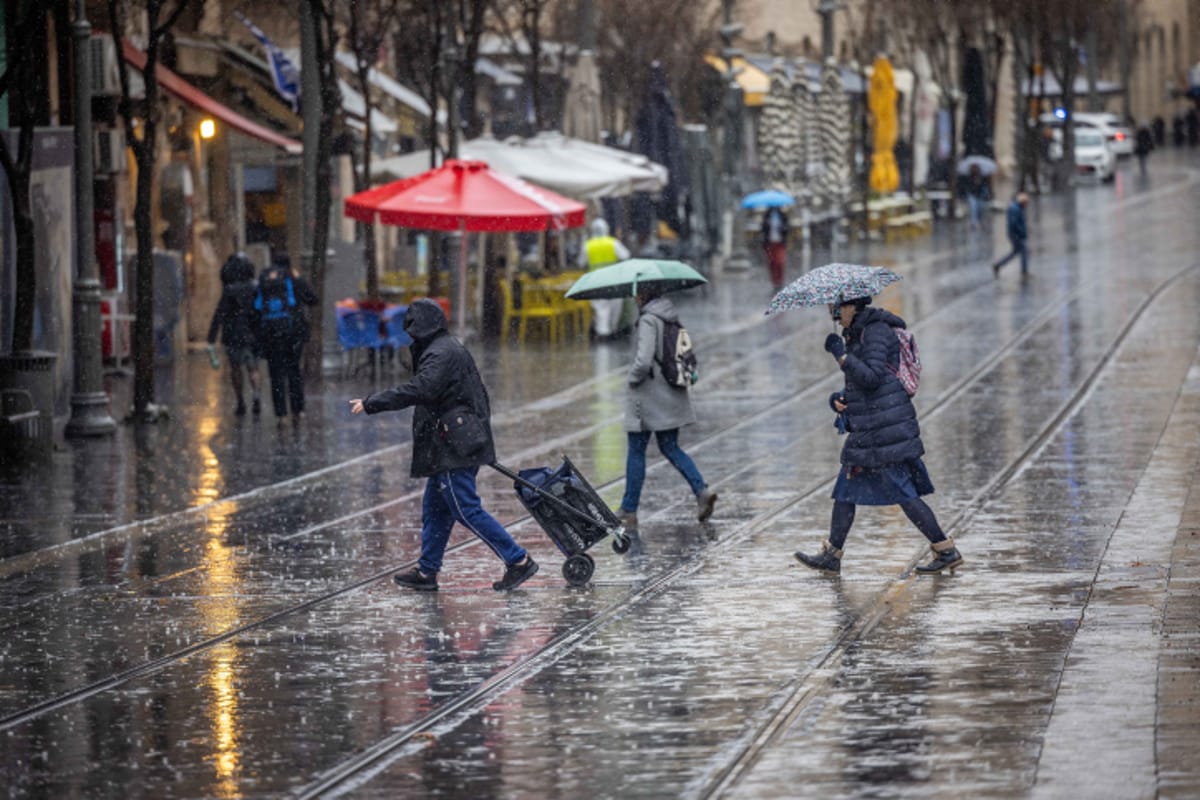
Israel is preparing for an unusual weather event this weekend, with significant rainfall expected in the first half of August—something that rarely happens this time of year. Light drizzle occasionally falls along the coast every few years, but meaningful rain in the interior is uncommon, occurring only once every five to ten years. The last time it happened was 2022. In the south, particularly Jerusalem and the Dead Sea region, August rain is practically unprecedented.
The Arava Rescue Unit is already preparing for flash flooding scenarios in the wadis of the Jordan Valley, Judean Desert, southern Dead Sea, and northern Arava. The danger is real: fast-moving water in narrow desert canyons is life-threatening.
Their message to the public is clear: stay out of flowing streams. Don't try to cross a road where water is running, even if it looks passable. "Under no circumstances should anyone enter," rescue officials emphasized. If you're blocked, wait for the water level to drop. If there's any doubt, don't attempt it.
Those who want to observe a flash flood should watch from high, safe ground only—never from the streambed or flood path.
The extreme weather shift comes after days of severe heat. Cool, moist air from the Mediterranean region is moving in, possibly amplified by the Super El Niño phenomenon, which affects weather systems across the Northern Hemisphere.
Rain begins Friday morning with drizzle in the north and coastal areas, spreading inland to the central hills by midday. Saturday is when it intensifies. Peak rainfall is expected Saturday afternoon, concentrated mainly in the eastern half of the country—the Golan Heights, Jordan Valley, Judean Desert, and Dead Sea region, where flash-flood risk is highest.