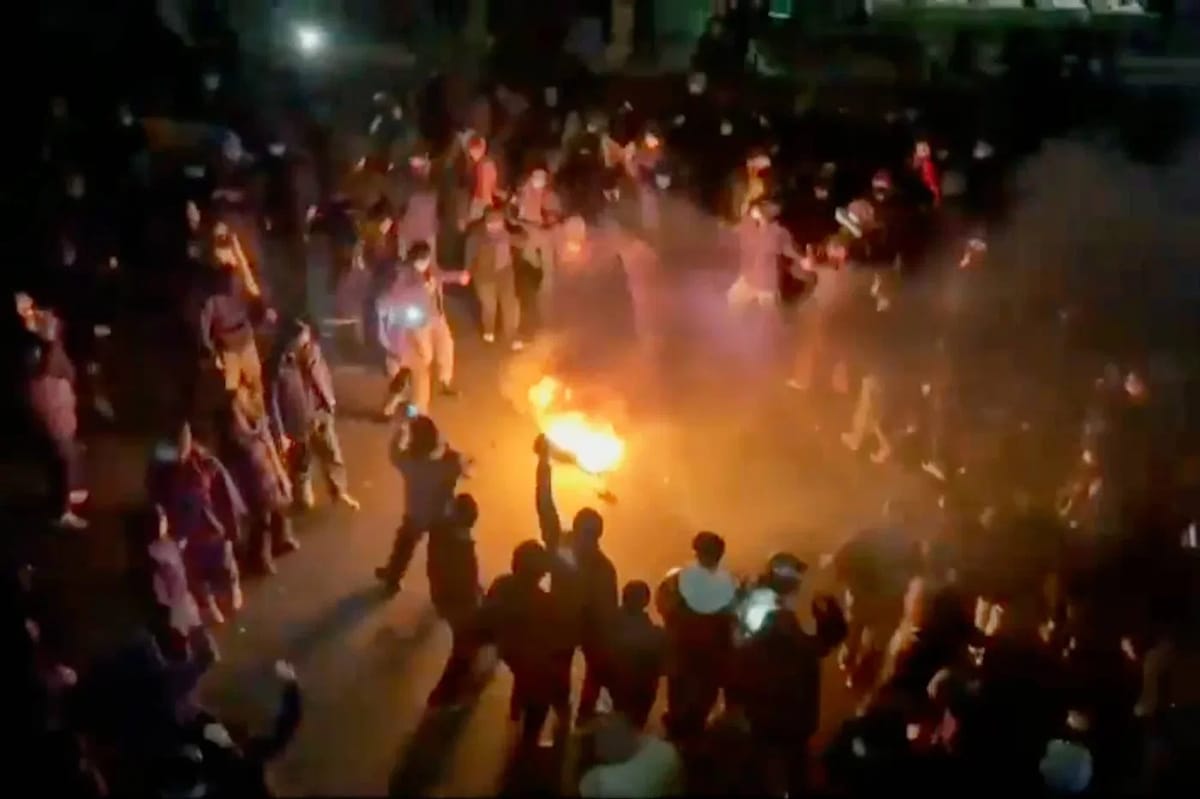
Ordinary Iranians in Tehran and other cities, speaking at considerable personal risk to an Israeli news outlet, are openly calling for military action to bring down the Islamic Republic, even at the cost of massive infrastructure damage.
The remarks mark a striking escalation in public dissent against the regime during the 12th consecutive night of U.S. bombing campaigns. They suggest that the continuous strain of conflict, combined with decades of economic hardship and government negligence, has fractured what remained of public patience with Iran's leadership.
"Finish the job with these terrorists," one Tehran resident told reporters. "Any destruction can be rebuilt, but if they stay in power, they'll drag the whole world into ruin and filth."
Weary of Dictatorship; Willing to Pay the Price
For many Iranians, the current crisis represents a breaking point after 47 years under the Islamic Republic. The prevailing sentiment expressed in interviews is that regime survival through yet another inconclusive conflict would be worse than military action that might finally end clerical rule.
"We've been paying the price of dictatorship for 47 years," said a resident from Mashhad. "Our fear is that the Islamic Republic won't be destroyed, and these clashes will turn into a war of attrition that will collapse Iran anyway. We might as well end it now."
But the calculation is grim. Residents express anxiety not about infrastructure damage, which they insist can be repaired, but about the regime's response to a prolonged conflict: mass arrests, executions on charges of spying or collaboration with foreign powers, and the psychological terror of living under constant security force presence.
The Checkpoints Return; Fear Spreads
One Tehran resident, Shirin, described the intensifying control mechanisms. "Checkpoints have returned. Beyond creating fear, they create massive traffic jams. People are afraid they'll be arrested on charges of espionage or collaborating with a hostile nation just for photographing damaged areas."
She continued: "If the conflict widens, of course I'm concerned about military action that could destroy vital infrastructure, disrupt people's lives, and place even heavier burdens on the people."
The mood in the streets has shifted noticeably. While residents did not openly challenge the regime before, the current conflict has emboldened some to speak, if only anonymously to foreign journalists, about the regime's fundamental disconnection from the suffering masses.
Residents direct sharp criticism at Supreme Leader Mojtaba Khamenei, arguing that he has systematically ignored the population's economic desperation while enriching the ruling elite. One person stated bluntly: "They don't think about the people at all. They don't care what we're going through, poverty, unemployment. They live the best lives while the rest of us struggle just to have normal lives."
The Price of Ambiguity
The interviews reveal deep frustration that inconclusive conflict would leave Iranians worst off: the regime intact, the economy devastated, and the security apparatus expanded and emboldened.
"What we fear most is that this continues without resolution," another resident explained. "That leaves everything destroyed and nothing changed. The regime stays, we stay broken, and they stay in power."
These voices, risky to express in Iran, suggest that the Trump administration's strategy of sustained military pressure, combined with economic devastation, has fractured something fundamental in the social compact. For many Iranians, the question is no longer whether change should come, but whether it can come before the entire system collapses under its own weight.