Muwaffaq Salti Air Base, also known as Al-Azraq, is a joint Royal Jordanian Air Force and U.S. Air Force installation that underwent a $143 million American-funded expansion beginning in 2019. By 2026 the base hosted F-15s, F-22s, F-35s, and MQ-9 Reaper drones, representing one of the densest concentrations of advanced American strike aircraft anywhere in the Levant.
Satellite Imagery Confirms Strike Accuracy
Commercial satellite imagery released in the aftermath reveals extensive damage across the facility, particularly to newly constructed military infrastructure. Satellite records confirm the structures were entirely absent from imagery as recently as February 2026, indicating rapid American-driven expansion in response to evolving operational demands.
Limited protective berms or overhead cover around the fresh hangars reduced their resistance to near-miss or direct ballistic effects compared with older, more developed facilities on the same base, suggesting the newly constructed buildings may have been particular vulnerabilities in the overall base design.
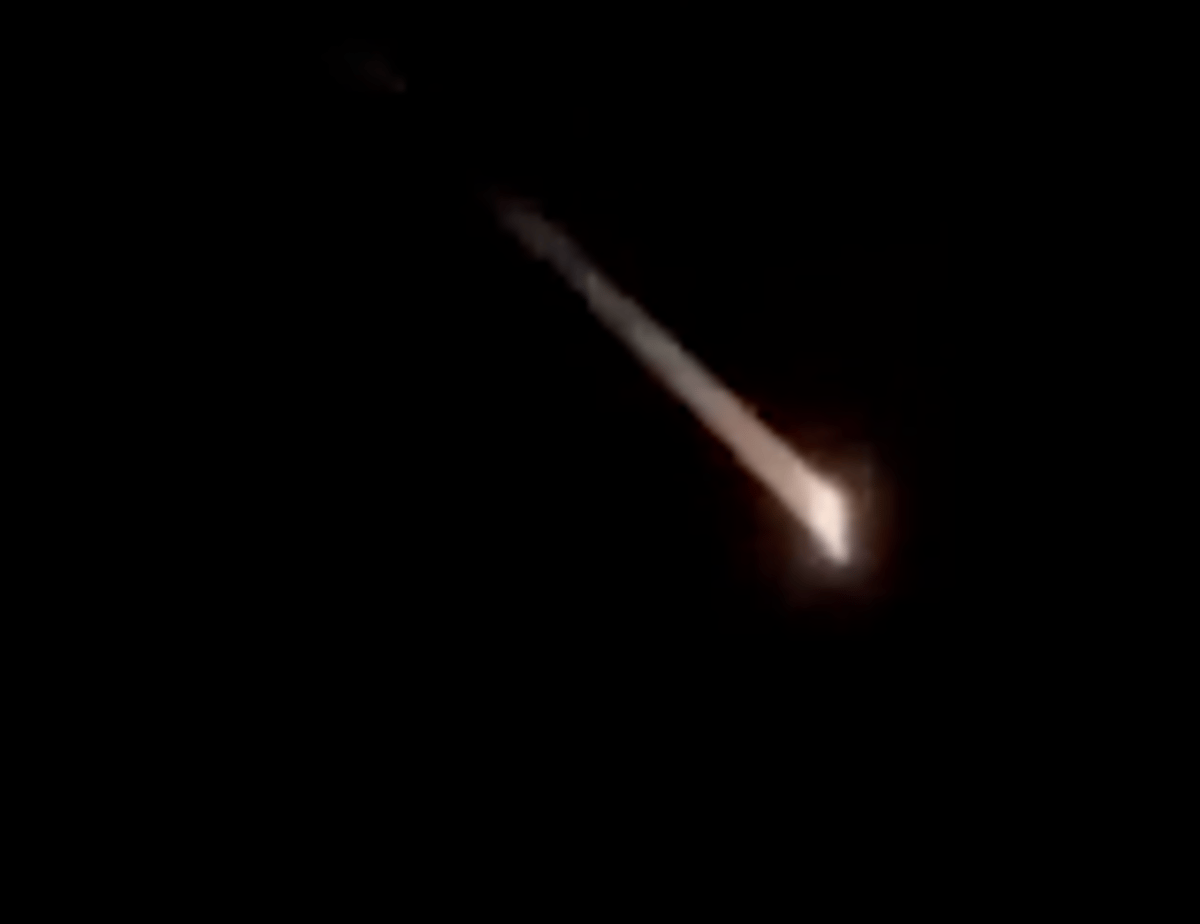
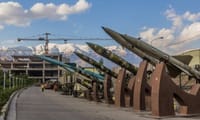
The Islamic Revolutionary Guard Corps (IRGC) claimed responsibility for the strike, stating that it used precision ballistic missiles, including the Khyber-Shakan, to target U.S. command-and-control facilities and aircraft storage areas. Commercial satellite imagery indicates that multiple projectiles reached the base and struck military infrastructure, while at least one U.S. MQ-9 Reaper drone appears to have sustained missile shrapnel damage.
Strategic Implications for Regional Airpower
The successful strike raises urgent questions about the vulnerability of fixed air bases in modern high-intensity warfare. Facilities such as Muwaffaq al-Salti were originally designed around the assumption that hardened aircraft shelters would provide substantial protection against conventional air attack. However, the latest imagery suggests that modern precision-guided ballistic missiles carrying powerful penetrating warheads are increasingly capable of destroying even reinforced infrastructure, forcing militaries to place greater emphasis on dispersal, mobility, and rapid relocation of aircraft and personnel.
This represents the second major Iranian strike on the facility in nine days. On July 9, eight Iranian ballistic missiles were fired at the same base and were all reported intercepted, but the July 17 barrage appears to have overwhelmed Jordanian and American air defenses.
Jordan's Precarious Position
The attack underscores the dilemma facing Jordan as a U.S. treaty ally caught between American military commitments and a domestic political environment hostile to the conflict. Jordan has spent this war trying to occupy an almost impossible position: a treaty relationship with the United States, a border with Israel, a large and unenthusiastic public, and Iranian munitions crossing its airspace. Being struck on July 9 and again on July 17 is the cost of that position.
The facility's heavy concentration of advanced American aircraft makes it an attractive Iranian target, and Tehran has demonstrated precision guidance capability that U.S. officials previously believed would be difficult to achieve at such ranges. A U.S.-linked THAAD radar system associated with missile defense in Jordan was reportedly damaged during these attacks, prompting American officials to move to replace it, a detail that if accurate would represent a genuine degradation of regional ballistic missile defense architecture.
The strike raises the number of American service members killed in this war to sixteen.