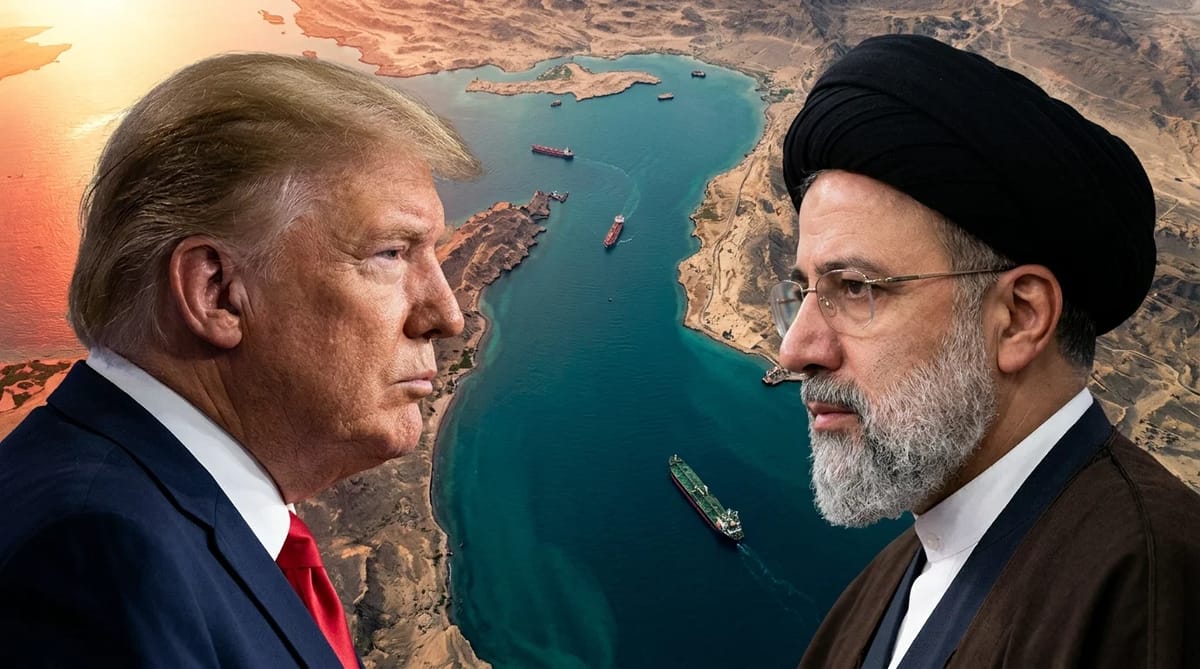
President Donald Trump issued an unprecedented escalation threat Wednesday over the Strait of Hormuz, vowing that the United States will destroy Iranian bridges and power plants, including infrastructure in Tehran itself, each time Iran attacks commercial shipping in the vital waterway.
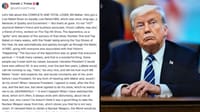
In a Truth Social post, Trump declared: "From this point forward, any time the Islamic Republic of Iran shoots at a ship in the Strait of Hormuz, whether it be by Missile, Rocket, Drone, or any other device or weapon, the United States will bomb and destroy ONE BRIDGE OR POWER PLANT, including those located next to, or in, the Capital City of Tehran."
The threat marks the administration's most explicit pledge to target Iranian civilian infrastructure and comes as the conflict enters a precarious new phase. The U.S. Central Command completed its 11th consecutive night of strikes Wednesday, targeting military operations centers, maritime capabilities, aircraft hangars, drone storage facilities, and logistics infrastructure aimed at degrading Iran's ability to threaten shipping.
Tensions on Day 11 of Military Campaign
The escalation unfolds against a backdrop of rapidly intensifying hostilities. Since July 6, when Iranian forces launched attacks on commercial vessels, Tehran has targeted at least a dozen ships in the strait according to the International Maritime Organization. Those strikes triggered the collapse of a memorandum of understanding that the two countries had negotiated just weeks earlier in mid-June.
Human rights monitors reported that between July 8 and July 17, American strikes killed at least 48 people and wounded 68 others. The full casualty toll from the ongoing 11-day campaign remains unclear, with only fragmentary reporting emerging from Iran.
Secretary of State Marco Rubio, currently in Manila at ASEAN ministerial meetings, offered mixed signals Wednesday about Washington's posture. Rubio criticized Iran for not being "serious" about negotiating an agreement, yet emphasized that the U.S. remained "committed to diplomacy" in the Middle East. He charged that Tehran is attempting to weaponize the Strait of Hormuz as "leverage against the world" and called on the international community to shoulder greater responsibility for protecting commercial passage.
Global Trade and Oil Markets at Risk
The confrontation poses severe risks to global commerce. The Strait of Hormuz serves as a chokepoint for roughly one-fifth of the world's oil supply. Since May, U.S. Central Command has facilitated passage for approximately 900 commercial vessels and 450 million barrels of crude through the strait, but continued Iranian attacks threaten that stability.
Tehran has characterized the Strait's security as a "red line" and warned that it will "crush" key Middle Eastern targets if Trump follows through on threats to destroy Iranian power plants and water infrastructure. International law experts have cautioned that civilian infrastructure strikes could constitute war crimes under the Geneva Conventions.
Mediation Efforts Gain No Traction
Mediators from Qatar and Pakistan, who have been engaged throughout the crisis, proposed a temporary 10-day ceasefire to allow both sides to resume negotiations. The offer has gained no purchase with the Trump administration, which has shown no appetite for pausing military operations. Iranian officials signaled that Foreign Minister Eskandar Momeni plans to travel to Pakistan carrying a "special message" from President Masoud Pezeshkian regarding potential U.S. talks, but U.S. officials have offered no indication of receptivity.
The proxy consequences are already reverberating across the region. The Houthis in Yemen, which have served as Iran's forward-deployed strike force, have reportedly entered "full panic mode" following precision U.S. strikes that killed approximately 12 senior commanders in a single intelligence-enabled operation. Hezbollah in Lebanon, meanwhile, finds itself increasingly isolated following Syria's border closures, which have severed its primary supply line from Tehran.
The Deadline Challenge
Trump has not specified whether he will proceed with additional strikes tonight as he suggested to media earlier in the day in Ankara, Turkey, where he told reporters "probably" more attacks would come. The administration has also suggested the possibility of resuming a naval blockade of the Strait itself—a move that would sharply escalate the economic dimensions of the confrontation.
With the June diplomatic framework now in ruins and Trump's rhetoric hardening by the day, analysts assess the situation as potentially capable of spiraling into a multi-week exchange of fire. The precise trajectory, U.S. officials told Axios, depends almost entirely on Tehran's next move.