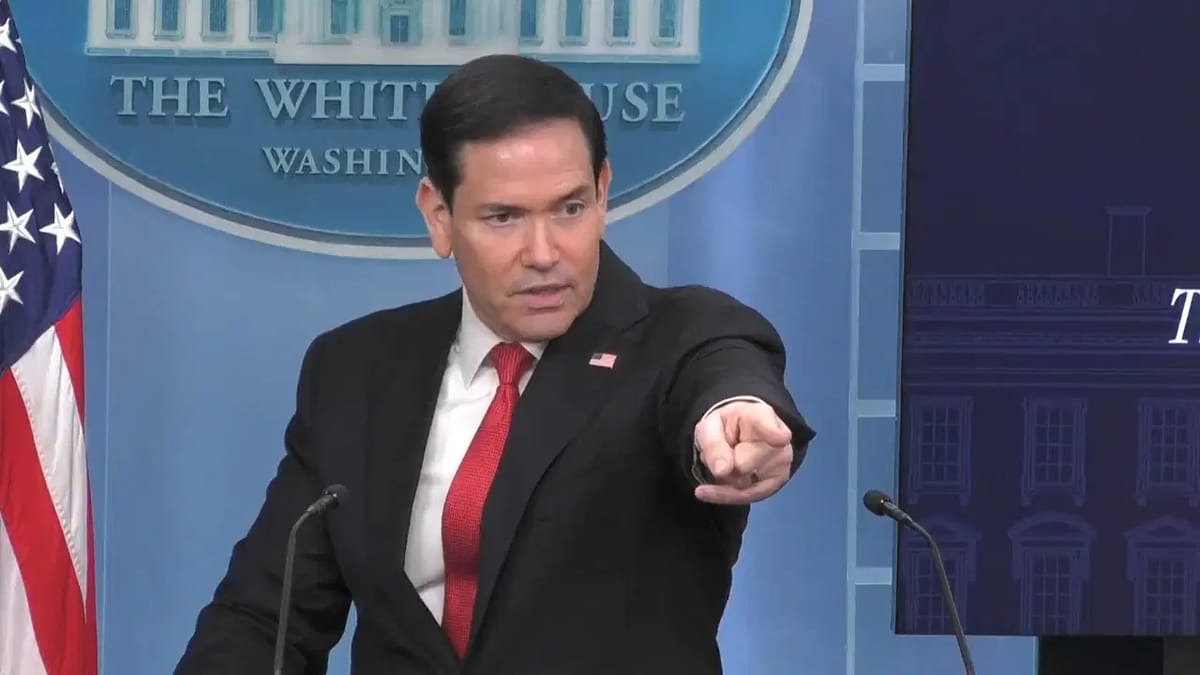
Secretary of State Marco Rubio delivered a blistering assessment of Iran's negotiating posture Thursday, revealing what he characterized as a pattern of duplicity: Tehran seeking deals with Washington while simultaneously refusing the terms required to make them stick.
"Iran is begging for a deal with America every day," Rubio said in sharp-edged remarks. "But the central problem is they keep changing their minds and backing down. They're not ready to make a deal. Because of that, the president keeps raising the bar on threats and they will pay a price. Maybe in a few more days they'll come to their senses."
Rubio added that the Trump administration currently sees "no point in even responding to them" given Tehran's unwillingness to negotiate seriously. His words reflect deepening frustration within the White House over what officials characterize as a strategy of performative outreach coupled with substantive refusal.
The Pattern: Begging and Backing Away
The dynamic Rubio described encapsulates the core impasse: Iran signals openness to dialogue while maintaining positions that Washington regards as non-negotiable. The regime has indicated willingness to discuss terms while refusing to commit to the nuclear and regional security constraints the Trump administration demands.
Rubio characterized this not as negotiating leverage but as fundamental bad faith. "Iran is a wealthy country, but instead of investing in its people, every dollar the regime gets—whether from sanctions relief or oil revenues—goes to Hezbollah, Hamas, and other terror organizations," he said.
His comments come as the U.S. military maintains relentless pressure, now in the 12th consecutive night of bombing campaigns targeting Iranian military infrastructure, including naval capabilities, missile storage, and air defense systems. The strategic use of heavy B-1 bombers marks an escalation in the campaign's weaponry.
Rubio's Call: The World Must Bear Its Share
Rubio also widened his critique to include international actors he said have been free-riding on American security guarantees. He argued that other nations benefiting from open shipping in the Persian Gulf must contribute more to protecting the Strait of Hormuz.
"It's not America's job to defend the whole world forever," he stated. "Europe, Asia, and other nations that profit from free commerce in the Gulf need to start sharing the burden, whether through equipment or funding. The U.S. will do what's necessary, but we can't be doing this alone."
The comment signals a Trump administration position that allies have underinvested in regional security while depending on American military power. It reflects a broader theme in Trump's foreign policy: shifting costs and responsibilities away from Washington.
Economic Fallout in Israel
The escalation continues to reverberate economically. Fuel prices in Israel are projected to spike sharply within weeks, with 95-octane self-service benzene rising roughly 25-30 agorot per liter as Persian Gulf tensions drive global energy costs upward. Analysts attribute the climb directly to the intensifying conflict and its threat to regional shipping.
Israeli defense officials have raised alert levels in recent days, though no change to public directives has been announced. The consensus among security establishment figures is that Iranian retaliation could come within days, though such assessments have been revised repeatedly as the conflict drags on.
The question now appears to be whether Rubio's characterization of Iranian inflexibility reflects reality or serves as rhetorical cover for an American strategy increasingly moving beyond negotiation toward pressure and, as some officials have begun discussing, regime change.