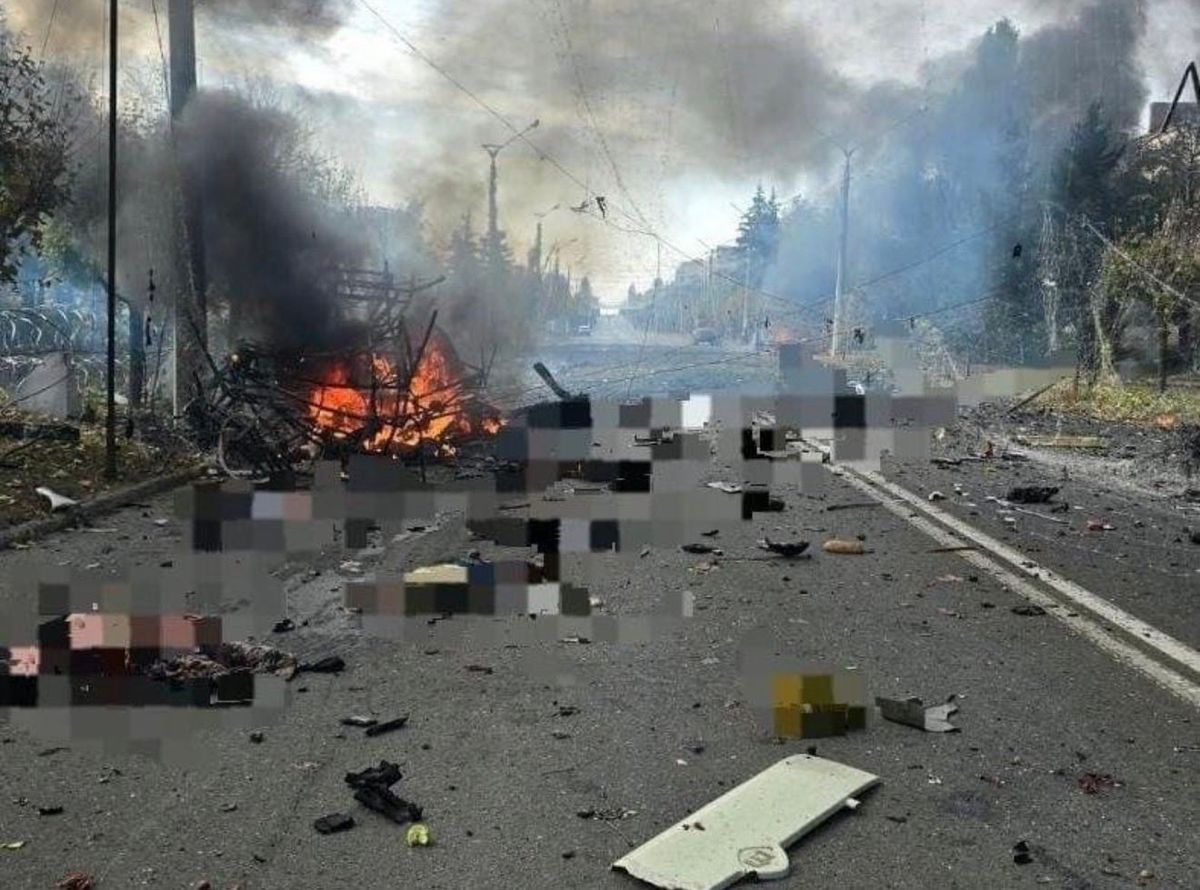
At least 33 people were killed and 18 wounded when Russian glide bombs struck two buses carrying passengers in the eastern Ukrainian city of Kramatorsk, Ukrainian rescue services reported.
The buses were transporting passengers in an area near the front line when they were hit, according to local authorities in the Donetsk region.
Ukraine's prosecutor's office released images from the scene showing the remains of one bus engulfed in flames, with debris scattered across the road. Donetsk regional governor Vadym Filashkin accused Russia of deliberately targeting a civilian bus and said the strike was intended to kill as many civilians as possible.
Russia has not yet responded to the reports of the attack.
Kramatorsk and nearby Sloviansk are considered part of the "fortress belt" in eastern Ukraine, a key zone in Russia's campaign to seize control of Donetsk region. Both cities have become increasingly frequent targets of Russian strikes as Russian forces advance in the east.
Following the deteriorating security situation, Filashkin ordered the suspension of public transport in Kramatorsk and Sloviansk. He called on residents still in the area to leave for safer parts of Ukraine.
"We cannot risk the lives of passengers and drivers," the governor said, stressing that civilian safety is the top priority.
The deadly strike comes after days of significantly intensified Russian attacks across Ukraine. According to UN data cited by the BBC, the number of civilians killed in Ukraine from the start of the year through August has already exceeded the total number of civilians killed throughout all of 2025.
Just a day earlier, 22 people were killed, including five children, when a strike hit a five-story residential building in the city of Pryluky, east of Kyiv. Three of the children killed were only one year old.
The capital Kyiv is also under growing threat. Air-raid sirens sound frequently, and residents are often forced to rely on metro stations as shelters. Ukrainian President Volodymyr Zelenskyy warned this week that intelligence indicates Russia is preparing for another large-scale offensive.
Zelenskyy expressed condolences to the families of those killed in the Kramatorsk attack and called on Western nations to provide Ukraine with "concrete action" through new defense packages.
One of Ukraine's main challenges is a shortage of air-defense systems and interceptor missiles. While Russia has increased its use of missiles and drones against targets across the country, Ukraine's ability to intercept all threats is limited by the lack of air-defense systems and interceptors.
Meanwhile, both countries have intensified their use of long-range strikes in recent months. Russia has targeted logistics infrastructure and data centers in Ukraine, while Kyiv continues to strike targets inside Russian territory.
Kramatorsk has served for much of the war as an important logistics and supply hub for Ukrainian forces. But as the front line moves closer to the city, it has come under increasingly frequent shelling and air strikes.
In particular, there has been growing use of "glide bombs" against Kramatorsk and Sloviansk. These are bombs equipped with wings that allow them to glide for a distance after launch and reach targets far from the point of release. In late August, it was reported that nine Russian glide bombs were fired at Kramatorsk in a single day.
The Kramatorsk city council described the latest attack as a "horrific crime" against the civilian population and said there were no military targets in the area where the buses were hit.
The fighting around Donetsk and around Sloviansk and Kramatorsk is part of Russia's campaign to seize control of the remainder of Donetsk region still held by Ukraine. Moscow frames the war in the region as part of its goal to defend and ultimately control the Donbas areas, which include Donetsk and Luhansk regions. Most of Luhansk region is already under Russian control, while Moscow seeks to complete its takeover of the territory remaining in Ukrainian hands in Donetsk region.