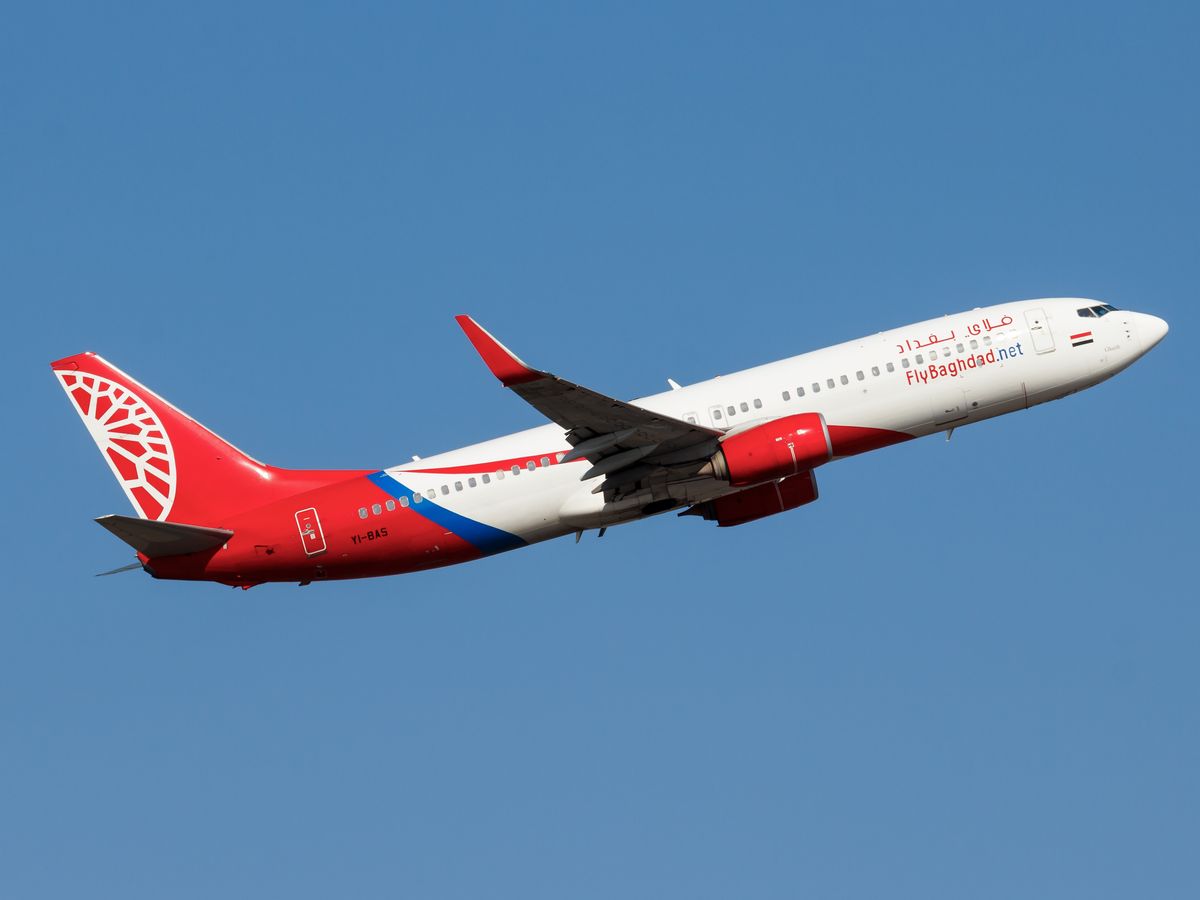
The U.S. Treasury Department removed Fly Baghdad Airlines Company and two of its Boeing 737 aircraft from its sanctions list today, but maintained individual sanctions against the airline's CEO, Basheer Abdulkadhim Alwan Al-Shabbani, according to an OFAC update. The action represents a selective delisting that separates the airline entity from its controlling executive, while simultaneously recharacterizing the CEO's designation from airline-linked terrorism support to direct involvement with Iran's Islamic Revolutionary Guard Corps-Qods Force (IRGC-QF).
The dual action, delisting the company while re-designating the CEO under a different authority, creates an unusual legal framework where the airline can operate but its owner cannot conduct transactions on its behalf.
What Was Removed
The August 5 removal specifically delisted:
- Fly Baghdad Airlines Company (also known as Fly Baghdad and Iraq Express)
- Aircraft YI-BAF (Boeing 737-800)
- Aircraft YI-BAN (Boeing 737-700)
These removals restore the airline's ability to access international banking systems, operate on international routes, and conduct business with foreign entities. The aircraft delisting removes blocking designation on specific airframes that had been frozen under the sanctions regime.
What Remained: The CEO Redesignation
Critically, CEO Basheer Abdulkadhim Alwan Al-Shabbani remained on OFAC's Specially Designated Nationals (SDN) list, but with a technical redesignation: his listing was updated to reflect a direct link to IRGC-Qods Force rather than to the airline entity.
This recharacterization has significant legal and operational implications. Under the original January 2024 designation, Al-Shabbani was sanctioned as the controlling entity of a designated airline. Under the August 5 redesignation, he is sanctioned as an individual operative or facilitator of IRGC-Qods Force operations, a more severe and personal designation that does not require the airline's sanctioned status to remain valid.
Operational Constraint: The CEO Problem
The asymmetric delisting creates a fundamental operational challenge: an airline requires executive authority to conduct business. With the CEO remaining sanctioned, questions immediately arise about:
- Authority to operate: Can the airline make binding business decisions without executive sign-off?
- Financing access: Can banks provide credit facilities if the controlling owner remains designated?
- Liability exposure: Does the airline or other officers become liable for sanctions violations if the CEO exercises corporate control?
- Asset ownership: Can the CEO retain ownership of the airline if he cannot legally transact on its behalf?
The constraint may force the airline to install alternate corporate governance, appointing a separate executive board or transferring operational control to non-designated parties, to circumvent the CEO's individual designation while the airline itself operates under delisting.
Original Designation and Allegations
The U.S. government originally sanctioned Iraqi airline Fly Baghdad on January 22, 2024, alleging that the carrier has supported US-designated terrorist organisations, including the Islamic Revolutionary Guard Corps' Quds Force. "Fly Baghdad flights have delivered shipments of weapons to Damascus International airport in Syria for transfer to members of the Quds Force and Iran-aligned militia groups on the ground in Syria," the US Department of the Treasury said.
The original designation identified approximately 150 flights since October 2023 transporting personnel and material to Iranian proxy organizations operating across Iraq, Syria, and Lebanon.
The Redesignation Strategy
The August 5 technical update—shifting the CEO's designation from airline-dependent to direct IRGC-QF linkage—represents a sophisticated legal maneuver. By recharacterizing rather than delisting the CEO, the Treasury Department:
- Preserves enforcement authority over the individual without requiring the airline to remain sanctioned
- Signals a policy shift toward the airline entity while maintaining national security pressure on the CEO
- Creates operational flexibility where the airline can be revived under alternative management without immediately eliminating the CEO designation
- Maintains future leverage over the CEO as a direct IRGC operative rather than merely as an airline owner
This approach allows the Trump administration to demonstrate sanctions relief to Iraq while technically maintaining sanctions against the individual believed to have facilitated IRGC operations.
Regional and Strategic Context
Fly Baghdad remained on U.S. Global Magnitsky Sanctions lists as recently as May 21, 2026, indicating the delisting is extremely recent and follows months of aircraft and entity remaining under active designation.
The timing during intensified negotiations over Iran's nuclear program and regional military posture suggests linkage to broader strategic discussions. Removing sanctions on Iraqi transport infrastructure signals willingness to normalize economic relations with Baghdad or respond to Iraqi government appeals for relief of the airline entity.
However, the CEO's continued designation, now under direct IRGC-QF linkage, maintains enforcement capability if U.S. intelligence determines renewed involvement in weapons or personnel transport operations.
Iraqi Government and Business Response
The Iraqi government is expected to welcome the airline delisting, which permits Fly Baghdad to resume regional and international operations and access frozen assets. However, the CEO's continued designation will complicate succession planning and may force the airline to install non-designated management to satisfy international compliance requirements.
The airline had previously denied the original allegations and demanded evidence of wrongdoing. The selective delisting may signal either that the Treasury Department found insufficient evidence of ongoing IRGC facilitation after January 2024, or that policy considerations outweighed enforcement concerns regarding the airline entity itself.
The CEO's redesignation suggests the government believes Al-Shabbani remains involved in IRGC operations, but disconnected from the airline's future operations.