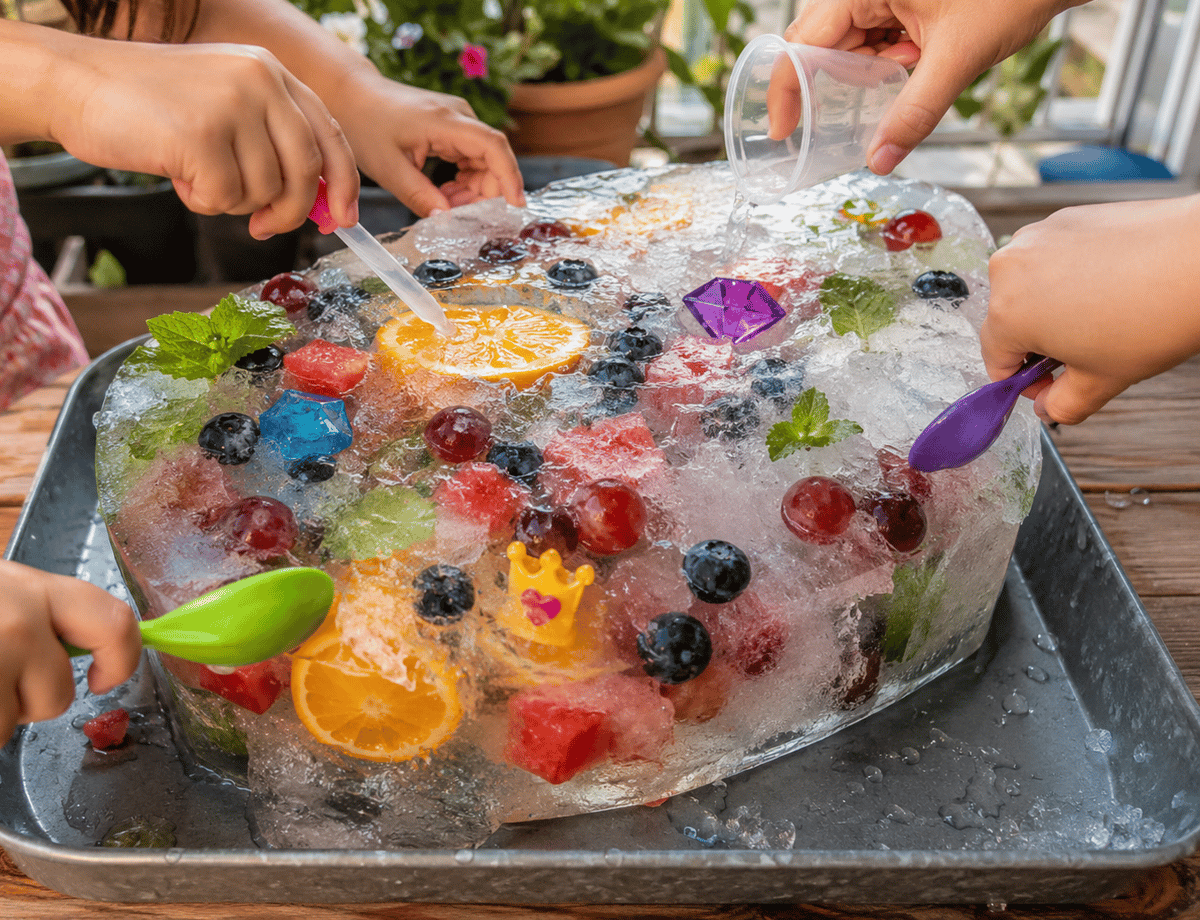
Some children's activities sound appealing in theory but fall flat in practice. Others capture immediate attention and sustain engagement for extended periods. This frozen ice block activity firmly belongs to the latter category.
The concept is straightforward: place a bowl of water containing small toys, fruit pieces, and other surprises in the freezer overnight. By morning, children discover a massive, glistening ice block concealing treasures they must extract themselves.
Unlike brief craft projects that children abandon after minutes, this activity combines investigation, tactile exploration, and problem-solving. Children compete to free a frozen grape first, strategize how to extract toys without breaking the ice, and discover what else remains hidden inside.
The activity requires minimal preparation, costs almost nothing, and creates an experience that feels far more elaborate than the effort involved.
Preparation Instructions
Select a large bowl or deep plastic container suitable for freezing. Fill it with water, then add items safe for freezing:
Grapes, orange or lemon slices, blueberries, small watermelon chunks, mint leaves for edible options. Small waterproof toys, plastic animals, colorful blocks, small spoons, or balls for non-edible treasures.
For enhanced visual appeal, freeze in layers: add water with several items, freeze for one to two hours, then add another layer with additional surprises. This technique prevents everything from sinking to the bottom and creates depth throughout the ice block.
After a full night in the freezer, remove the container and gently invert it onto a tray or outdoor table. If needed, run lukewarm water over the container's bottom for several seconds to release the ice block.
Children handle the rest from there.
Excavation Tools and Techniques
Provide children with simple, safe extraction implements: cups of warm water, spoons, droppers or pipettes, small squeeze bottles, brushes, small bowls, and if appropriate, toy hammers or gentle plastic tools.
Their mission: liberate everything frozen inside.
Some children carefully drip warm water onto the ice. Others scrape, pour, dig, tap gently, rotate the block, and experiment with different approaches. The simple activity transforms into scientific investigation, challenge, and sometimes friendly sibling competition.
Why This Activity Succeeds
The frozen block appeals to children because it offers exactly what captures their interest: something large and unusual, hidden surprises, the thrill of discovery, permission to play with water and ice freely, and extended engagement that doesn't end immediately.
For parents, the activity proves convenient, preparation takes minutes, costs remain negligible, and no special skills are required. Brief planning the evening before yields an activity that appears far more elaborate than its actual complexity.
Enhancement Options
Parents can adapt the concept to specific themes:
Frozen jungle, with plastic animals and leaves. Summer bowl, with colorful fruits. Frozen treasure, with play coins and surprises. Frozen ocean, with shells, toy fish, and smooth stones. Toddler version, using only large fruits or especially safe objects.
Multiple small bowls instead of one large container give each child an individual "mission."
Practical Considerations
To avoid indoor puddles, conduct the activity on a balcony, in a yard, on a large tray, or inside a basin. For indoor use, spread a large towel or plastic sheet beforehand and allow children to work freely.
Safety Guidelines
Adapt contents to children's ages: avoid items too small for toddlers, exclude sharp objects, prevent excessive hammering on ice, and ensure any fruit included is clean and suitable for consumption.
This activity succeeds precisely because it doesn't strive for perfection, it simply intrigues. A massive ice block concealing surprises belongs to the category of things children see and immediately want to touch, investigate, discover, and extract.
Sometimes that's exactly what school breaks require: not another expensive attraction, not more screen time, not an endless list of "what should we do today", but one small idea that transforms an ordinary morning into an adventure.