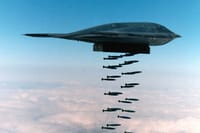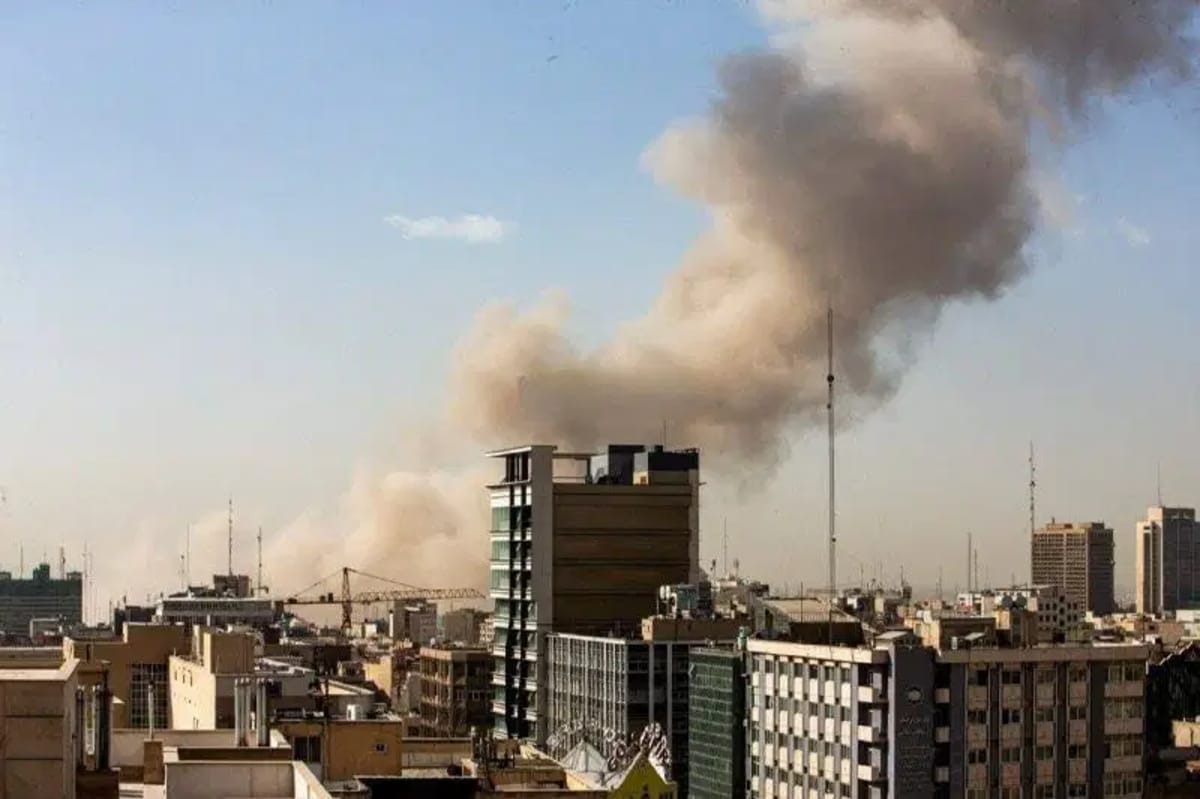
United States Central Command forces have launched a highly precise surgical operation to destroy one of the most critical maritime intelligence assets belonging to the Islamic Revolutionary Guard Corps. The targeted aerial strike completely neutralized a strategic naval observation and control tower located at the Shahid Kalantari facility within the port city of Chabahar. This decisive military action represents a major operational setback for Iran's regional surveillance capabilities during the rapidly expanding war.
The specialized installation had functioned for decades as the primary eyes and ears of the Iranian regime throughout the Gulf of Oman and the critical approaches to the Strait of Hormuz. The elimination of the site is part of a significantly broader offensive campaign executed by American forces over the past several days. Washington finalized plans to expand the scope of its air campaign and increase its target matrix following the recent deaths of American service members stationed at a base in Jordan.
For multiple years, the surveillance tower operated under a strict doctrine of operational duality to mask its true military purposes. During periods of relative calm, the facility portrayed itself as an innocent administrative outpost managed by the Iranian Ports Authority to oversee commercial shipping lanes and coordinate maritime search and rescue missions. Behind this civilian facade lay an advanced military infrastructure that provided the Revolutionary Guards with deep electronic espionage capabilities.
The physical facility was heavily integrated with state of the art espionage technologies hidden beneath its standard port infrastructure. The site utilized long range surface scanning radars to identify and track international transit vessels at extreme distances. It also housed advanced electro optical arrays, thermal imaging systems, and night vision hardware to maintain continuous live visual monitoring of the surrounding waters.
The technical capabilities of the hub extended to advanced electronic warfare suites designed to intercept foreign naval communications and jam critical frequencies used by Western warships. The base also utilized Automated Identification System monitoring platforms to actively track the precise movements of all vessels traversing the region, including American and allied military assets.
The primary danger posed by the facility was its direct integration into active tactical strike networks. The real time tracking data harvested by the tower allowed the Revolutionary Guards to close firing loops and vector precise attacks utilizing armed drones, ballistic missiles, and swarming fast attack craft. By removing this critical node, the Pentagon has disrupted the regime's ability to threaten international freedom of navigation in these highly sensitive waters.
The direct strike takes place amid a broader geopolitical crisis marked by severe threats and heavy infrastructure damage across the theater. Iranian authorities recently issued public threats declaring their intent to abduct 100 American soldiers, while simultaneously erecting graphic capital city billboards targeting President Trump and his family following the death of Senator Lindsey Graham.
Western defense experts clarify that while the destruction of the tower inflicts a severe blow to localized data collection, the Revolutionary Guards retain significant strategic depth. The paramilitary force maintains a highly decentralized coastal network consisting of secondary radar stations, converted civilian intelligence vessels, and mobile radar trucks that can be deployed across the terrain within minutes.
The destruction of the Chabahar asset marks a fundamental transition in the American military approach from defensive containment to the proactive elimination of hostile targeting infrastructure. The regional defense architecture is currently monitoring whether Tehran will attempt physical retaliation or choose to rely on its mobile backup arrays to replace its lost coastal assets. The strike coincides with separate reports detailing collapsed bridges and destroyed transportation tunnels inside Iran, which have left extended convoys of state oil tankers completely stranded near critical logistics routes while regional states attempt emergency backchannel diplomacy to halt the war.