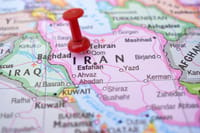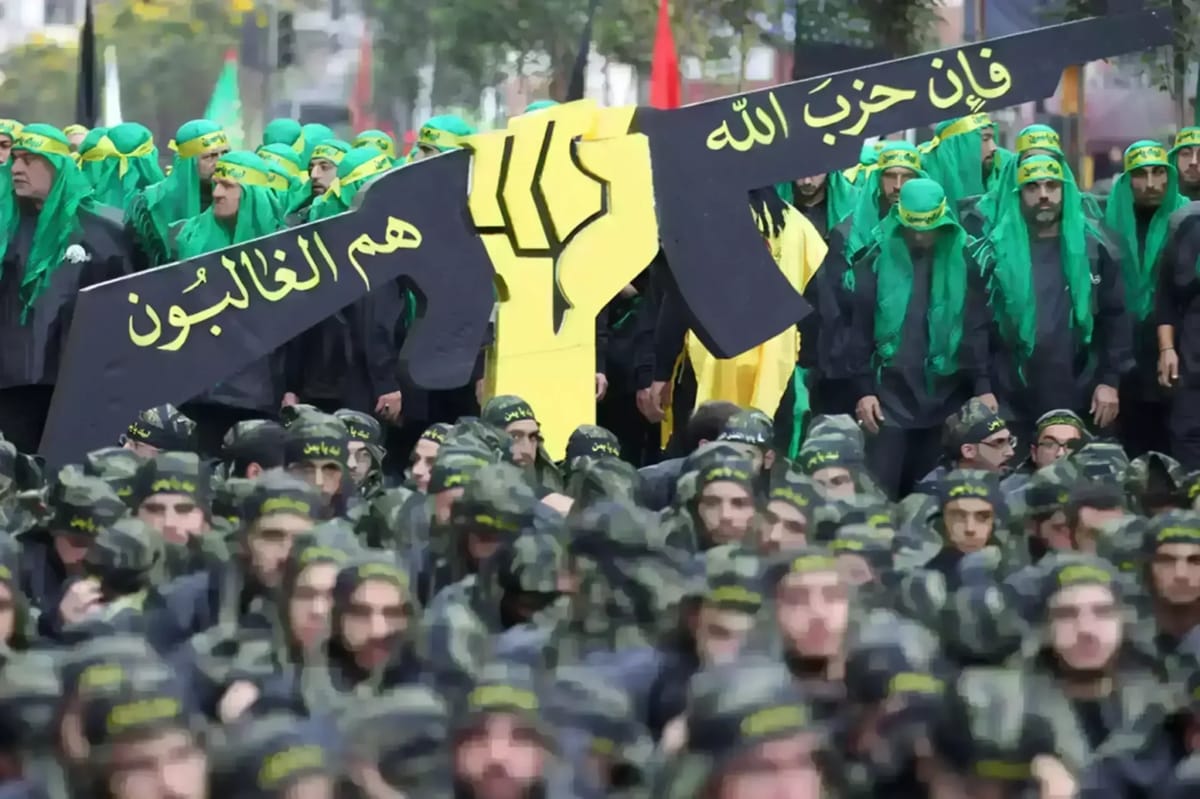
Despite its recent defeat by Israel, Hezbollah is quietly rebuilding its command structure in Lebanon with significant backing from Iran. The terrorist organization, severely weakened following the assassination of its leader Hassan Nasrallah in September 2024, is undergoing a covert transformation to restore its operational capabilities. An operative described the group’s state after Nasrallah’s death, saying, “For ten days, no one answered calls. We were like a body in a coma.” To address this disarray, Iran deployed senior commanders from the Islamic Revolutionary Guard Corps’ Quds Force, led by chief Esmail Ghaani, to Lebanon. These efforts aim to reorganize Hezbollah’s shattered network, ensuring its survival despite Lebanon’s financial collapse and battlefield losses.
Hezbollah, established in 1982 by Iran’s Revolutionary Guards, has long served as Tehran’s proxy on Israel’s northern border. Even after a U.S.-brokered truce between Israel and Lebanon last summer, which prompted Lebanon’s government to plan Hezbollah’s disarmament under Western supervision, Iran has continued to supply weapons and funding. Tehran condemned the disarmament efforts, arguing they aim to weaken Lebanon’s defenses. Reports indicate Iran has moved weapons to the Bekaa Valley and north of the Litani River, bolstering Hezbollah’s arsenal.
The organization is now adopting a more secretive structure, separating its political and armed wings while promoting younger, loyal officers aligned with Iran’s agenda. An Arab source monitoring Hezbollah warned, “They are like a snake that slithers in the dark. They have not disappeared, they are just waiting.” This covert approach, coupled with ongoing Iranian support, raises concerns about future escalation with Israel. A Western diplomat noted, “Their aim isn’t peace. It’s patience, survive, rebuild, and strike when the moment returns.” Hezbollah retains strong support within Lebanon’s Shi’ite community, further complicating efforts to dismantle it. As tensions with Israel persist, the group’s underground activities signal a potential for renewed hostilities in the region.