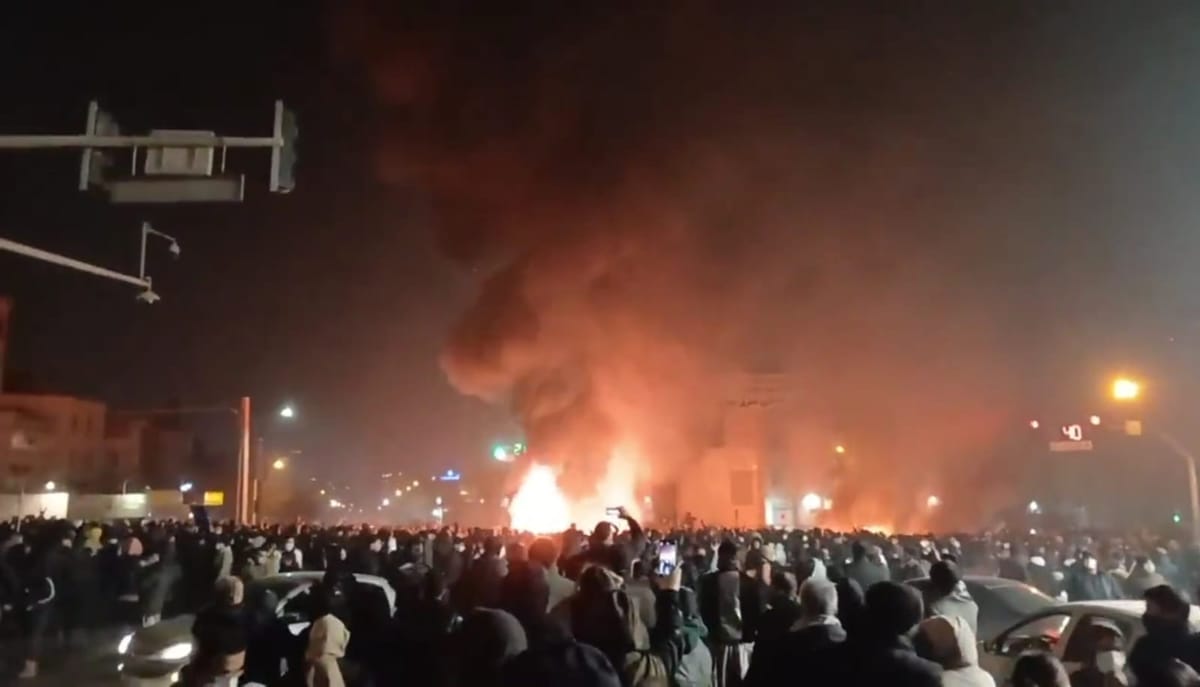
Senior officials within Iran are privately warning that another round of economic pressure from the United States could trigger dramatic consequences, potentially igniting a fresh wave of civil unrest across the country. Internal anxiety within the Iranian government is mounting as economic hardship intensifies and infrastructure damage accumulates, creating what insiders view as a genuine threat to the regime's stability.
Iranian President Masoud Pezeshkian recently acknowledged the severity of the situation, stating that "our problems have multiplied many times over, while our revenues have declined." These warnings come as U.S. President Donald Trump has pledged to deliver a severe economic blow to Iran, with Washington reportedly preparing to implement unprecedented measures in the coming days. According to the Reuters report, another major economic action could spark renewed street protests—an outcome that officials fear might ultimately lead to the regime's collapse.
The naval blockade and infrastructure damage have worsened shortages of essential goods and fuel. Parliament member Reza Sefvand noted that "Iran's daily gasoline production has reached the limit of its capacity, standing at about 130 million liters, compared to consumption of 137 million liters." The economic deterioration is clearly visible among the public, with inflation reaching 66 percent and food prices surging by 128 percent.
Voices from inside Iran paint a stark picture. Arshia, an engineer from Isfahan, shared his concerns: "I'm worried. If Trump imposes more sanctions, how will ordinary people survive? I don't want my country to be punished militarily or economically. We're already struggling." Many business owners have been forced to shut down operations and lay off workers due to the impact on commerce. Mohsen, a business owner from Bandar Abbas, recounted: "I had to fire 10 employees. It was painful, but I had no choice. I could no longer afford to pay their salaries, and now I'm relying on my savings to support my family."
The collapse of the local currency has led to a sharp decline in families' purchasing power. Hussein, a government employee from Yazd, described his distress: "I'm ashamed in front of my children. My salary disappears within days. Meat and chicken have vanished from our table. I have no idea how we'll manage." The sustained economic pressure is forcing many citizens to work multiple jobs or leave their hometowns. Bijan, an engineer from Tehran, described the new reality: "In the past I worked maybe five or six hours a day... Now, it's all work or looking for work, or feeling anxious that there isn't enough work."