Tehran’s Strategic Pivot
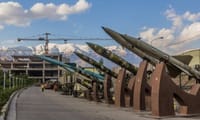
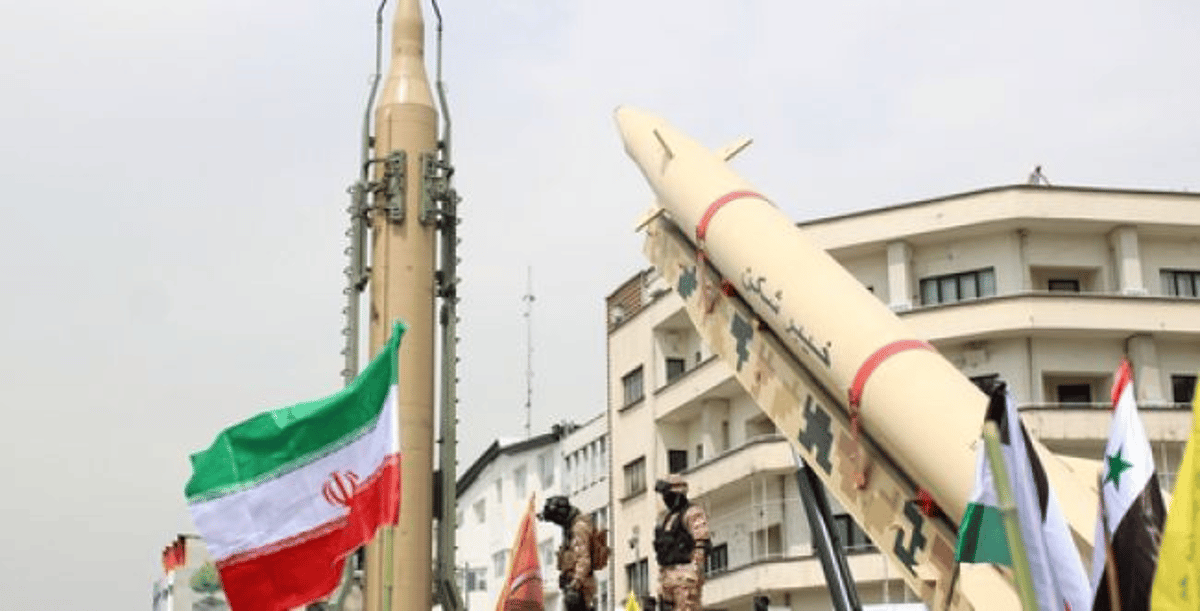
Following the massive kinetic exchanges in June 2025, the Islamic Republic has reached a tactical conclusion: ballistic missiles are its most effective defense. While the nuclear program remains a long-term goal, the leadership in Tehran understands that resuming high-level uranium enrichment would immediately trigger a joint U.S. and Israeli strike. In contrast, they perceive the ballistic program as a "safer" route to deterrence that might not fully bring the United States into a war.
Danny Citrinowicz, a senior fellow at the Institute for National Security Studies (INSS), explains that Iran’s primary advantage is its self-reliance. "The system was significantly damaged, but it is managing to rehabilitate itself fast, perhaps faster than we thought, because of Iran's independent knowledge," Citrinowicz noted. Even after the elimination of Amir Ali Hajizadeh, the mastermind behind the missile program, Iran relies on thousands of engineers who are working 24/7 to replenish their stocks.
The Production Race: 3,000 Missiles a Year?
Before the 12-day war, Prime Minister Netanyahu warned that Iran aimed for an arsenal of 20,000 ballistic missiles by 2027. Although Israel destroyed nearly half of Iran's launchers and significant production sites, the recovery is moving at a frantic pace. Reports from NBC suggest that without intervention, Iran could scale production to 3,000 missiles per year. If accurate, this would allow Tehran to fully erase Israel's strategic gains from the war by 2026.
This has created a desperate "production race" between Iranian missile manufacturing and Israeli interceptor supply. While President Donald Trump has been vocal about preventing a nuclear Iran, he has been less definitive regarding their conventional missile program, a gap that Tehran is currently exploiting to rebuild its offensive "umbrella."
Israel’s Impossible Choice
Israel now faces a strategic trap. The "Prevention Doctrine" adopted after the October 7 massacre by Hamas terrorists dictates that Israel cannot allow an existential threat to build up across its borders. However, as Citrinowicz warns, another round of war might be more difficult than the first. "We realized that we cannot topple the regime, and on the other hand, they have an independent ability to develop missiles. So the utility of such a campaign is not really clear," he argued.
As Netanyahu prepares to present new attack options to President Trump, the reality on the ground is shifting. Iran’s air defenses were decimated in June, but the regime believes that a powerful offense is the best defense. By upgrading their strike capabilities, they hope to deter Israel from future interventions or force an early end to any upcoming war. With the IAEA’s oversight of nuclear sites nearly non-existent and the missile factories running at full capacity, the region remains on a knife-edge, with many experts believing a new round of war is merely a matter of time.