The Chief of the General Staff of the Israel Defense Forces, Lieutenant-General Eyal Zamir, has initiated a series of high-level operational assessments with top military planners to finalize readiness protocols for a massive offensive operation. These intensive strategic sessions are designed to prepare ground, air, and intelligence branches for the immediate possibility of an American presidential authorization to launch coordinated strikes against strategic infrastructure inside Iran. The defensive preparations are occurring simultaneously across seven active combat sectors, requiring unprecedented coordination between international allies to secure regional perimeters.
To ensure seamless execution, Lieutenant-General Zamir has conducted extensive strategic dialogues with his direct counterparts in the United States military establishment to synchronize electronic intelligence feeds and mapping assets. Simultaneously, the Israeli Air Force has placed its advanced air defense networks on the highest state of alert, working in absolute coordination with technological and logistical commands. Security officials confirmed that a significant influx of heavy American military transport aircraft has arrived at domestic airfields over the past month, offloading specialized electronic equipment and advanced munitions.
Military commanders revealed that the current deployment strategy incorporates deep operational lessons gathered during recent encounters, specifically focusing on the tracking, identification, and interception of ballistic missiles and advanced attack drone swarms. These technical adjustments have been fully integrated into joint task forces operating alongside United States personnel who are actively deployed to protect the domestic home front. The updated protocols place a heavy emphasis on altering missile interception altitudes, enhancing satellite data sharing between allied armies, and deploying fresh battery units to vulnerable industrial corridors.
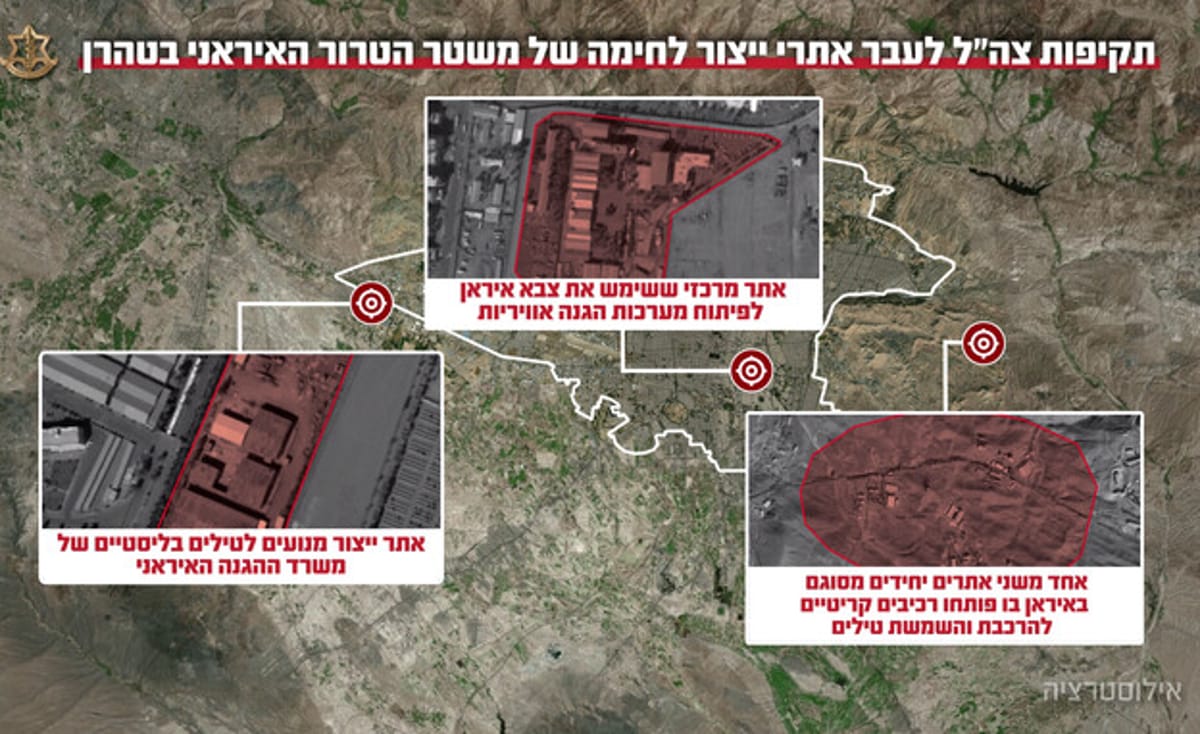
Senior intelligence sources confirmed that the national target matrix managed by Military Intelligence has been upgraded on an unprecedented scale, mapping out thousands of high-value structural vulnerabilities within the Iranian regime's defensive line. Defense officials stated that internal surveillance indicates the ruling councils in Tehran are experiencing profound institutional anxiety regarding the potential breakdown of current diplomatic tracks. Intelligence operatives emphasized that the majority of recent public reports concerning progress in peace negotiations are entirely inaccurate, serving as a smoke screen while Western powers decide whether to resume active combat operations.
A senior defense official revealed that allied forces were exceptionally close to initiating a massive wave of renewed air strikes just one week ago, with the entire operation being deferred at the absolute last minute due to a specific policy decision by the White House. While diplomats continue to utilize Pakistani intermediaries to test the sincerity of the Iranian regime, the defense establishment is refusing to decrease its offensive posture. Home Front Command officers have simultaneously established continuous monitoring protocols, instructing municipal authorities that any updates to civilian protection instructions will be broadcast instantly through verified official channels if hostilities reopen.