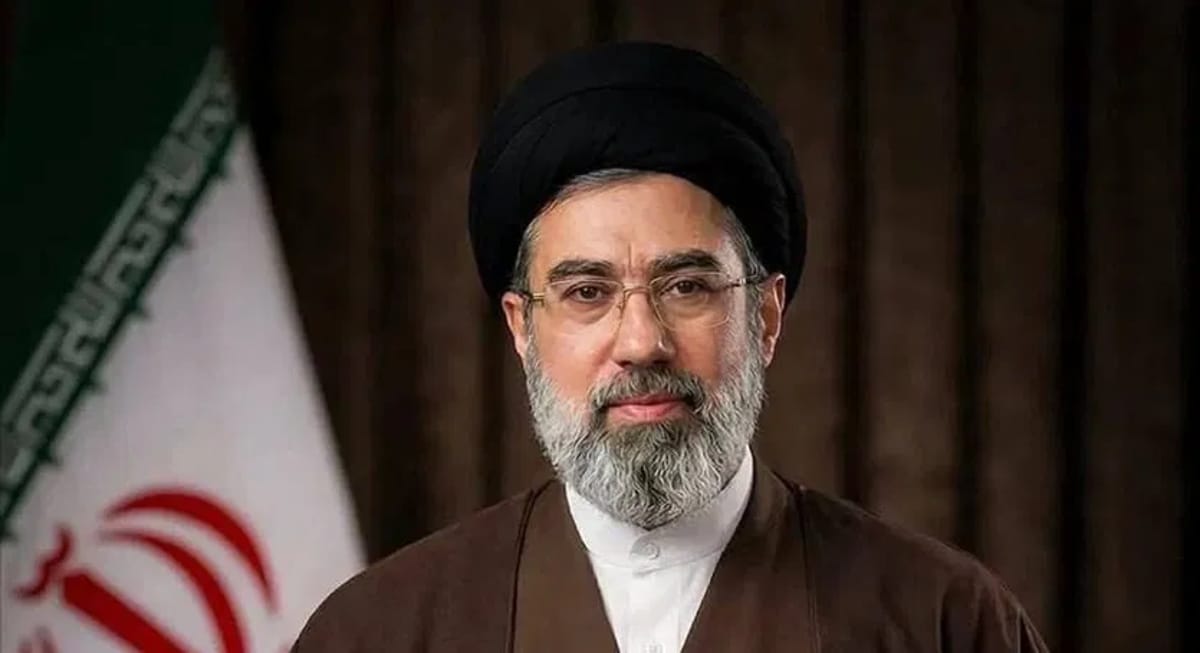
The Supreme Leader of Iran, Mojtaba Khamenei, has officially ordered that the country’s entire stockpile of highly enriched uranium must remain within domestic borders. This definitive decree represents a severe hardening of the position held by Tehran regarding one of the central security demands presented by the United States during active peace negotiations. The political development arrives at a critical juncture, directly defying recent warnings from Washington that failure to comply would result in an immediate resumption of intense aerial bombardments.
Senior diplomatic sources speaking from Tehran confirmed that the instruction issued by Mojtaba Khamenei reflects a absolute consensus among the core components of the Iranian political and military establishment. The Supreme Leader, who has maintained an incredibly low profile since succeeding his father Ali Khamenei at the absolute beginning of the recent war, possesses ultimate authority over national nuclear policy. This public hardening of terms is expected to create profound strategic complications for United States President Donald Trump, who recently promised regional allies that any successful peace treaty would mandate the complete removal of all weapons-grade atomic materials.
Israeli political leadership has mirrored this firm posture, with Prime Minister Benjamin Netanyahu repeatedly stating that the current war will not officially conclude until several non-negotiable benchmarks are achieved. These core Israeli security demands dictate that the highly enriched uranium must be completely transported out of Iranian territory, all regional funding for proxy terrorist networks must permanently cease, and the ballistic missile production infrastructure of the Islamic Republic must be entirely dismantled. Despite these demands, Iranian officials firmly believe that surrendering the nuclear material would strip the nation of its primary deterrent, exposing their industrial centers to sudden preemptive strikes.
International atomic monitors from the International Atomic Energy Agency previously estimated that Iran possessed over four hundred kilograms of uranium enriched to the critical sixty percent threshold prior to the joint strikes launched last June. While significant portions of the manufacturing infrastructure sustained heavy damage during those initial operations, international inspectors believe a substantial amount of the material survived intact. Recent inspections indicate that the remaining stockpiles are currently secured deep within an extensive underground network of defensive tunnels located at the Isfahan nuclear complex, with additional caches tracked at the primary enrichment facility in Natanz.
Despite the severe rhetoric emanating from the leadership councils in Tehran, some internal negotiators suggest that specific technical solutions remain viable if diplomatic channels remain open. One senior Iranian official noted on the condition of anonymity that formulas exist to resolve the current impasse, including the potential dilution of the existing stockpile under the direct, continuous supervision of international inspectors. However, the ruling regime maintains that it will not enter into detailed technical verification protocols until Western powers provide ironclad, legally binding guarantees ensuring a permanent end to the war and a complete cessation of future military operations.