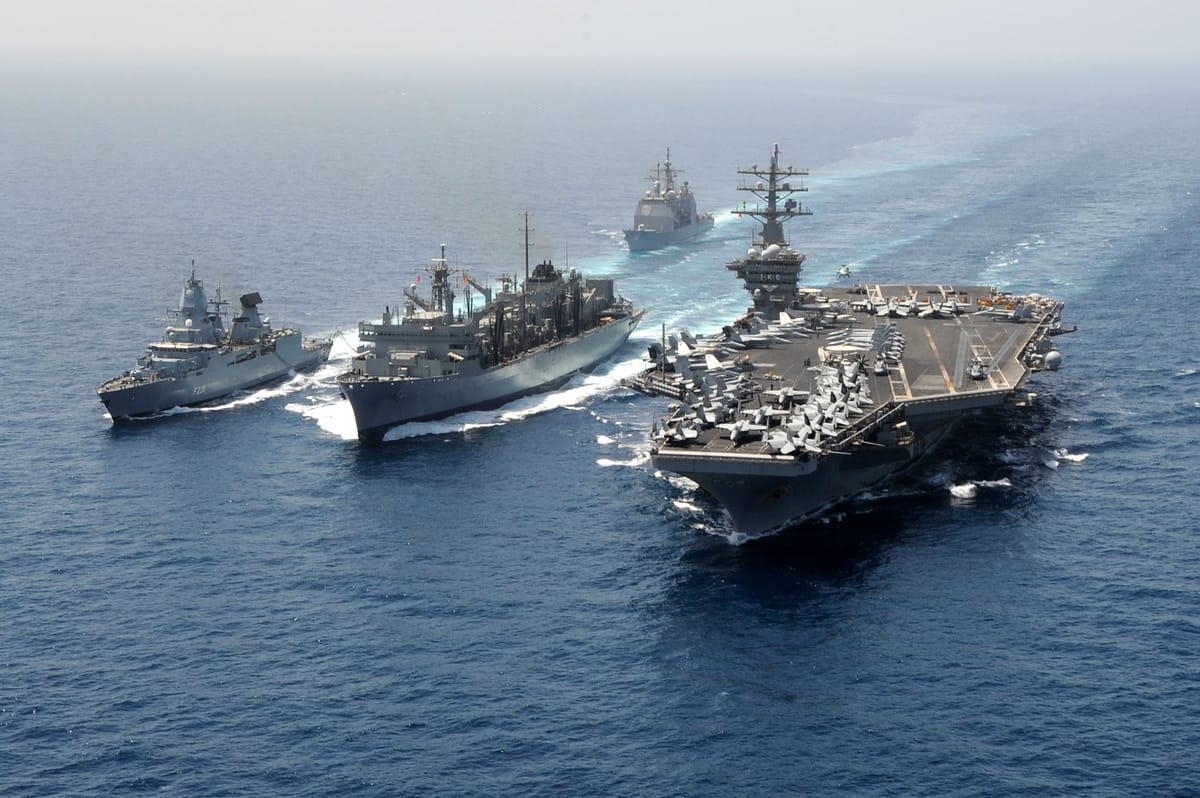
The American military initiative known as "Project Freedom," designed to provide safe passage for neutral vessels through the Strait of Hormuz, has largely failed to restore the confidence of the international shipping community. Despite President Trump’s promise to "guide ships safely out of restricted waterways," the mission was frozen after only 48 hours, leaving approximately 1,600 vessels still stranded and crews facing a deteriorating humanitarian situation.
Gene Seroka, a veteran of Middle Eastern maritime operations and current head of the Port of Los Angeles, told CNN that military escorts are simply not enough to convince commercial carriers to risk their assets. Seroka emphasized that until a verified and lasting peace agreement is signed, no responsible shipping executive is willing to send multimillion-dollar cargoes into a waterway where missiles are still flying. The risk to both human life and cargo remains unacceptably high for the global fleet.
The scale of the paralysis is staggering, as the Strait normally handles about 20% of the world's daily oil supply. While the Danish giant Maersk confirmed one of its ships was successfully escorted out, most other companies, such as Hapag-Lloyd, have chosen to remain in port or wait in long lines outside the danger zone. An attack on a container ship during the night, which resulted in injuries to the crew, further shattered any remaining belief that the waterway was safe for navigation.
Data from the International Maritime Organization (IMO) reveals that 32 ships have been hit by missiles since the war began, resulting in ten deaths and dozens of injuries. These statistics have made it nearly impossible for shipping companies to secure insurance, as standard war clauses often exclude coverage for vessels operating in active combat zones. Without financial backing, the logistical and economic risk of an accidental strike becomes a potential death sentence for smaller shipping firms.
In a move to reassert control, Iran has announced the creation of a "Strait Authority" to regulate traffic and collect fees for passage, a move the U.S. has declared illegal. The standoff has created a reality where the U.S. attempts to force the water open while Iran attempts to monetize the blockade. Caught in the middle are the tens of thousands of sailors who are running out of food and water as they wait for a political breakthrough that remains elusive.
The suspension of Project Freedom highlights the limitations of military power in resolving commercial crises. While American destroyers remain in the region, their presence has not been enough to restart the engines of global trade. For the 1,600 ships currently caught in the 34-kilometer-wide trap, the only true path to freedom appears to be a diplomatic signature in Washington or Islamabad, rather than a naval escort.