Reports from Reuters on Thursday indicate that the United States and Iran are approaching a temporary agreement designed to halt the direct military confrontation between the two nations. This interim deal, rather than a comprehensive peace treaty, is intended to stabilize the chaotic situation in the Strait of Hormuz and prevent the regional war from spiraling into a global catastrophe.
The proposed framework reportedly consists of three distinct stages: a formal declaration ending the state of war, a technical solution for the crisis in the Strait of Hormuz, and the opening of a month-long window for high-level talks. A senior Pakistani official involved in the mediation emphasized that the current priority is establishing a permanent end to the fighting so that deeper issues can be solved in a calmer environment.
News of the potential breakthrough has already sent ripples through global financial sectors, with oil prices dropping sharply as traders anticipate the reopening of vital shipping lanes. However, both Washington and Tehran have been careful to lower public expectations, as massive disagreements remain over the fate of Iran’s 400-kilogram stockpile of enriched uranium and the length of any nuclear freeze.
Iranian President Masoud Pezeshkian reportedly informed French President Emmanuel Macron that any full reopening of the Strait requires the U.S. to first lift its naval blockade. Pezeshkian argued that American sanctions have pushed diplomacy away from constructive cooperation toward threats. Meanwhile, voices in the Iranian parliament have labeled the American proposal as a "wish list" rather than a workable reality, accusing the U.S. of creating media spin.
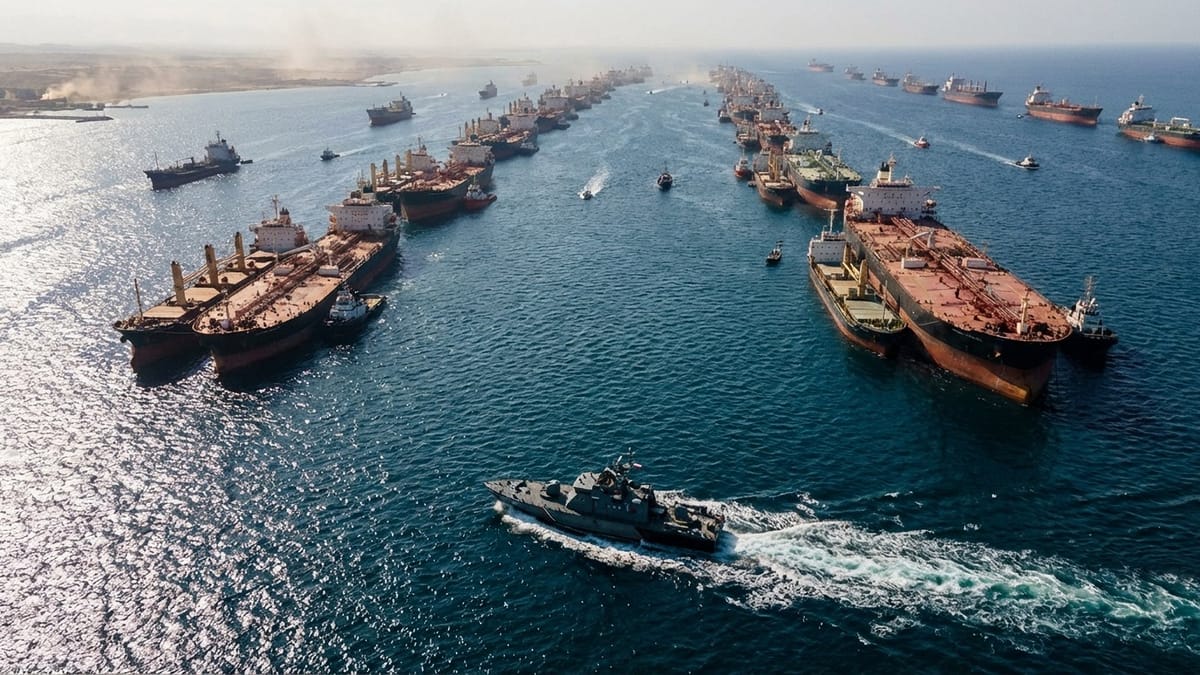
The humanitarian crisis at sea continues to loom over these talks, with more than 1,500 commercial vessels still waiting for permission to pass through the narrow chokepoint. While some sources suggest understandings have been reached to ease the blockade in exchange for a gradual opening of the water, the situation remains precarious. President Trump has stated that "very good talks" have taken place, but he warned that the U.S. is ready to resume heavy bombing if a signature is not secured.
This 30-day window represents a high-stakes gamble for both administrations. If the talks fail to produce a more detailed agreement on missile programs and proxy support, the regional ceasefire could collapse just as quickly as it was formed. For now, the world remains in a state of cautious observation, waiting to see if the "cooling off" period will lead to a lasting peace or simply provide both sides with time to rearm.