Get our mobile app
Download on the App StoreGet it on Google Play

Syria After Assad

Israel Targets Turkish Expansion in Syria

Middle East analyst Dr. Haim Golubovitz explains how a recent Israeli airstrike on a Syrian military base sent an unprecedented warning to Turkey, as concerns grow over Ankara's deepening involvement in post-Assad Syria and reports of enriched nuclear material

Ahmed Al Shara
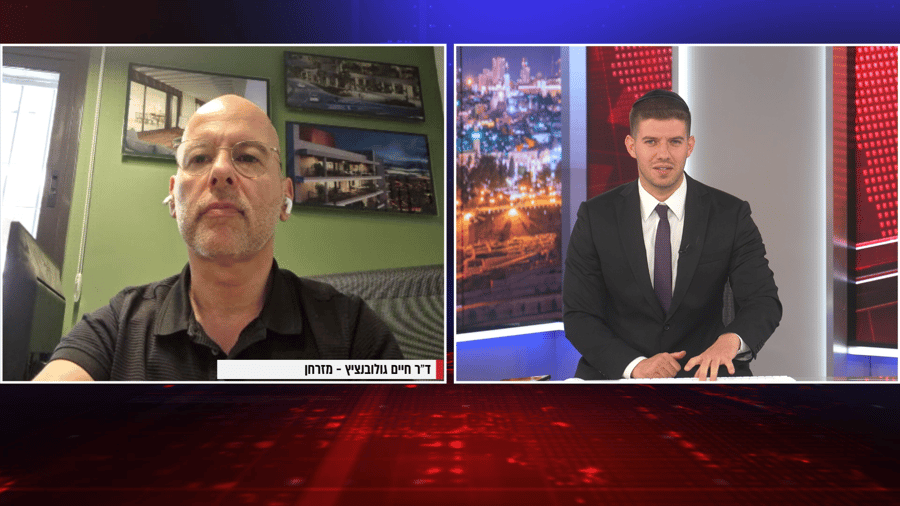
המזרחן ד"ר חיים גולובנציץ מנתח | צפו

Recent developments in Syria have reignited concerns within Israel's security establishment, particularly following foreign reports of an Israeli airstrike on the Abu al-Duhur airfield. The strike, reportedly aimed at preventing Turkish military entrenchment in the area, drew American criticism for what Washington called unnecessary escalation.

In an interview with Yossi Sergobsky on Kikar Hashabat, Dr. Haim Golubovitz, a Middle East scholar and expert, addressed both the reports of nuclear material in Syrian hands and rising tensions with Turkey. According to Golubovitz, beyond the nuclear question itself, the more significant development is the broader regional picture—particularly Turkey's attempt to deepen its grip on Syria.

From Chemical Weapons to Nuclear Ambitions

Throughout the Assad family's rule, Golubovitz explained, Syria's military efforts focused primarily on chemical weapons. Simultaneously, however, a limited Syrian nuclear program was developed with North Korean assistance.

That program came to light following the 2007 Israeli strike on the al-Kibar reactor, an operation attributed to Israel. Now, years later, the issue of nuclear materials remaining in Syria has resurfaced.

Golubovitz noted that in discussions with the International Atomic Energy Agency, the possibility of transferring Syrian-held material to international supervision was raised. However, Damascus later clarified its intention to retain the material, claiming it was designated for civilian purposes and permitted under the Nuclear Non-Proliferation Treaty.

Syria's declaration of intent to pursue a civilian nuclear program is itself an unusual development, he said. "The Assad regime, which had considerable self-confidence and ruled Syria with an iron fist, never dared to formally announce it wanted nuclear capabilities for peaceful purposes," Golubovitz observed.


"The Real Story Is Turkey"

Yet according to the analyst, the nuclear material is only part of the picture. His central concern is Turkey and its deepening involvement in Syria.

Following the fall of the Assad regime, Israel struck a significant portion of the Syrian military's conventional capabilities. Now, Golubovitz argues, a substantial process is underway to rebuild the Syrian army, with Turkey assisting and expanding its influence in the country.

Golubovitz contends that Israel's recent strike sent a clear message not only to Damascus but also to Ankara: Jerusalem will not permit the establishment of a Turkish military presence approaching the Israeli border.

"Israel is drawing an absolute red line militarily and telling both Syria and Turkey—this far and no further," he explained. "If you help the Syrians establish a Turkish military presence, we will destroy it."

The strike on the Abu al-Duhur base, which according to reports was connected to the Syrian military rehabilitation effort, is part of this message, he said.

Near-Confrontation Between Israel and Turkey?

One significant detail that emerged in the interview is the claim that the recent Israeli strike occurred against a backdrop of growing tension with Turkey, accompanied by concerns about escalation into a broader incident.

Golubovitz referenced comments by U.S. Ambassador to Turkey Tom Burk, who reportedly said the event came close to a "miscalculation," with Turkey unaware of the strike in advance and detecting foreign aircraft in the area.

This represents a meaningful shift in relations between the countries, he said. "We passed through a very significant phase yesterday," Golubovitz stated. "Israel is essentially telling Turkey: you will not come and tighten your grip on Syria."

Netanyahu and Erdogan
Netanyahu and Erdogan (Shutterstock )

"Erdogan Isn't Khamenei, But We Need to Look Five Years Ahead"

Later in the interview, Golubovitz addressed how Turkish entrenchment in Syria could affect Israel.

The threat is not comparable to what Iran poses through its proxies, he said, but the danger could be significant precisely in the long term.

"Erdogan isn't Khamenei," he clarified, but argued that Turkey is building its position as a significant regional power over time, while maintaining relationships with a long list of actors—from Iran and Russia to the United States.

Alongside Turkey's military strengthening, he said, a process is also underway to shift Turkish public opinion regarding Israel. "I think he is building Turkish public opinion to recognize Israel as Turkey's primary enemy," Golubovitz said.

The scenario that particularly troubles him is one in which Turkey establishes a significant military presence in Syria and even Lebanon in the future. "What will happen in five years if Turkey has footholds in Lebanon?" he wondered. "Israel won't be able to launch the air force and bomb targets, because the response will be a Turkish response."

"Syrian Militias Must Not Be Replaced by Turkish Soldiers"

According to Golubovitz, the central point for Israel is preventing a situation where Turkish entrenchment reaches the border area.

"We cannot agree to a situation where Syrian militias in the Golan Heights are replaced, heaven forbid, by Turkish soldiers," he said.

Israel must act now to prevent such a reality before the Turkish presence becomes an established fact, he argued.

Concluding the interview, he emphasized that the recent strike is not merely an isolated incident but part of a broader campaign over Syria's future and the new balance of power in the Middle East. "This event is very significant," he summarized. "Israel is marking a very clear red line for Erdogan."

The full interview is available on the Kikar Hashabat website.

Ready for more?

Join our newsletter to receive updates on new articles and exclusive content.

We respect your privacy and will never share your information.

Enjoyed this article?

Yes (48)
No (2)
Follow Us:

Unmissable content


Loading comments...

Also of Interest