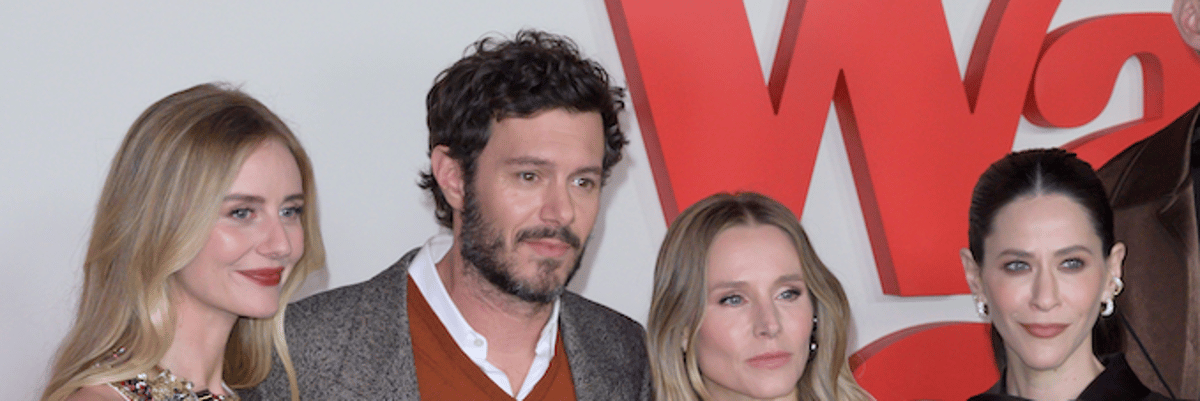
Let’s get the easy part out of the way: Nobody Wants This Season 2 is a delight. Kristen Bell’s Joanne is still a whirlwind of charm, Adam Brody’s Noah still melts hearts with every half-smirk, and the will-they-won’t-they tension now spiced with actual coupledom is light, fizzy, and relentlessly watchable. The rom-com beats land like clockwork; the jokes are sharp; the pastel-soaked Los Angeles glows. If you want 30 minutes of serotonin, this is your show.
But when it comes to the one thing it promised to explore, Joanne’s potential conversion to Judaism for Noah’s Orthodox-leaning family, the series flunks with flying colors. What could have been a thoughtful, even groundbreaking look at modern Jewish identity instead reduces Judaism to a mood board of feelings, bagels, and “vibes.” And that’s not just disappointing; it’s borderline irresponsible.
The red flags start early. Joanne’s “conversion journey” is framed as a series of whimsical epiphanies: a tearful moment at a shiva, a giddy dance at a klezmer brunch, a soul-stirring bite of kugel. She doesn’t study. She doesn’t wrestle with theology. She doesn’t even seem to know what kashrut is until Noah’s mom hands her a separate fork. Judaism, in this telling, isn’t a covenant, a discipline, or a 3,000-year intellectual tradition, it’s a Pinterest board labeled “cozy spiritual aesthetic.
Her mother's conversion was just as bizarre. After Noah tells her that all jewish souls were present at the giving of the Torah on Mount Sinai, she has an "epiphany"- I was there, she says. I'm Jewish. And when she goes to Temple Ahavah to start the process, they laughingly tell her it can be done painlessly in six months.
”Real conversion is grueling. It’s Hebrew at 7 a.m. with a rabbi who doesn’t care that you have a podcast. It’s memorizing blessings you’ll mispronounce for years. It’s facing a beit din, three rabbis who will grill you on everything from your sex life to your politics, and then, if you’re lucky, dunking in a mikvah. It’s choosing, every day, to belong to a people that the world has tried to erase for centuries.
None of that makes the cut. Instead, we get Joanne gazing misty-eyed at a menorah and declaring, “I just feel Jewish.” The rabbi, a cartoonish nice-guy archetype, nods approvingly. Cut to montage: Shabbat candles, challah French toast, mazel tov confetti. Conversion complete.This isn’t representation; it’s appropriation with a laugh track.
The irony is brutal. The show’s Jewish creators clearly love the culture, every Yiddishism, every guilt trip, every overbearing aunt is pitch-perfect. But love isn’t understanding. By turning conversion into a rom-com subplot resolved with hugs and humming “Hava Nagila,” they’ve erased the very thing that makes Judaism resilient: its rigor. You don’t feel your way into a people that survived exile, pogroms, and the Holocaust. You commit. And the stakes aren’t academic.
Real converts, especially women marrying into Orthodox or Conservative families—face gatekeeping, skepticism, and lifelong scrutiny. They’re sometimes told their kids might not be “Jewish enough,” that their sincerity will always be questioned. The show gestures at this tension (Noah’s mom side-eyes Joanne’s bacon past), then resolves it with a tearful speech and a group hug. In real life, that speech wouldn’t even get you past the intake form.
There’s a deeper insult, too. By making Judaism accessible only through emotion, the show implies it’s lightweight, something you can dabble in, like yoga or sourdough. That’s the same logic antisemites have used for centuries: Jews are just a “feeling,” not a nation, not a civilization.
When October 7, 2023, happened, the world didn’t ask how Jews felt. It asked where we stood. This show pretends that question doesn’t exist.
Look, I must confess I binge-watched the entire thing in an evening. But every time the show waved away the hard parts of Jewish life, I felt the same ache I get when a gentile friend says, “I’m basically Jewish, I love Seinfeld!”
Nobody Wants This had a chance to show what it really means to choose Judaism in 2025: the doubt, the bureaucracy, the beauty, the burden. Instead, it gave us a fairy tale where love conquers halacha. Cute? Sure. True? Not even close.
If Season 3 wants to fix this, give us Judaism in all its messy, demanding, life-altering glory. Until then, enjoy the rom-com. Just don’t call it Jewish.