Netflix under fire
"Blood Libel:" Netflix Film Claims IDF Abused, Murdered Jordanian Family
A new film from Jordanian director Darin J. Sallam is scheduled to be released this month on Netflix. A petition calling on them to cancel because the film promotes lies about the IDF has over three million signatures.
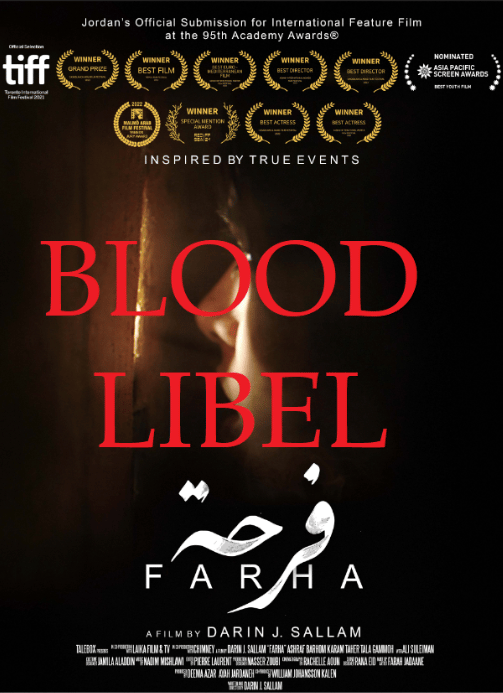
A new petition demanding that Netflix remove the film Farha has drawn thousands of signatures, amid growing criticism that the movie promotes antisemitic tropes and blood libel narratives. The online campaign, hosted on ActionNetwork, frames Farha as a dangerous piece of media that perpetuates harmful stereotypes about Jews and undermines social cohesion.
Petition organizers argue that the film distorts historical events and portrays Jewish characters in a way that aligns with classic blood libel mythology, which falsely accuses Jews of ritual violence. Signers warn that, in a moment of rising antisemitism globally, platforms with Netflix’s reach should not amplify content that can be interpreted as endorsing age-old bigotry.
The petition calls not only for Farha to be removed from Netflix’s streaming library but also for the company to adopt clearer content standards that prevent the distribution of films that could stoke religious or ethnic hatred. Supporters emphasize that freedom of expression does not justify broadcasting content they view as inflammatory or discriminatory.
Many who have added their names express personal concern about the impact such films have on young viewers and broader cultural perceptions. Some highlight specific scenes and themes they believe unfairly single out Jewish people, arguing Netflix has a responsibility to its global audience to avoid legitimizing potentially harmful depictions.
Critics of the petition, including defenders of artistic freedom, argue that films like Farha can prompt important dialogue about difficult historical realities and that removing content sets a troubling precedent. Supporters counter that there’s a difference between challenging media and content that crosses ethical boundaries into bigotry.
The debate over Farha comes at a time of heightened sensitivity to antisemitism in popular culture and public discourse. Advocates pushing the petition say their goal is not censorship for its own sake, but ensuring that major streaming platforms do not unintentionally legitimize narratives that fuel prejudice. Whether Netflix will respond to the petition remains unclear, but the campaign highlights deep public concern over how the media represents religion and history.