Right-wing activist Yair Ansbacher announced Tuesday that he has decided to back Naftali Bennett for prime minister, a declaration that stirred immediate controversy online given Ansbacher's standing within right-wing circles and the pointed critique of Prime Minister Benjamin Netanyahu that accompanied it, according to a report from Srugim News.
Ansbacher, writing in a lengthy social media post, was careful to frame his endorsement as pragmatic rather than enthusiastic. He said he is not a Bennett loyalist, does not work for him, receives no compensation from him, and that Bennett was not even aware the post was coming. He said he had weighed the decision extensively before writing it, but felt the moment demanded it now, as Bennett's political standing sits at a decision point he described as critical for the country's future. Of the three candidates currently positioning themselves as Israel's next leader, he wrote, none is his ideal choice, adding that he would have actually preferred to see Yair Winter as prime minister, but that politics is the art of the possible and sometimes requires choosing the lesser evil given the reality at hand.
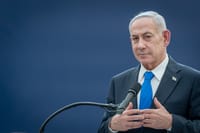
Ansbacher's harshest words were reserved for Netanyahu. He wrote that the prime minister not only bears responsibility for the October 7 attack and had neglected Israel's national security for nearly two decades, but had also misled the Israeli public throughout the war and spilled significant blood only to ultimately hand Gaza over to Hamas under Qatari patronage while preserving the status quo in Lebanon. He argued that Netanyahu exhausted the Israeli military, refused to press for decisive victory, and has become a symbol of division rather than unity, someone he said half the country has come to despise and feels is being trampled whenever convenient.
He was similarly critical of former IDF Chief of Staff Gadi Eisenkot, another contender in the emerging race, describing him as a clear man of the left who supported the establishment of a Palestinian state and calling him a chief architect of what Ansbacher characterized as the flawed defense conception that hollowed out the IDF before October 7. He accused Eisenkot's circle of coming from the same ideological mold as Israel's INSS style security establishment, one he said always concludes in withdrawals and toothless agreements while blaming settlers for Israel's security failures.
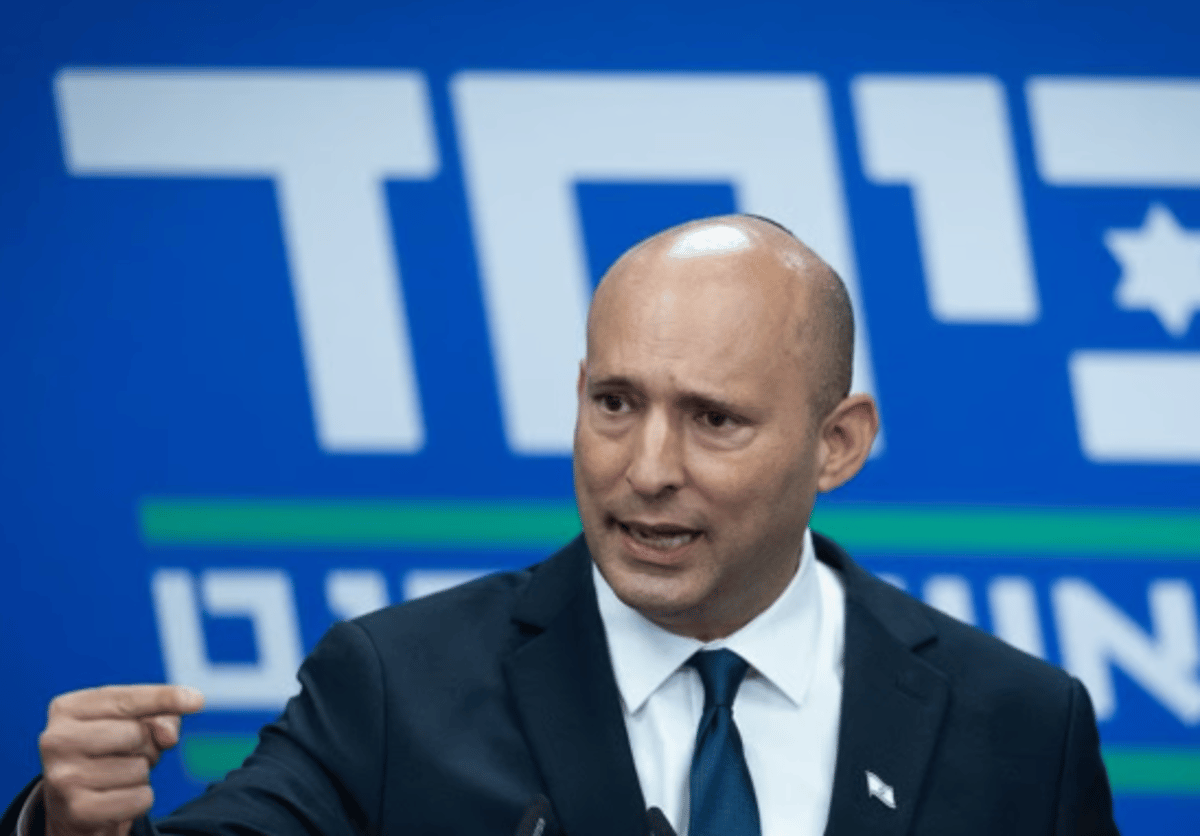
Turning to Bennett, Ansbacher argued there are effectively two versions of him in public discourse, a caricatured monster figure he said has been the target of a sustained and well funded Likud attack campaign, and the real Bennett underneath, whom he described as impulsive, occasionally immature, and prone to past mistakes, but fundamentally a genuine lover of the Jewish people who is religious and authentically right wing. Ansbacher pointed to Bennett's record as evidence, including operations targeting Islamic Revolutionary Guard Corps officers on Iranian soil during his tenure, a policy he said did not exist under Netanyahu, along with Bennett's push during Operation Protective Edge to destroy Hamas's tunnel network over cabinet objections and his broader record of settlement related policies while serving in government.
Ansbacher did not omit criticism of Bennett either, singling out his 2021 decision to form a coalition that included an Arab party for the first time, a move Ansbacher called religiously prohibited and especially poorly timed given it came shortly after rioting in Lod. He acknowledged Bennett has been caught overstating things in the past and said Bennett owes the public an explanation, an apology, and a commitment not to repeat the coalition move, adding that he personally cannot fully vouch for Bennett's trustworthiness.
He closed by arguing that despite those reservations, Bennett remains a religious right wing figure whom centrist voters are also willing to support, and that uniting behind him could form the basis of a broader national unity, even if it means not everyone gets everything they want immediately.