There is a version of Portugal's 2026 World Cup that exists only in hypothetical, and it starts with Roberto Martínez actually doing what the data was quietly begging him to do for four straight matches: bench Cristiano Ronaldo and build the attack around Gonçalo Ramos.
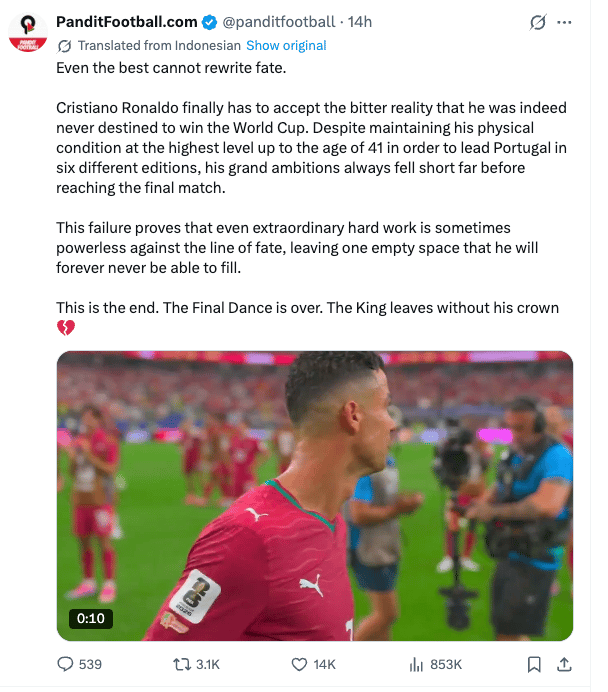
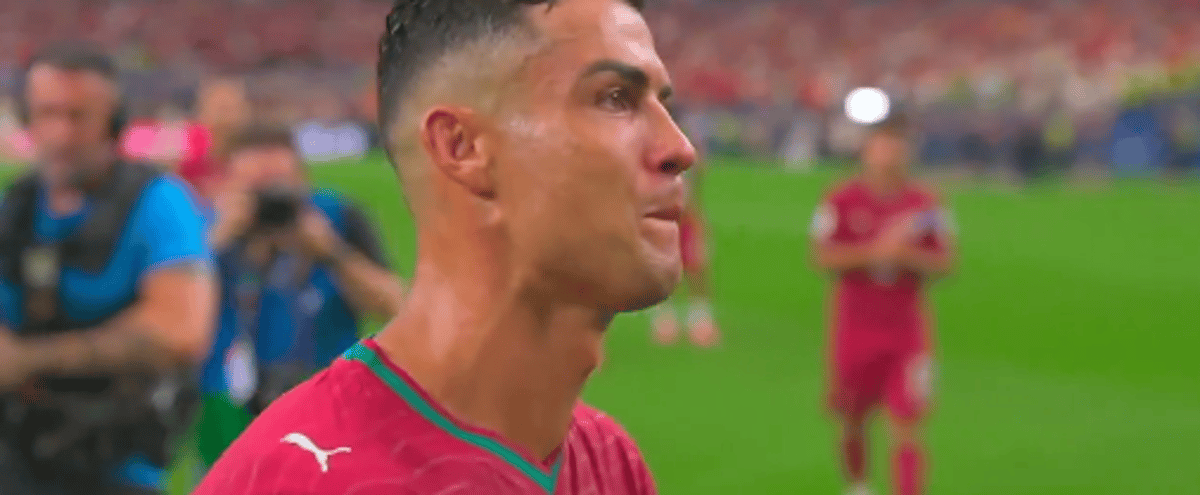
Portugal are out, beaten 1-0 by Spain in the round of 16 on a stoppage-time Mikel Merino winner, Ronaldo's tournament and international career now over by his own confirmation. The obvious storyline is elegiac: the oldest outfield player in the competition's history, still delivering moments of magic at 41, bows out with grace. The more uncomfortable storyline, the one that actually explains why Portugal are home while Spain are not, is tactical, and it was building in plain sight for weeks.
The pattern across four matches
Start with the opener against DR Congo. Portugal, among the pre-tournament favorites, could only draw 1-1. Ronaldo played the full match, took three shots, and finished with no goal and no assist. Pundits immediately began floating the idea that Martínez should drop him.
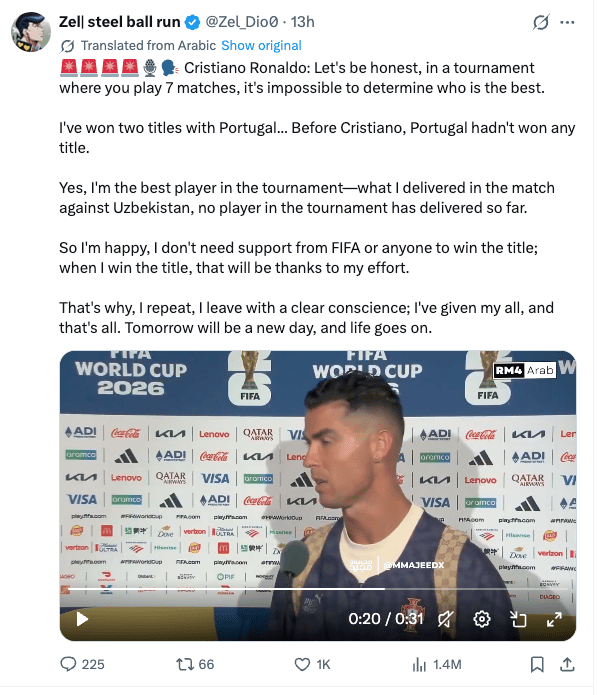
He didn't. Against Uzbekistan, Ronaldo justified the faith with a first-half brace in a 5-0 rout, becoming the first player to score in six different World Cups. It was a legitimate answer to his critics, but it came against a tournament debutant with a defense that had no business containing anybody. The eye test and the box score were both flattering that day in a way they wouldn't be again.
Then came Croatia in the round of 32, the match that actually decided whether this Portugal team had a tournament left in it. Ronaldo converted a penalty to level the score at 1-1, his first-ever World Cup knockout goal after eight scoreless knockout appearances stretching back to 2006. It's a genuine highlight of his career. But Martínez substituted him in the 81st minute with the game still level, visibly against Ronaldo's wishes, he shook his head and muttered before trudging off. Gonçalo Ramos came on, took over as the focal point, and headed in the stoppage-time winner. Portugal advanced not because of Ronaldo, but because Martínez removed him and Ramos delivered.
That sequence is the whole thesis in miniature: Ronaldo got Portugal level, then Portugal won it after he left the pitch.
What the underlying numbers say
The advanced data makes the pattern explicit rather than anecdotal. Ronaldo has yet to win a single take-on against a defender this tournament. He attempted between 19 and 25 passes per match, a modest number that reflects a deeper problem: his tendency, once documented by analysts covering the tournament, to drop deep into midfield to get touches when he goes more than a few minutes without the ball. That habit, understandable for a player whose legs no longer let him win the ball in behind, has the side effect of clogging exactly the zone Portugal's genuinely elite midfield trio, Vitinha, João Neves, and Bruno Fernandes, need to occupy to control matches against top-tier opposition.
Compare that to Ramos, who entered the Spain match averaging a goal contribution every 37 minutes at the World Cup, the best ratio of any Portuguese player with five or more involvements this tournament, against Ronaldo's rate of a contribution every 163 minutes. That is not a close comparison. It's the difference between a player operating at the peak of his sharpness and a legend managing the last embers of his.
Tactical analysts covering Martínez's setup over the past year have noted the same tension existed well before the tournament began. In Portugal's 2024-25 Nations League winning run, the side looked sharper and less dependent on Ronaldo, with Bernardo Silva playing centrally as a false nine and João Neves and Nuno Mendes given license to dictate play through the middle. Once the World Cup started, Martínez reverted to accommodating Ronaldo through the middle, and the same analysts flagged it directly: his pressing inadequacies pulled Portugal's shape out of the sharper, more controlled form they'd found the previous year.