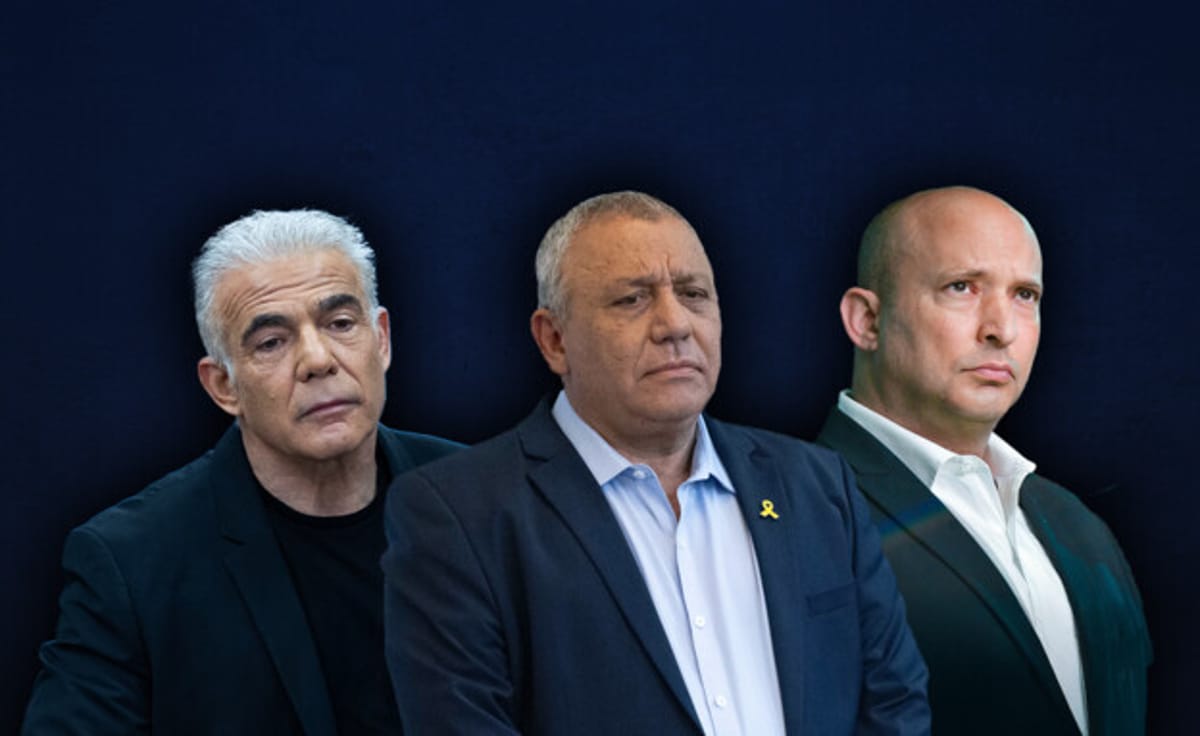
Former IDF Chief of Staff Gadi Eisenkot, leader of the Yashar party, has put forward a proposal to former prime ministers Naftali Bennett and Yair Lapid to form a single joint list for the upcoming 2026 elections, with the aim of creating a dominant center bloc to challenge Prime Minister Benjamin Netanyahu and his current coalition. The identity of the list's leader would be determined closer to the vote based on surveys and in-depth research, ensuring the candidate with the strongest chance of victory heads the ticket.
Eisenkot developed the idea through dozens of hours of discussions with Bennett and Lapid, presenting elements of a shared platform that would include core principles like establishing a state inquiry commission, education reform, and a new draft law. The joint list would run under one campaign banner while preserving the individual identities of Yashar, Bennett's Bennett 2026 party, and Lapid's Yesh Atid. One year after the elections, the parties would decide whether to fully merge into a single entity or maintain the current structure.
The vision is for a powerhouse list projected to secure 30 or even 40 mandates, surpassing Likud by a significant margin. Lieberman from the right and Golan from the left would endorse the shared guidelines and participate in opposition meetings, though not formally join the list. The goal is a comprehensive unification in one move to position the group as a true center party from the outset, with Eisenkot seen as the centrist anchor, Bennett to his right, and Lapid to his left.
Neither Bennett nor Lapid has publicly responded to the proposal yet. A source close to Eisenkot emphasized, "This is not a media spin. In the end, if the public wants one big and strong party in the center, this is the best solution." The insider added that the joint run allows each leader to keep their party intact while projecting unity and governing strength.
Notably absent from Eisenkot's plan is his former partner Benny Gantz, who recently launched his own campaign focused on a government without Ben-Gvir or Ra'am. Yoaz Hendel, chair of the reservists' party, commented on the potential merger. "In my view, what is happening in the center-left is less important to our matter. The point of decision in Israeli politics is to the right of the center. And I tell you from deep knowledge that right-wing people who look at this government and say it is a catastrophe, people from religious Zionism who oppose the draft evasion law, they will not vote for such a group. And therefore the reservists are so essential in the upcoming elections."
Recent polling from Channel 12 shows Bennett at 22 mandates, making his party the second largest after Likud's 26, with Lapid at 9 and Eisenkot at 8. In head-to-head matchups against Netanyahu for prime minister suitability, Bennett scored highest among the three, followed by Eisenkot and then Lapid. The proposal comes amid a fragmented opposition landscape, where uniting center forces could reshape the political map and provide a viable alternative to the current government. Eisenkot's military background and centrist appeal position him as a key bridge-builder in this effort to consolidate anti-Netanyahu votes.