The Prime Minister's Office issued a strong statement on Saturday rejecting the White House declaration on the composition of the Gaza management committee, describing it as neither coordinated with Israel nor aligned with its policies. The announcement came after the US revealed details of the executive body that will oversee the new technocratic Palestinian administration in Gaza, reconstruction efforts, and demilitarization under President Trump's broader 20-point plan to end the war.
According to the American statement, the committee includes Turkey's Foreign Minister Hakan Fidan, a senior Qatari official Ali Al-Thawadi, Egypt's intelligence chief Hassan Rashad, former British Prime Minister Tony Blair, American-Israeli-Cypriot billionaire businessman Yakir Gabay, former Bulgarian Foreign and Defense Minister Nikolay Mladenov, UAE's Reem Al-Hashemi, and UN representative Sigrid Kaag, among others. The body, defined as an executive council, will operate under the higher-level Peace Council chaired by Trump himself, with members including Secretary of State Marco Rubio, envoys Steve Witkoff and Jared Kushner, World Bank President Ajay Banga, billionaire Marc Rowan, and Robert Gabriel, deputy national security advisor.
The Peace Council holds overarching responsibility for major decisions such as international resource mobilization, inter-state coordination, and broad policy on Gaza's rebuilding and peace advancement. The management committee focuses on day-to-day implementation, service provision, civilian institution strengthening, and coordination with the local Palestinian National Committee for the Administration of Gaza, whose members, announced earlier in the week, are largely identified with Fatah and the Palestinian Authority.
Israel's objection centers primarily on the inclusion of Turkey, which Jerusalem views as ideologically and politically linked to Hamas terrorists and consistently hostile toward Israeli policy in the region. Officials made clear to American counterparts that Ankara cannot be considered a legitimate actor in post-war Gaza governance. The presence of Qatar, long accused of supporting Hamas terrorists financially and politically, also raises deep concerns in Jerusalem about continued influence from states seen as problematic.
The statement from the Prime Minister's Office read, "The announcement regarding the composition of the Gaza management committee, subordinate to the Peace Council, was not coordinated with Israel and contradicts its policy." It added, "The Prime Minister has instructed the Foreign Minister to address this matter with the US Secretary of State."
The move comes despite recent understandings with the Trump administration, including a two-month ultimatum given to Hamas terrorists to disarm and disband voluntarily, after which the IDF would act to enforce demilitarization. Trump reportedly stated, "They can do it the easy way or the hard way." Israeli security sources confirmed that the IDF is already preparing contingency plans should the deadline pass without compliance, noting that while Hamas has suffered heavy losses during the war, it retains significant governmental and military control in parts of Gaza, continues arming itself, and uses the interim period to rebuild capabilities and underground infrastructure.
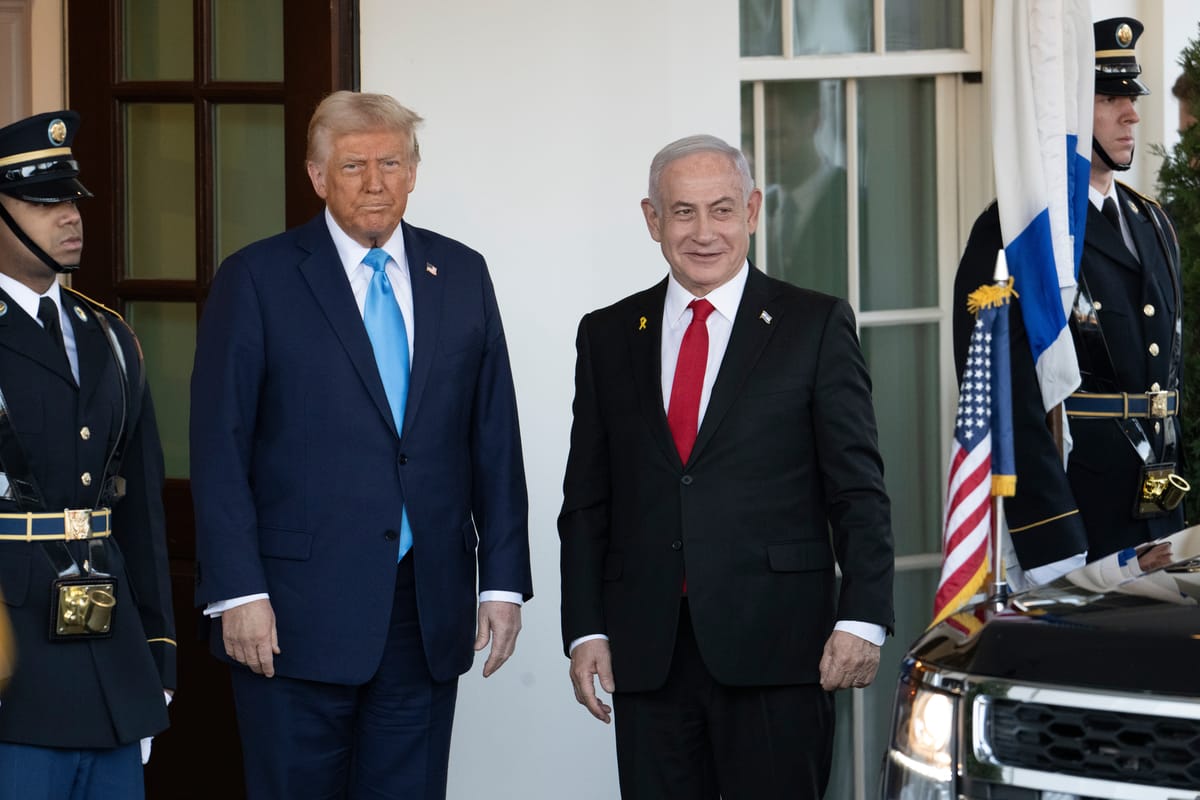
Jerusalem insists that prolonging the current transitional phase serves Hamas interests by allowing recovery time and operational continuity. Officials emphasize that the agreed timeline is fixed and non-negotiable, with civilian hardship in Gaza and lack of decisive resolution creating conditions favorable for the terrorist group to persist. The public rift highlights underlying strains in US-Israel coordination on the post-war vision for Gaza, even as both sides maintain close daily consultations. Netanyahu's decision to route the protest through Foreign Minister Gideon Sa'ar rather than directly confronting Trump personally appears aimed at preserving strategic ties while firmly registering opposition to specific elements of the plan.