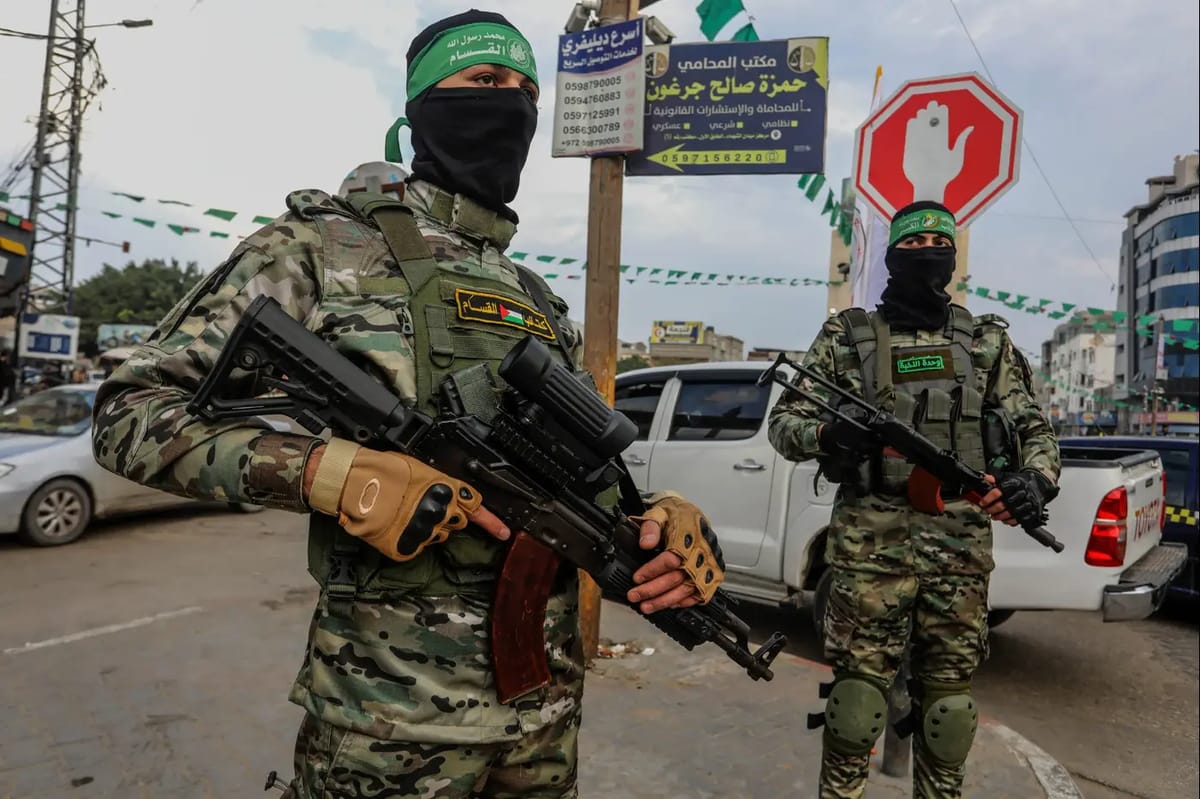
As talks are set to commence in Egypt tomorrow (Monday) between Israel, Hamas, and international mediators, Arabic media reports are detailing the terror organization’s expected high-stakes demands. A Hamas source told Al Arabiya that they have begun the process of collecting the bodies of dead Israeli hostages and requested a halt to bombings to complete the mission. According to the source, the release of living hostages would occur in a single phase, while the transfer of the bodies "will require some time."
The source claimed that the terror group has seen "American flexibility regarding the issue of handing over the dead hostages and has received American guarantees via Qatar regarding a permanent Israeli withdrawal." Furthermore, the source asserted that Hamas provided mediators with a list of both living and dead hostages to present to Israel, which the group claims knows the exact number being held. Hamas also reportedly received American guarantees that their leaders would not be targeted. The source stressed that the negotiation process would be "fast and intense," adding, "it is in our interest to carry it out quickly."
According to the Saudi channel Asharq, Hamas’s primary demands will include a complete ceasefire for the entire duration of the negotiations, a withdrawal of the Israeli military from Gaza City, and a return of Israeli forces to the positions they held during the previous hostage deal. The organization will also reportedly demand a suspension of air force sorties and drone flights for 10 hours daily, extending to 12 hours on days when hostages are released. These steps are expected to be demanded throughout the entire negotiation period, which may last a week or more.
Reports also indicate that Hamas intends to make the negotiations on the first phase of the deal contingent on simultaneous discussions for the subsequent phases, including issues like the governance of Gaza, security, weapons, border control, and reconstruction. This demand, however, is likely to be rejected by Israel.
Negotiating Team and Prisoner Criteria
Hamas’s negotiating team will reportedly be led by senior official Khalil al-Hayya and will be split into two working teams: one focused on the indirect talks with Israel for a hostage deal and the end of the war, and the other participating in inter-Palestinian meetings aimed at "unifying the ranks and ending the division."
In the talks over the release of Palestinian security prisoners, Hamas officials stated they would adhere to the principle of release based on seniority and age, meaning those arrested earliest and those who are oldest. Crucially, Hamas is expected to demand that Israel "relinquish its grip" on the list of prisoners for release, pushing for the inclusion of high-profile, long-serving terror leaders who Israel has previously opposed releasing, such as Marwan Barghouti, Ahmed Sa'adat, Ibrahim Hamed, Hassan Salameh, and Abbas al-Sayed. Hamas believes this may be the last opportunity to secure their freedom. Observers predict a crisis in the negotiations if Israel maintains its objections to releasing any of these named individuals.
In an unprecedented move for security, Egyptian intelligence, which is overseeing the talks, has reportedly implemented strict security measures around the Hamas delegation, including deploying reception jamming technology along the delegation’s routes and meeting locations in Cairo.
Meanwhile, in a parallel move, Egyptian sources told Al Arabiya that dozens of Egyptian heavy vehicles have begun entering areas north of Nuseirat in Gaza to establish the largest temporary displacement camps in the strip, part of an Egyptian plan for reconstruction aimed at stabilizing the population and preventing their displacement.