For the first time in recent memory, a parliamentary inquiry into police conduct has a realistic chance of passing, but the unlikely coalition backing it reveals deep tensions within Israel's government over how law enforcement is deployed against Haredi demonstrators.
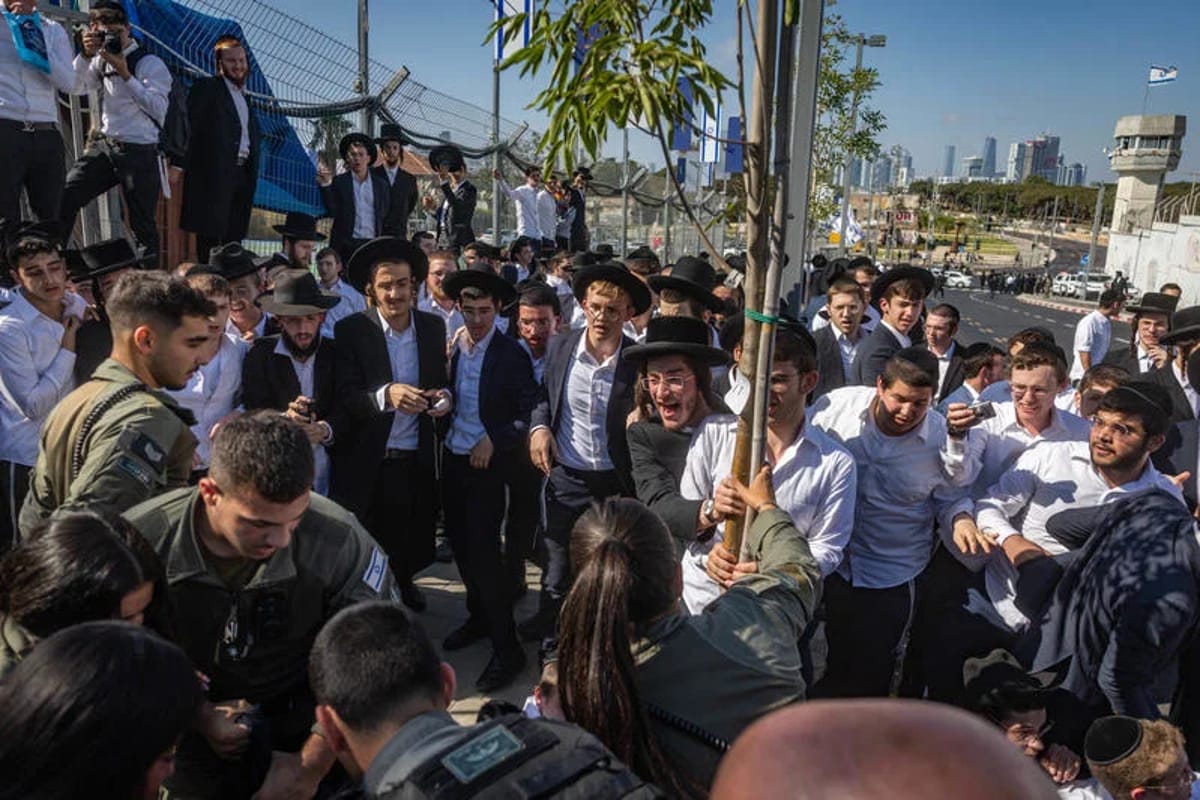
Uri Maklev, a United Torah Judaism lawmaker, has initiated the inquiry to examine police behavior during recent anti-draft protests, where documented incidents show officers using force that raised public alarm. The proposal is expected to come before the Knesset next week, and political analysts assess it could gain sufficient votes to advance, a scenario considered unusual for law enforcement oversight.
The unprecedented possibility stems from a convergence of interests: Haredi parties, whose constituents have borne the brunt of police operations, are demanding accountability. And opposition lawmakers, angered by National Security Minister Itamar Ben Gvir's broader approach to public order, see an opportunity to challenge the coalition.
The Documented Incidents
The inquiry was prompted by a series of confrontations in which police deployed what observers described as disproportionate force. In recent incidents in Bnei Brak and elsewhere, documented cases show officers using stun grenades contrary to established procedure and employing force tactics that prompted public outcry. Makhlev's proposal states that police have "crossed all red lines," describing the conduct as "severe brutality, unchecked and directed at civilians."
Haredi political leaders argue the enforcement has been selective. A report in Kikar Hashabbat found that police systematically violate standard procedures specifically during Haredi demonstrations, including the use of stun grenades and direct projectile deployment against protesters.
Coalition Pressure on Shas
The proposal puts Shas in a difficult position. The Sephardic Haredi party faces competing pressures: voting against the inquiry invites criticism from the Haredi street, where images and testimony from recent clashes have circulated widely. But supporting it could be read as joining a frontal challenge against Ben Gvir and the coalition.
"Ben Gvir is overstepping," Haredi party officials told Kikar Hashabbat. "He's playing like he's above the UN and simply doing nothing. There's no such thing as he can't do anything."
Shas has not indicated which way it will vote, and some analysts suggest the party may attempt to avoid taking a clear position.
The Inquiry's Scope
If passed, the committee would examine the chain of command leading to the incidents, the directives given to forces in the field, the enforcement policy applied toward the Haredi public, and oversight and supervisory mechanisms. The stated goal is to produce findings and recommendations for changing force deployment procedures during protests.
The dynamic reflects a broader strain in the coalition over public order and Ben Gvir's role. While the National Security Minister has pursued a hardline approach on multiple fronts, Haredi partners argue the police response to anti-draft protests has exceeded proportionality and singled out their community.
"This is a significant test for the coalition," political analysts say. "Unlike similar proposals that are routinely rejected by the coalition majority, this one could realistically advance."