
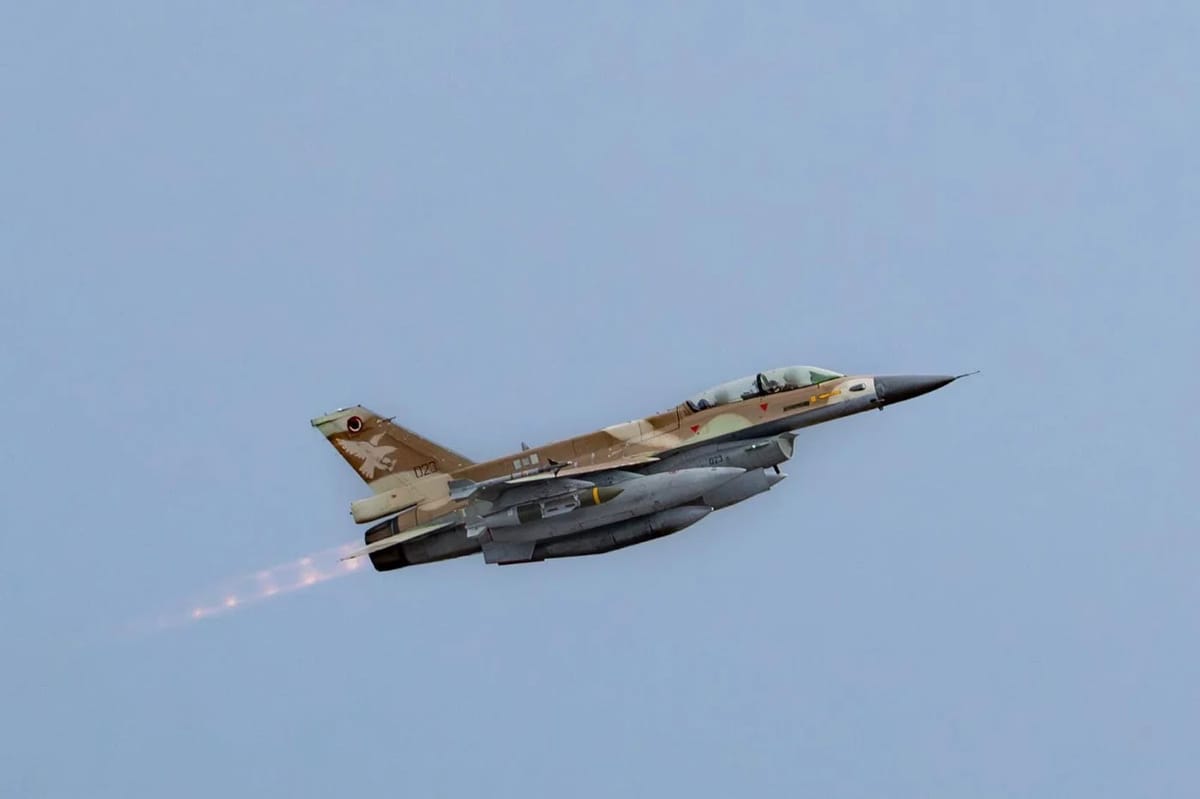
Israeli Air Force commander Maj. Gen. Omer Tischler has confirmed in a dramatic letter to his pilots and aircrew that a massive Israeli strike on hundreds of targets deep inside Iran was fully prepared and ready to launch last week --- and was called off just one hour before takeoff on orders from U.S. President Donald Trump.
"The entire Air Force was ready to take off for a broad strike sortie," Tischler wrote in a letter distributed to IAF personnel Tuesday. "Hours from the order to take off, hundreds of targets in the heart of Iran. The strike was stopped while we were being briefed in the squadrons, one hour before departure."
The revelation puts into stark relief the degree to which Washington has assumed effective veto power over Israeli military operations in the current conflict, and how close the region came to a dramatically escalated confrontation with Tehran.
According to reporting by Channel 12, Trump called Prime Minister Benjamin Netanyahu directly and instructed him to halt any further strikes so the United States could pursue a diplomatic agreement with Iran. Netanyahu agreed, standing down the operation while aircraft were already prepared on the runway, a move that reportedly caused "considerable confusion" within the IDF high command. Some Israeli officials characterized the conversation as one of mutual understanding between the two leaders; other sources described it more bluntly as a directive from the president.
The strike had been planned in response to Iran's missile attacks on Israel in the days prior. The IAF did carry out an earlier, more limited wave of strikes on June 8, hitting Iranian air defense systems and what Tischler described as "additional regime components." But the far larger follow-on operation, targeting hundreds of sites in the Iranian interior, never got off the ground.
"We struck hard at the Iranian leadership, at their offensive and defensive systems, at nuclear components, at the economy, at the chain of command and knowledge, at the military and national industry," Tischler wrote, describing the limited strikes that did take place.
He added a carefully worded note of watchful uncertainty about what comes next: "It is too early to know how global developments will affect the security reality."
The disclosure comes from a commander who took the helm of the IAF just six weeks ago, on May 5, when he replaced outgoing chief Maj. Gen. Tomer Bar. Tischler, 50, is an F-15I veteran who led the 2007 mission that destroyed Syria's secret nuclear reactor and commanded Nevatim Air Base, home to Israel's F-35 fleet. He assumed command as one of the most experienced operational minds in the Israeli military, and his letter makes clear he is not shying away from describing just how close the IAF came to executing a potentially war-defining strike.
The episode raises pointed questions about the limits of Israeli operational independence. Tischler's predecessor, Bar, said explicitly at his farewell ceremony last month: "We will not give up our ability to act independently." Tischler himself had vowed at that same ceremony to be "ready to take the entire Air Force eastward, if required."
That moment came. And it was stopped from Washington.