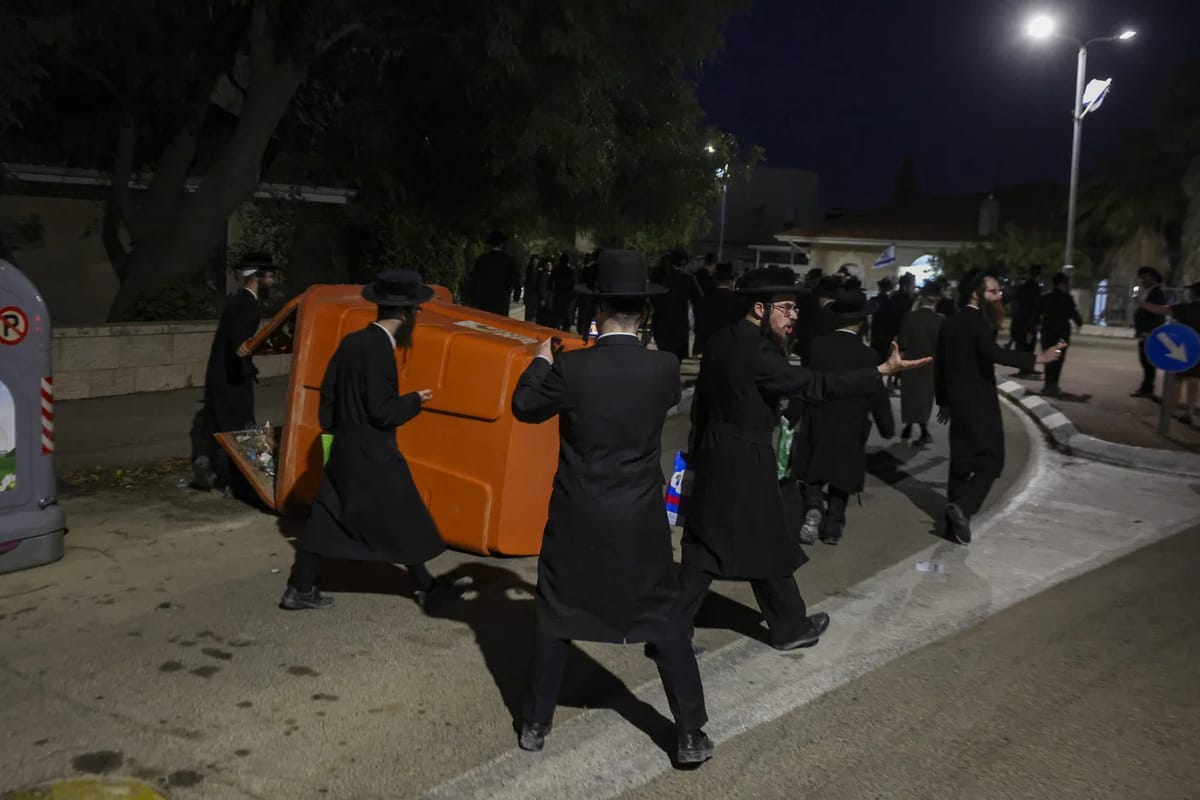
A wave of fear has spread through the judicial branch following a violent demonstration targeting the private residence of Supreme Court Deputy President Noam Sohlberg. Dozens of judges contacted their administrative directors to voice deep anxieties that these aggressive tactics will soon target their own homes and families, warned that such actions threaten to disrupt the administration of justice and compromise the independence of the courts. The magistrate himself remained inside his home following the incident, stating to close associates that he felt strengthened by the hundreds of supportive messages he received from across the political spectrum.
The assault was orchestrated by a radical faction known as Anshei Chail, an extremist group affiliated with the zealots of the Edah HaChareidit community. Members of this organization are required to sign a formal pledge committing to demonstrate at least once a week, often targeting state institutions. Investigations revealed that the group had been conducting counter-surveillance on the jurist for an extended period, visiting his neighborhood on at least two prior occasions to map out security cameras and plan an entry route while completely evading police detection.
The protest escalated rapidly as approximately 150 rioters swarmed the property, shouting slurs at arriving officers and causing significant property damage, including the vandalism of the magistrate's personal vehicle. Supreme Court President Yitzhak Amit issued a scathing letter to all judicial employees, calling the breach an unprecedented cross of a red line that was intentionally designed to destroy the sense of security of public officials. He emphasized that the violence occurred while the jurist's children and grandchildren were present in the house, making it an assault on the entire rule of law.
Law enforcement officials managed to restore order within eight minutes of their arrival, deploying special patrol units to arrest sixty-two suspects at the scene. Senior police sources reported that the detainees acted with the coordination of an organized crime syndicate, refusing to identify themselves, carrying fraudulent identification documents, and maintaining absolute silence during their interrogations. The group had apparently been pre-briefed on how to systematically disrupt law enforcement processing and delay court proceedings.
The legal fallout from the riot began moving through the Jerusalem Magistrate Court as judges evaluated extension requests for the large group of detainees. The court ordered forty-four of the suspects to remain in custody, including five minors, with detention extended until mid-June to allow the police to compile formal indictments. Meanwhile, nineteen other suspects were granted conditional release to house arrest, though police immediately secured a temporary stay of execution to appeal the release order and keep the individuals detained during further security reviews.