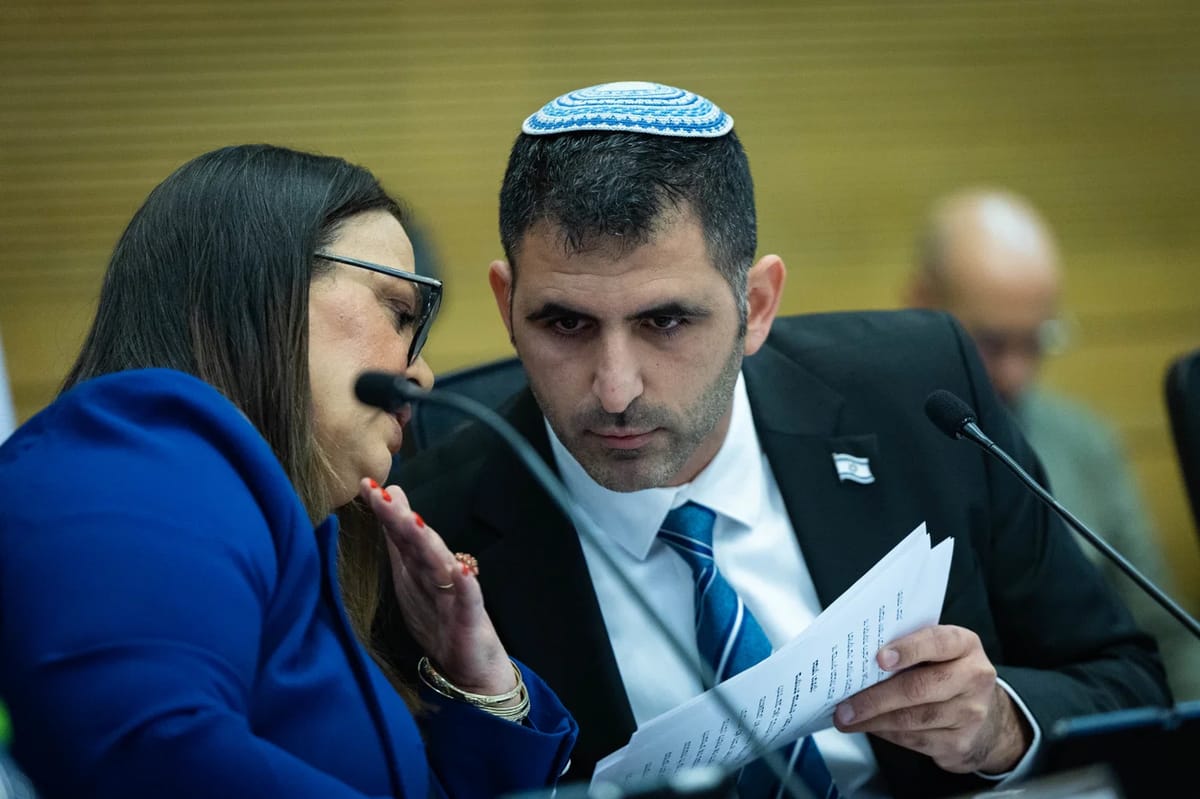
In a heated session of the Knesset Constitution, Law and Justice Committee, MK Avi Maoz sharply criticized a key change in Communications Minister Shlomo Karhi’s proposed broadcasting reform, warning that removing Section 70 could lead to the spread of “immoral content” and weaken protections in Israeli media law.
The controversial Section 70, which deals with restrictions on inappropriate content for licensed broadcasters, was removed from the bill as part of its legislative restructuring ahead of the first reading. Maoz argued that the decision represents a serious error that could have far-reaching consequences.
Speaking during the debate, Maoz said the removal of the clause would effectively eliminate safeguards against harmful material. “Section 70 states that a licensed provider must not distribute content that constitutes indecency,” he said, adding that splitting and weakening the provision was a “mistake” that Israel would ultimately regret.
Maoz expanded his criticism beyond the legislative change itself, warning that technological advancement without parallel moral development creates societal risk. “When we develop capabilities without developing morality alongside them, those capabilities turn against us,” he said, arguing that education systems are failing to instill ethical values alongside technical skills.
He added that unrestricted access to violent and explicit content online risks harming young audiences, claiming that society is “digging its own grave” by allowing such material to circulate freely.
Maoz said he plans to submit formal objections to the bill and seek to expand its scope, proposing that it include not only restrictions on explicit material but also on violent content.
The remarks come amid broader criticism from Haredi political factions regarding the overall communications reform, with concerns that it could introduce smartphones and unrestricted media access more widely into Haredi society and weaken Shabbat-related protections in broadcasting.
Further committee deliberations on the bill are expected in the coming weeks.