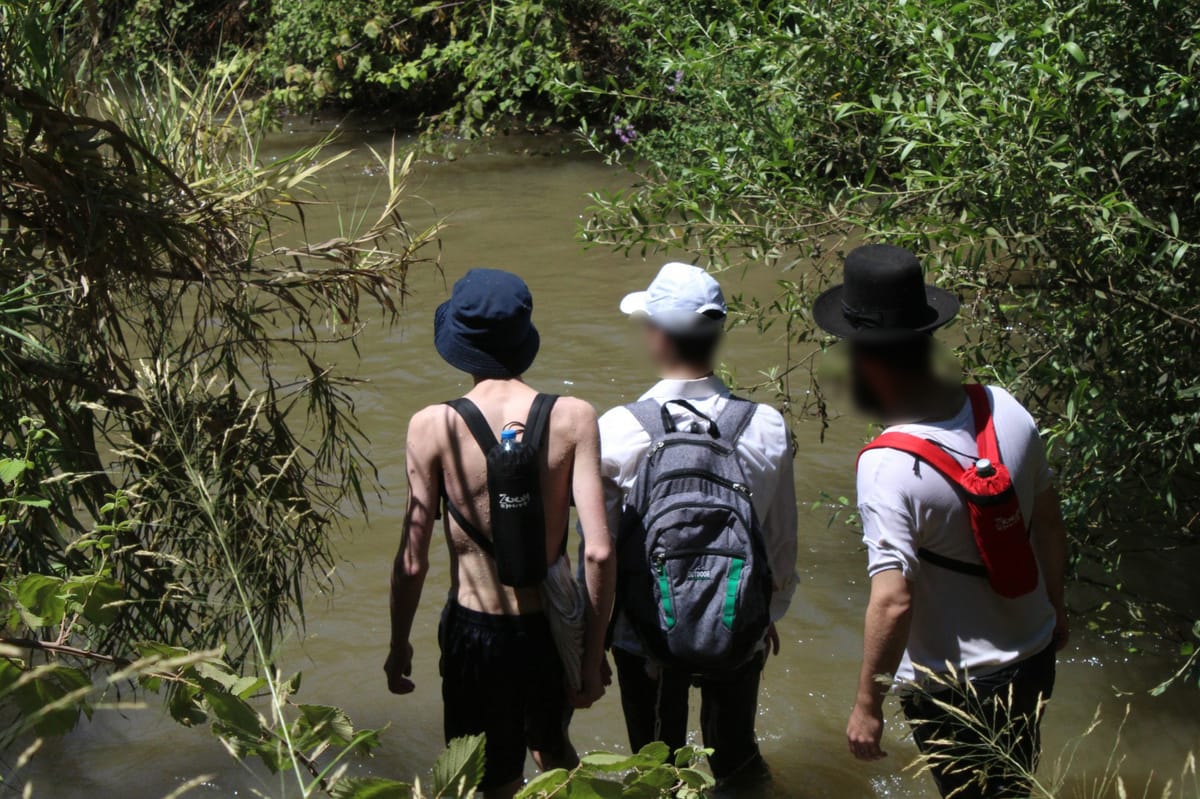
The Ministry of Health and the Environmental Protection Ministry have issued a public warning against entering nine streams and pools in northern Israel after water samples taken earlier this month showed dangerous levels of fecal contamination.
The warning comes just as bein hazmanim draws to a close, when many yeshiva bochurim head north to cool off in the region's well-known streams. Entry to the affected sites is now considered a health risk until further notice.
Water samples collected on October 4 and 5, 2026, showed bacterial levels exceeding the Health Ministry's safety threshold of 400 fecal coliform per 100 milliliters. The contamination indicates the presence of sewage or other waste in the water.
The test results by location:
Banias — Kfar Salad Bridge: 830. Hexbani — Roman Bridge: 800; Gan HaTzafon (hydroelectric station): 660; Meeting of Streams Promenade (Jordan River entrance): 570. Jordan River — Gesher Yosef: 1,100; Gesher Lahavot HaBashan: 2,000; Gesher HaHamisha: 1,000; Gesher HaPakak (Huri): 1,400; Metzad Ateret: 1,500; Gesher HaDodot: 1,100; Gesher Arik: 1,200. Hexagon Pool: 2,100. Gilbon: 1,900. Zaki: 1,050. Yehudiya: 500. Tzalmon — Haruv Pool: 1,040. Keziv — Ein Hardalit: 760.
The following sites are closed to the public until test results return to safe and stable levels:
Banias — Kfar Salad Bridge. Hexbani — from Roman Bridge to Meeting of Streams Promenade (Jordan River entrance). Jordan River — from Gesher Yosef to Gesher Arik. Hexagon Pool. Gilbon. Zaki. Yehudiya. Tzalmon — Haruv Pool. Keziv — Ein Hardalit.
The Environmental Protection Ministry has not identified a known source of contamination in the streams.
Under normal procedures, Nature and Parks Authority inspectors collect water samples once every two weeks at fixed monitoring points throughout northern streams in the Upper Galilee, Golan Heights and Western Galilee. Each sampling point represents a waterfall, pool or stream section.