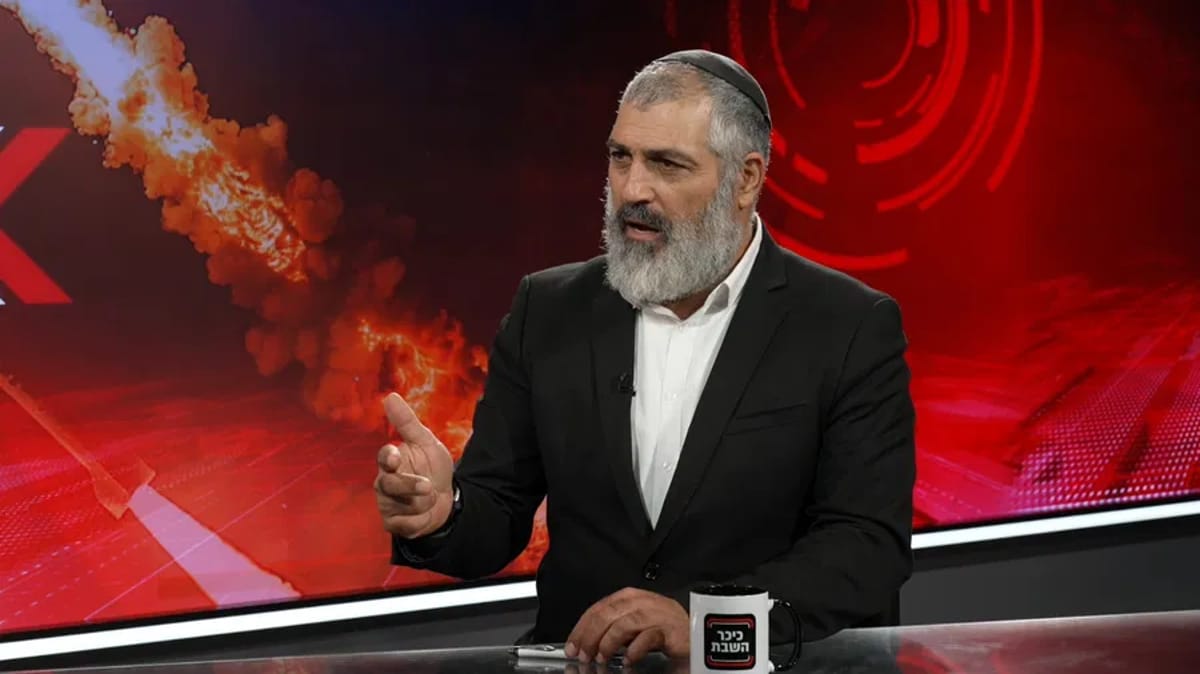
In the Middle East, silence is often the loudest noise. After a night of heightened alert with the U.S. Air Force seemingly one button press away from striking Iran, the world awoke to a morning of apparent de-escalation. Is this a genuine strategic shift by President Donald Trump, or merely the calm before the storm? Senior Arab affairs commentator Zvi Yehezkeli sorts through the developments in a special interview on Kikar FM with Eli Gotthelf.
It Could Always Be a Deception Tactic': Pressures Behind the Scenes
"It could always be a deception tactic," begins senior Arab affairs commentator Zvi Yehezkeli in his remarks on Kikar FM. "But we need to understand that behind the scenes, enormous forces are working to get Trump down from the tree." According to him, Iran, despite its back against the wall, is conducting a sophisticated pressure campaign through traditional mediators like Qatar and Saudi Arabia.
Yehezkeli reveals the Arab paradox: "Those who most wanted to see Iran collapse are suddenly afraid. They whisper to Trump: 'Back off, let's do a quiet regime change, remove Khamenei and bring in someone else.' Why? Because they fear the day after. If Trump attacks and the regime doesn't fall completely, the Iranians will retaliate against the Saudis and Qataris. In our neighborhood, everyone looks out for their own survival first."
Trump's Economic Model: Oil, Money, and Power
One of the intriguing points in the interview touches on the White House's true motives. Gotthelf presented a theory that an attack on Iran is part of a broader economic move to seize global energy reserves, alongside Venezuela and Greenland, to erase the U.S. debt to China.Yehezkeli confirms: "Trump sees the world as one big business. He has no moral or liberal considerations of 'human rights.' If Iran didn't have oil, he wouldn't bother with it. He wants to turn the U.S. into an exclusive energy superpower. If toppling the ayatollahs' regime serves the American economy—he'll do it brutally."
The Israeli Mistake: 'We Should Have Struck the Snake's Head'
Yehezkeli delivers sharp criticism of Israel's hesitation. In his view, Israel missed a historic opportunity at the start of the campaign (the 12-day war):Khamenei's immunity: "He was exposed. A decision was made not to eliminate him and that's a mistake. Today he's already hiding deep in bunkers, learning from what happened to Nasrallah and Sinwar."
Reliance on the U.S.: "Betting on Trump worked for us in the past (exiting the nuclear deal, recognizing the Golan), but if now he folds to a political solution, Israel will be left alone facing an existential threat. We shouldn't have waited for anyone."
The Day After: Who Will Fill the Vacuum?
When asked about the option of Reza Pahlavi, the son of the Shah, Yehezkeli sounds reserved. "Iran is a mosaic of groups, Kurds, Baloch, Azeris. They won't return to the monarchy they kicked out. Pahlavi could be a symbolic figure for transition, but the Iranian street wants real freedom. If there's no leader to unite everyone, we could slide into a bloody civil war like in Syria."
Yehezkeli warns against secret agreements (like rumors of a non-aggression pact between Israel and Iran): "Agreements tie Israel's hands. In our neighborhood, whoever seeks an agreement is seen as weak. We need to keep all options open."
Critical Weeks Ahead: 'Kings' Hearts Are in God's Hands'
The coming weeks, according to him, will be critical. Yehezkeli believes that ultimately "kings' hearts are in God's hands," and historical processes will lead to change, but he calls on the Israeli public to wake up: "Don't be worried, be glad we're opening our eyes. Whoever anticipates the remedy before the blow has the upper hand."