Yisrael Beiteinu, the secular nationalist party led by veteran politician Avigdor Liberman, is experiencing a notable shift in its political fortunes. After years of polling steadily around seven to eight Knesset seats (Israel's 120-seat parliament requires 61 seats to form a government), recent surveys show the party consolidating support around ten mandates. Communications strategist Moran Shmouelof attributes this uptick to the party's evolving appeal beyond its traditional base.
Israeli Politics
Liberman Expands Party With New Recruits
The veteran politician is drawing former Likud members, military officers, and civil society figures to his party as it rises in polls — but questions remain about his ultimate political strategy
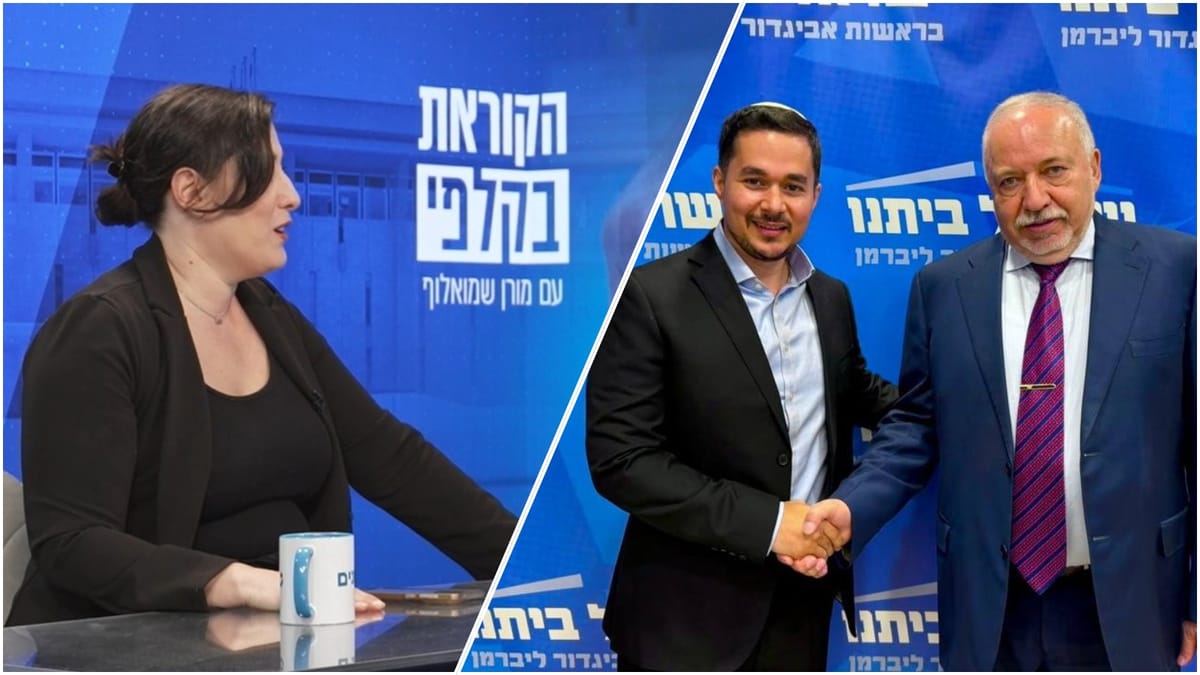

Liberman is actively working to broaden his party's demographic reach far beyond its historical core among immigrants from the former Soviet Union. Recent recruits include former Likud Knesset member Dan Illouz, retired Colonel Talia Lankri, Lily Ben Ami, Sharon Sharabi, and several other figures drawn from Prime Minister Benjamin Netanyahu's Likud party, the former Labor party, Israel's security establishment, and civil society organizations.
This growing list of newcomers creates both opportunity and challenge for Liberman. While the expanding roster projects momentum and attractiveness, it also raises practical questions: with a limited number of realistic Knesset seats available, not all recruits can secure viable positions on the party list. Liberman clarified today that he has not promised anyone a guaranteed spot and will not intervene in determining the list's composition this time around.
The campaign strategy is transparent: Liberman aims to reposition Yisrael Beiteinu from a sectoral party representing Russian-speaking immigrants into a broader secular, nationalist, security-focused, and anti-haredi (ultra-Orthodox) movement capable of attracting right-wing and centrist voters seeking an alternative to Netanyahu. Illouz's defection from Likud serves as a particularly symbolic marker of this attempted transformation.
Yet the party's growing strength sharpens a fundamental question: what will Liberman do with this political capital?
While Liberman presents himself as a candidate for prime minister, Yisrael Beiteinu alone cannot assemble a governing coalition. If he rules out partnering with Netanyahu and the haredi parties, he requires additional allies. This is where Yair Golan's Democrats party enters the picture, and recent comments by Yisrael Beiteinu's Yulia Malinovsky, identifying the Democrats as a potential partner, expose Liberman's dilemma.
On one hand, Liberman wants to attract right-wing and centrist voters. On the other, transforming from a strong party into one that actually forms a government requires keeping open the possibility of cooperation with parties positioned to his left.
This may be Yisrael Beiteinu's central question heading into the next elections: Is Liberman on a path to becoming prime minister himself, or is he positioning himself as the kingmaker who will determine who leads Israel's next government?
If Yisrael Beiteinu continues its upward trajectory, it could evolve from a party fighting for political survival into a "deciding party" --- one that neither major bloc can afford to ignore when coalition negotiations begin.
צילום: Srugim studio