
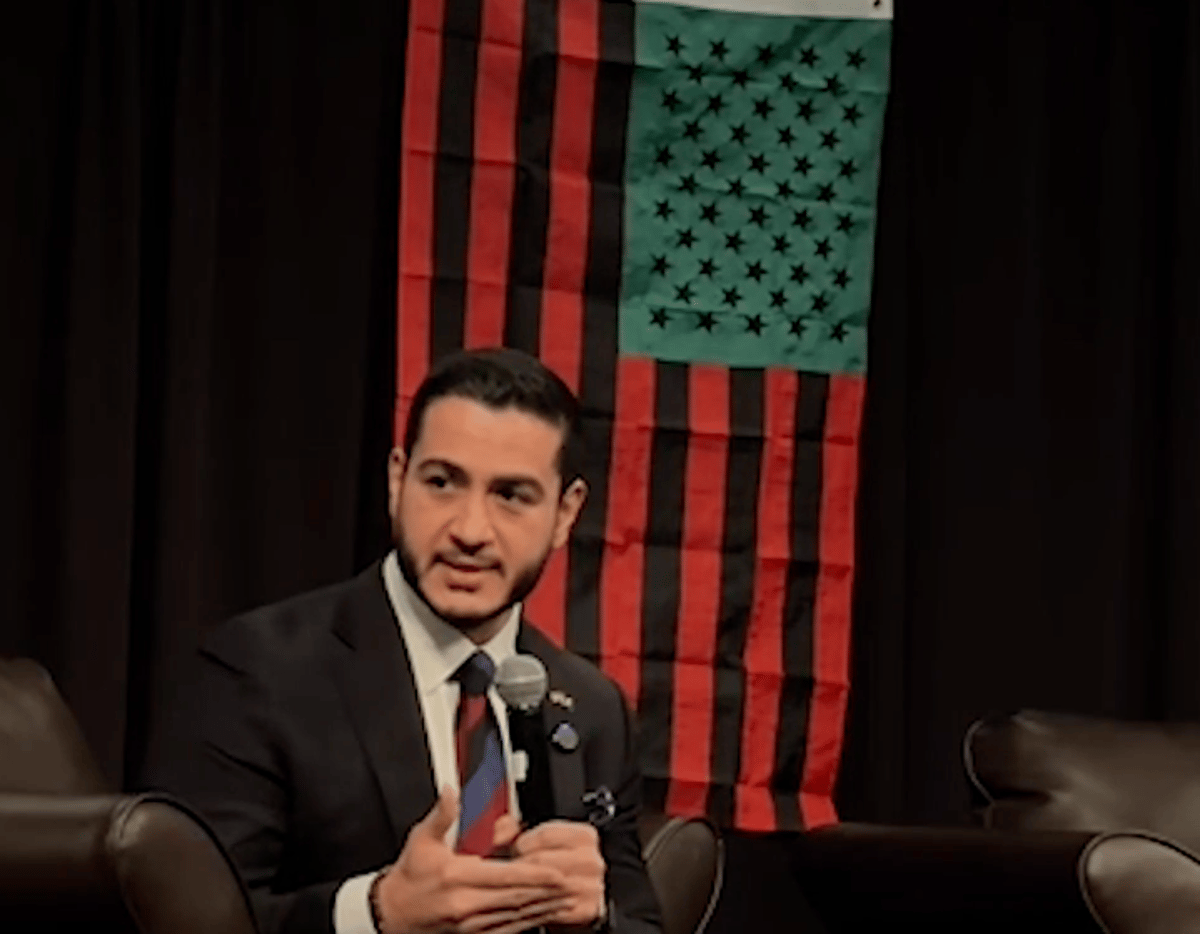
Michigan Democratic Senate nominee Abdul El-Sayed's documented history with flag protest is surfacing anew as an unverified social media accusation about a modified flag design circulates online,.
In his 2020 memoir, "Healing Politics: A Doctor's Journey Into the Heart of Our Political Epidemic," El-Sayed disclosed that as a college athlete in 2004 during the Iraq War, he refused to face the American flag during the national anthem as a form of protest. According to the Free Beacon, he wrote that he took to "showing my opposition to the war by choosing not to face the flag during the national anthem prior to our games."
He explained that while the gesture offended his teammates, he framed it as rooted in patriotism, writing, "I love America, but I love it enough to demand it to be better, and to believe it can be." His actions ran counter to U.S. Flag Code guidelines, which hold that persons present during the national anthem should face the flag and stand at attention with their right hand over the heart.
Now, a viral X post (by user @ginamilan_) accuses El-Sayed of displaying a modified American flag featuring black stripes and a green canton with black stars. The video-based claim has circulated widely on social media, with some commenters alleging it represents a "Black nationalist" reimagining of the U.S. flag. However, no mainstream reporting has confirmed that El-Sayed personally endorsed, ordered, or regularly displayed such a flag as a campaign or personal symbol.
The design being circulated matches a well-documented 1990 conceptual artwork by American artist David Hammons titled "African-American Flag" (also called "Untitled [African American Flag]"). According to Fairfield University's Walsh Gallery, Hammons reimagined the U.S. flag using the colors of the Pan-African flag, green, red, and black, colors that the Universal Negro Improvement Association established in the early 20th century to symbolize the struggles and unified identity of people of African ancestry.