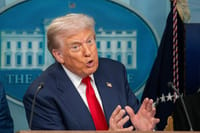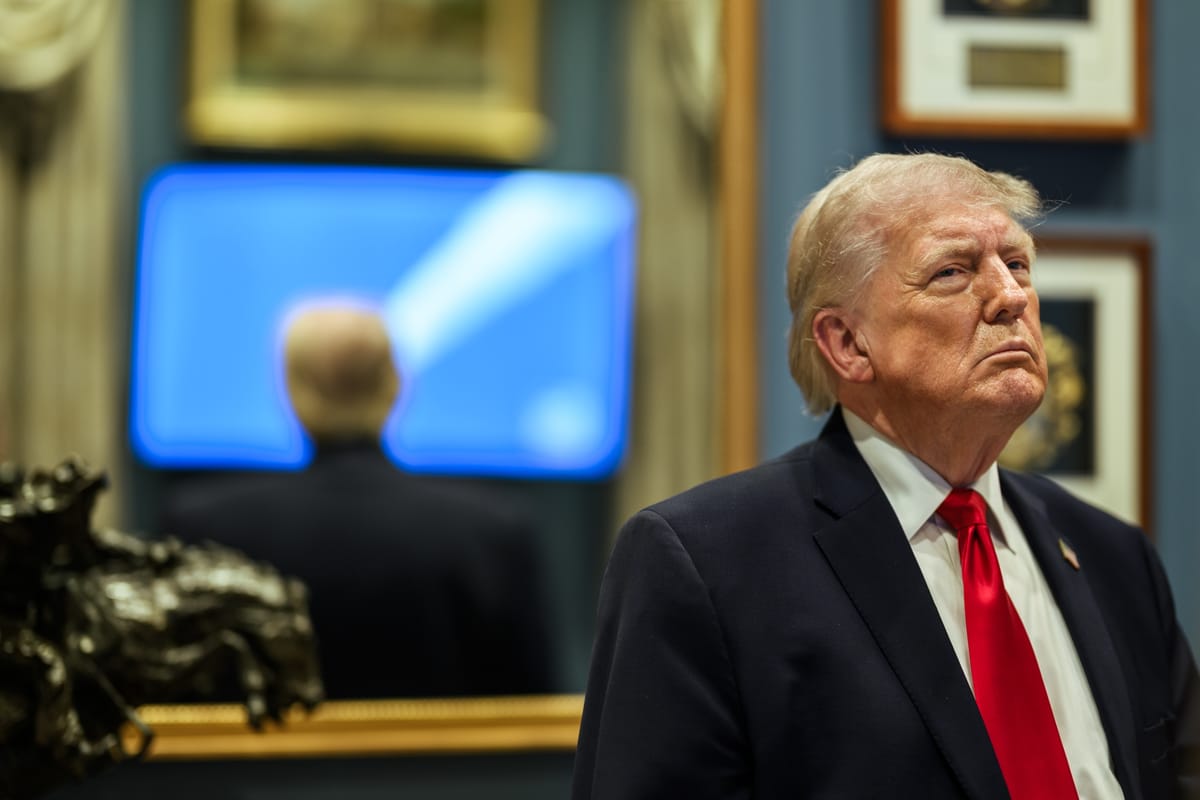
An extraordinary diplomatic intervention orchestrated by a coalition of regional heads of state successfully averted a catastrophic military clash between the United States and Iran at the absolute last minute. The behind the scenes drama was initially ignited by a highly aggressive social media publication from President Donald Trump, who announced to global allies that the American military was prepared to strike the Islamic Republic exceptionally hard that evening. The immediate threat of an unmitigated aerial assault sparked widespread panic across foreign capitals, fearing an uncontrollable regional war.
According to a detailed intelligence review published by Politico, three high ranking international figures possessing deep ties to both Washington and Tehran chose to coordinate an immediate intervention. Within a tiny window of just a few hours, the White House was inundated with urgent, high priority telephone communications from the Amir of Qatar Tamim bin Hamad Al Thani, the President of the United Arab Emirates Mohamed bin Zayed Al Nahyan, and the Pakistani Chief of Army Staff General Asim Munir. These specific leaders possess substantial economic and political leverage over the supreme leadership council in Tehran.
The international intermediaries provided Trump with an ironclad, formal guarantee that an initial framework agreement capable of guiding both nations into comprehensive negotiations was already finalized on the table. This specific diplomatic breakthrough was sufficient to convince the president to issue an immediate freeze to the Pentagon's prepared strike packages. Trump subsequently broadcasted an optimistic update to global markets, declaring that a formal pact could be legally executed before the end of the upcoming weekend.
However, the immense enthusiasm displayed by the executive branch in Washington was met with a highly guarded response from internal actors within the Islamic Republic. The spokesperson for the Iranian Foreign Ministry, Esmaeil Baghaei, clarified through state media channels that the regime has not yet formulated any final, definitive conclusions regarding the draft text. Baghaei emphasized that his country will never compromise on its core national red lines under any level of external military intimidation.
The long term viability of the proposed truce faces significant internal complications due to the deteriorating physical condition of the Supreme Leader of Iran, Mojtaba Khamenei. High level American intelligence sources exposed that Khamenei sustained severe, debilitating wounds during the opening days of the military campaign and has since been confined to a highly protected, reinforced underground bunker complex. Out of extreme fear of targeted drone strikes, the supreme leader remains completely disconnected from all digital communication networks, severely delaying the state's capacity to evaluate incoming mediation proposals.
Furthermore, Western diplomats point out that the ultimate success of the treaty depends heavily on which specific internal faction signs the document, as hardline elements within the Islamic Revolutionary Guard Corps are actively attempting to sabotage the diplomatic track. The current framework remains strictly limited in scope and deliberately avoids addressing the complex nuclear crisis. Secretary of State Marco Rubio confirmed during a congressional briefing that reopening the strategic Strait of Hormuz to international maritime traffic represents a preliminary phase, while the highly rigid negotiations over uranium enrichment will be deferred to a later, more intensive stage of diplomacy.
To incentivize the cash strapped regime to accept the initial parameters, international negotiators are discussing a mechanism to grant controlled access to frozen Iranian financial assets valued at over 16 billion dollars, currently held inside Qatari banking systems. These massive funds were completely blockaded by the United States in 2023 following the outbreak of hostilities in Gaza. Financial experts are currently engineering specialized humanitarian exceptions that will restrict Tehran to utilizing the capital exclusively for medical supplies and agricultural imports without violating the broader international sanctions regime.