It took over a century. It took the collapse of a strategic alliance, a Turkish president who compared Netanyahu to Hitler, an Istanbul court indicting Israeli officials, and a war that reshaped the Middle East. But on Sunday, the Israeli government voted unanimously to officially recognize the Armenian Genocide — and history, however belatedly, moved.
The Israeli government unanimously approved a proposal to officially recognize the Armenian genocide, with Foreign Minister Gideon Sa'ar declaring: "It is never too late to do the right thing."
"This horrifying genocide, which took place more than 100 years ago and about whose historical facts there is truly no dispute, involved the murder of one and a half million people and the destruction of an ancient cultural and historical heritage," Sa'ar said. "In my view, it is our moral duty as Jews — and certainly as the state of the Jewish people — to make the decision we made today."
Netanyahu, who last year became the first Israeli prime minister to personally state that he recognized the genocide, backed the resolution fully. Asked whether he had any concern about Turkey's reaction, Netanyahu said he had never made any effort to block this or past proposals, and stated simply: "I certainly support it."
The vote makes Israel the 35th country to formally recognize the genocide — joining the United States, Germany, France, Canada, and others who made the same determination years or decades earlier.
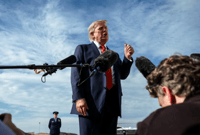
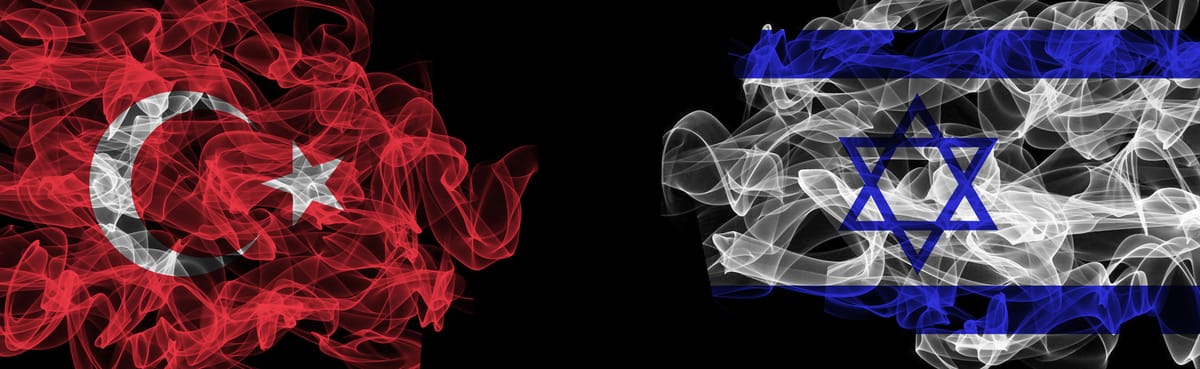
The timing is impossible to separate from geopolitics. The move comes as Washington weighs a possible F-35 sale to Turkey and a day after Trump praised Erdogan, so Israel is moving toward recognition at precisely the moment the U.S. is warming toward Ankara. Erdogan has spent years comparing Netanyahu to Adolf Hitler, backing South Africa's genocide case against Israel at the International Court of Justice, and severing economic ties with the Jewish state. An Istanbul prosecutor has sought thousands of years in prison for Netanyahu and dozens of other Israeli officials over last year's interception of a Turkish flotilla.
But the history underneath this moment runs deeper than any of that.
For decades, Israel didn't just avoid recognizing the Armenian Genocide, it actively helped Turkey suppress international recognition of it. Declassified Israeli and American archives, examined in a recent academic study, show that in the 1980s Israel systematically worked to block genocide recognition efforts in exchange for access to Turkish intelligence, airspace, and NATO connectivity. In 2001, then-Foreign Minister Shimon Peres told a Turkish newspaper that the Armenian massacres were "a tragedy" but "not a genocide" --- a statement scholars have described as crossing into active denial.
What Turkey wanted, Israel gave. What the Armenians deserved, Israel withheld.
Sunday's vote doesn't erase the decades of diplomatic silence. But it closes that chapter definitively, and on the right terms. The words Sa'ar chose, "our moral duty as Jews, and certainly as the state of the Jewish people," are exactly right. No nation on earth understands more viscerally what it means for a genocide to go unrecognized, unnamed, officially denied for the convenience of others. That understanding is written into the Jewish people's bones. And Israel, the state born from that catastrophe, has now used that understanding to do right by another people who suffered the same fate.
That is not weakness. That is what Jewish sovereignty is supposed to look like.