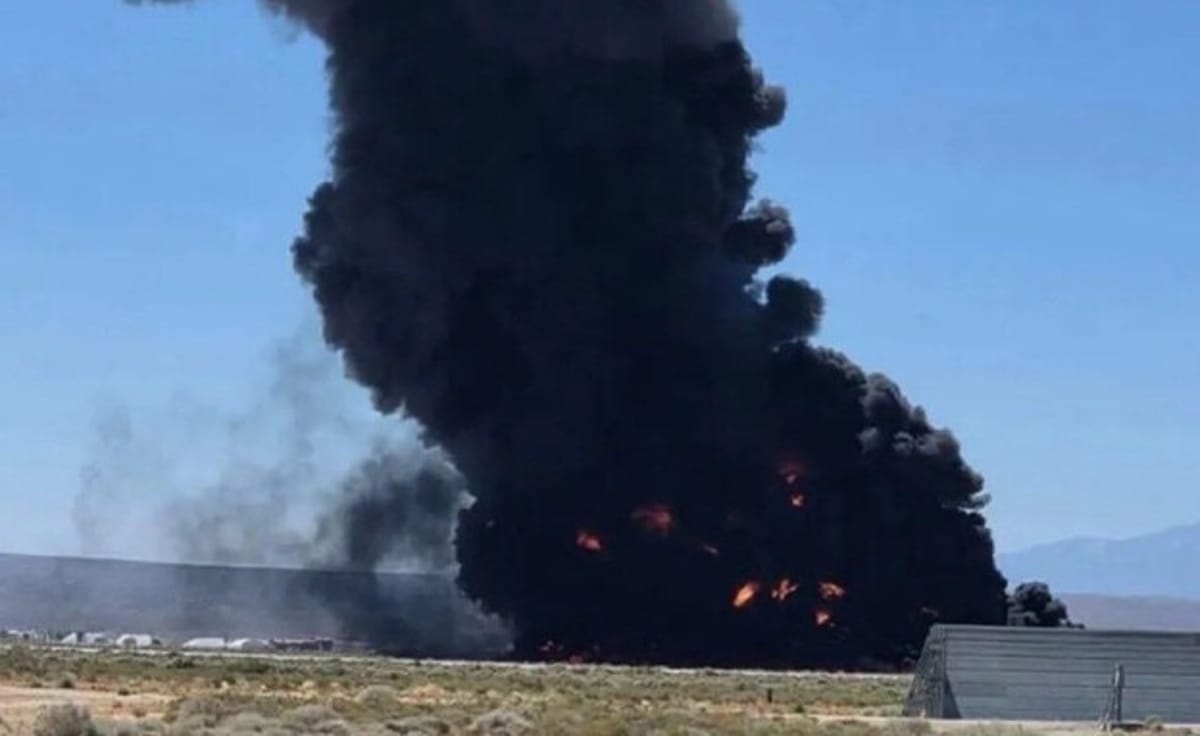
The United States military's global power projection apparatus faced a severe domestic aviation disaster on Monday morning when a legendary B52 heavy bomber suffered a catastrophic failure during liftoff. The massive aircraft, renowned for decades as a corner stone of the American nuclear deterrent triad, plunged back to earth immediately after attempting to depart from a major military installation located north of Los Angeles. The incident triggered an immediate, high level emergency response across the region, with local base administrators rapidly moving to secure the expansive perimeter as defensive planners scrambled to evaluate the broader operational impact on domestic fleet readiness.
The severe aviation mishap occurred precisely at 11:20 in the morning at Edwards Air Force Base, which is situated deep within the Mojave Desert region of southeastern California, northeast of metropolitan Los Angeles. Base officials utilized authenticated social media channels to confirm the unfolding tactical emergency, notifying the public that a B52 military aircraft had crashed shortly after takeoff. Executive administrators released an immediate update clarifying that emergency response teams arrived immediately at the location, the management of the incident is ongoing, as specialized fire and rescue crews worked to suppress the raging flames.
Initial journalistic dispatches broadcast by major global networks, including CNN, indicated that the precise status of the flight crew remained entirely uncertain during the opening hours of the containment operation, with officials refusing to clarify whether the crash resulted in immediate military casualties. Thick, billowing columns of dark smoke were visible for miles across the arid desert basin, confirming the violent nature of the impact and drawing intense focus toward the flight line. The base maintains a highly sensitive role in testing advanced aeronautical systems, making the loss of such a prominent strategic asset a highly sensitive matter for Pentagon planners.
The single aircraft model involved in the disaster possesses immense historical and operational weight within modern global diplomacy, having been introduced into service in 1952 as a dedicated doomsday bomber designed to execute unrefueled intercontinental nuclear strikes against the Soviet Union. Over the subsequent seven decades, the airframes have undergone systematic, multi billion dollar upgrades to continually integrate advanced precision weaponry, electronic warfare counter measures, and heavy conventional munitions. The giant platforms are engineered to haul an astonishing payload exceeding thirty tons of ordnance, including specialized bunker buster bombs designed to shatter subterranean command networks up to 2500 kilometers away.
Throughout its lengthy operational history, the heavy fleet has served as Washington's primary tool for blunt force intimidation, playing a central role in devastating carpet bombing campaigns such as Operation Linebacker Two during the Vietnam War, where these aircraft dropped over 15000 tons of explosives. In the 1990s, the platforms systematically pulverized underground bunkers across the Iraqi theater, and they were later deployed to neutralize entrenched positions during regional anti terrorism campaigns against ISIS. In recent years, the Pentagon has repeatedly utilized forward deployments of these massive strategic assets to Europe and the Middle East as a potent, visible warning to deter aggressive maneuvers by international adversaries, including Iran and Russia.