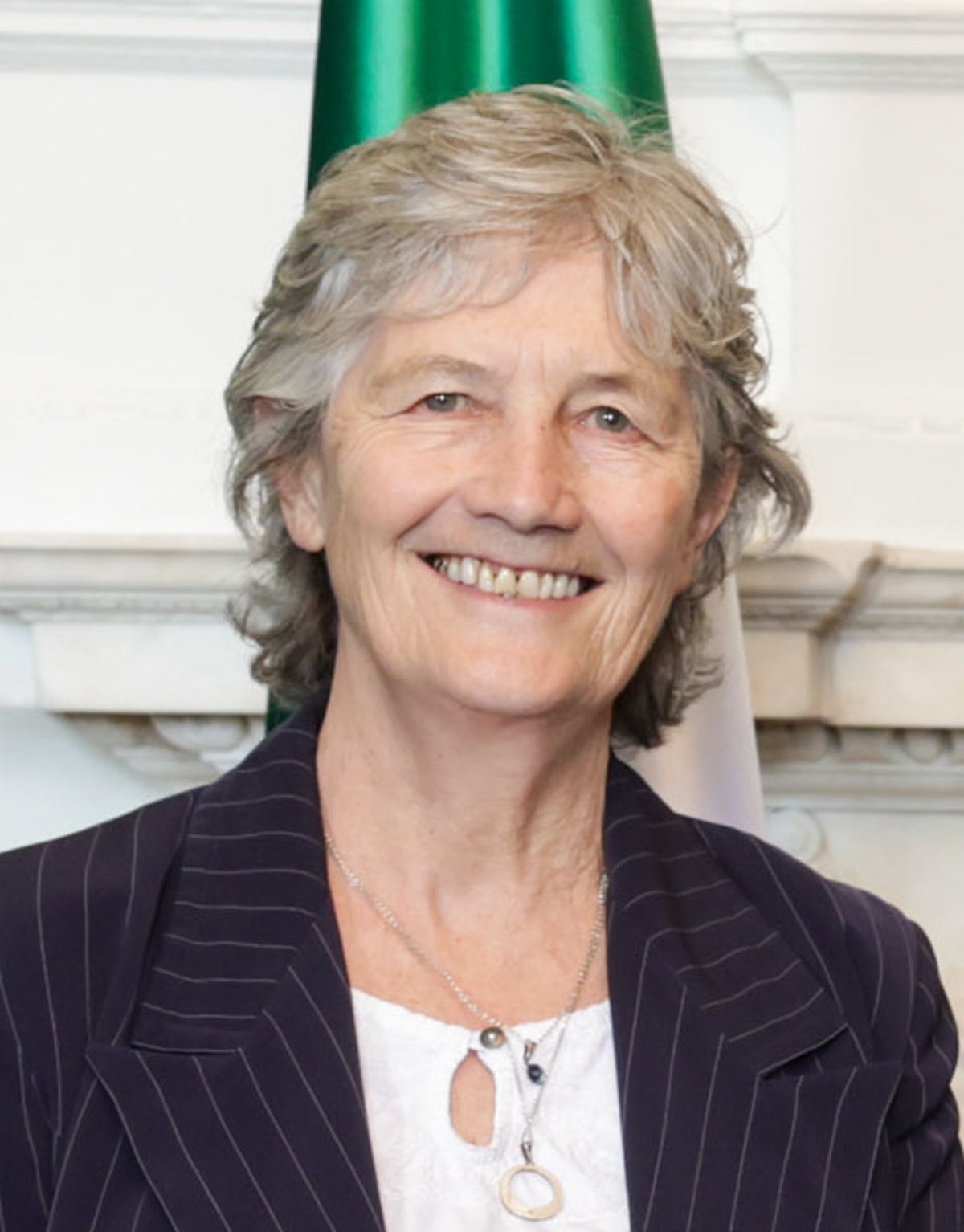
Catherine Connolly, a 68-year-old independent left-wing politician, made history on October 24, 2025, by winning Ireland's presidential election in a landslide, securing a record 63% of first-preference votes.
The victory, which saw her defeat Fine Gael's Heather Humphreys (who garnered about 29.5%), marked a stunning upset for Ireland's political establishment and highlighted a shift toward progressive, anti-consensus voices amid low voter turnout and a high number of spoiled ballots.
Born Catherine Martina Ann Connolly on July 12, 1957, in Shantalla, Galway, she grew up in a large family of 14, an experience that shaped her commitment to community and welfare.
Trained as a barrister, Connolly has long been an advocate for social justice, focusing on issues like housing, healthcare, and equality throughout her career.
Her entry into politics began in 1999 when she was elected as a Labour Party councillor for Galway City Council, where she served until 2016.
A highlight of her local tenure was her appointment as Mayor of Galway in 2004, during which she championed progressive policies.
In 2016, she transitioned to national politics, winning a seat as an independent Teachta Dála (TD) for Galway West in Dáil Éireann, a position she held until her presidential bid.
Throughout her time in the Dáil, Connolly was known for her outspoken criticism of government policies, often aligning with left-wing causes while maintaining her independence.
Connolly's presidential campaign emphasized her role as an "independent voice for peace and defending the welfare of the people."
She positioned herself as unafraid to challenge the status quo, stating that Ireland needed a president "not afraid to stand against the consensus." Backed by major left-wing parties, including Sinn Féin, which chose not to field its own candidate, her platform resonated with voters disillusioned by traditional center-right dominance from Fine Gael and Fianna Fáil. In her acceptance speech, delivered first in Irish, she pledged to be a "president for all," focusing on unity and social progress.
A key aspect of Connolly's profile is her strong stance on international issues, particularly Ireland's foreign policy. She has been a vocal critic of EU rearmament, military aid to Ukraine, NATO policies, and U.S. foreign interventions.
Much like her predecessor Michael Higgins, she is both intensely pro-Palestinian and pro Hamas - she has described Hamas as "part of the fabric of the Palestinian people" in discussions on peace processes and accused Israel of behaving like a "terrorist state." Many have labeled her views as extreme, with some expressing concerns about Ireland's international relations under her influence.
Domestically, Connolly is a staunch advocate for Irish reunification, describing partition as feeling like "losing a limb." She has announced that her first official visit as president will be to Northern Ireland, a move that could advance discussions on a border poll and cross-border relations.
While the Irish presidency is largely ceremonial, with limited executive powers, it serves as a moral and symbolic authority, allowing Connolly to influence debates on equality, sustainability, and progress, values she shares with her endorsing parties like the Social Democrats.
International reactions have been mixed, with congratulations from figures like French representatives and UAE leaders, while others watch closely for shifts in Ireland's neutral stance.
For Ireland, Connolly's win represents not just a change in leadership but a reflection of evolving voter priorities in a post-Brexit, globally turbulent world.