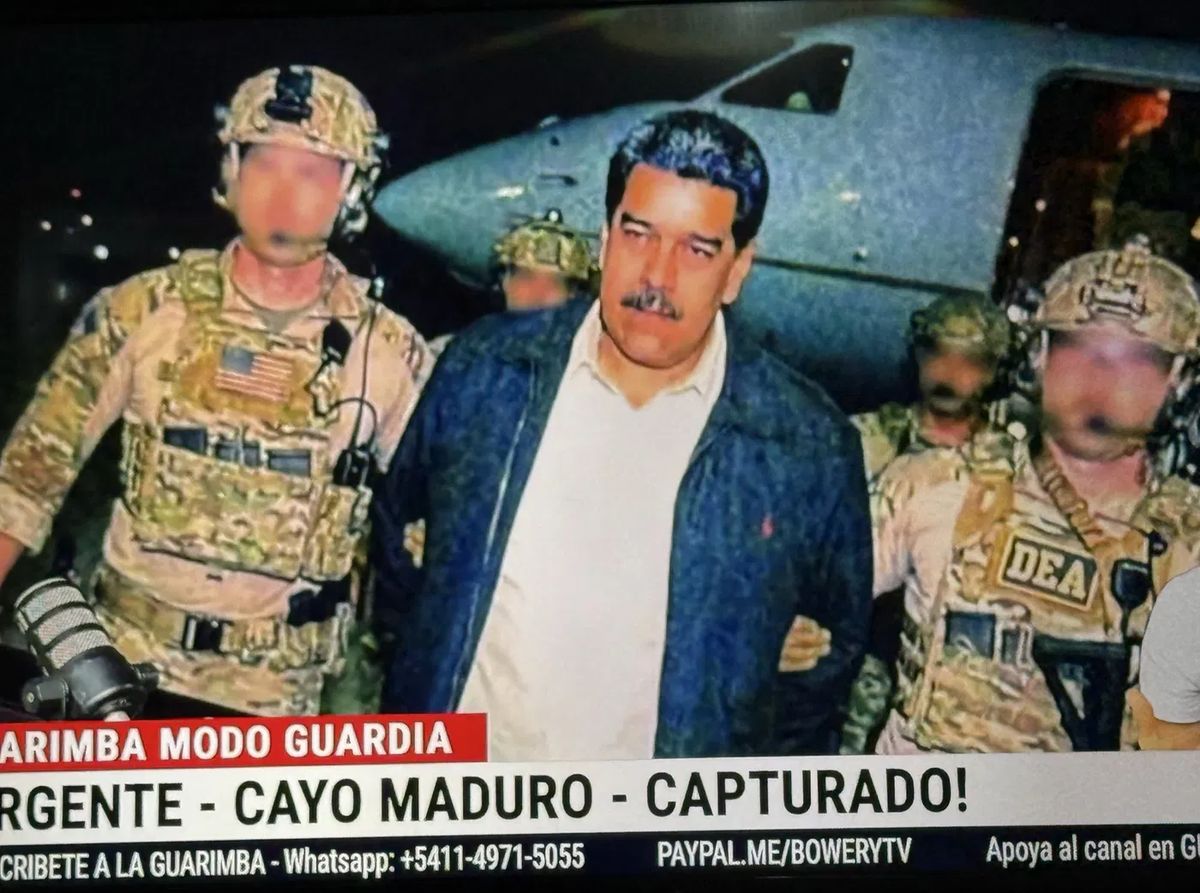
The US operation that led to the capture of Venezuelan President Nicolás Maduro was the culmination of months of intelligence collection, rehearsal, and force positioning, according to senior American military and intelligence officials.
US intelligence agencies had been tracking Maduro’s daily routines through a combination of signals intelligence, aerial surveillance, and at least one human source with access to Venezuela’s senior leadership. Officials said analysts compiled detailed profiles of Maduro’s movements, residences, security rotations, and emergency evacuation procedures. Surveillance reportedly extended to auxiliary details, including secondary safe houses and internal compound layouts.
Planning for the operation accelerated in late November, when elite US units constructed a full-scale replica of Maduro’s primary Caracas safe house at a secure training facility. Assault teams rehearsed multiple breach scenarios, including reinforced steel doors and interior safe rooms, using live explosives and mechanical cutting tools. Weather, visibility, and cloud cover were factored heavily into launch timing.
In the hours before execution, US forces initiated the air phase of the operation. More than 150 aircraft were involved over the course of the night, including strike fighters, bombers, electronic warfare platforms, and drones. Initial strikes focused on degrading Venezuelan air defenses and command-and-control nodes around Caracas, including La Carlota Air Base, Fuerte Tiuna, and coastal access points near Port of La Guaira.
US officials said the strikes were designed less to destroy infrastructure than to create confusion, suppress response times, and temporarily blind Venezuelan forces. Power outages across much of Caracas were attributed to cyber and electronic warfare measures conducted just ahead of the ground assault.
Ground forces, including members of Delta Force, entered the city under cover of darkness by helicopter shortly after the first strikes. One helicopter sustained damage from ground fire but remained airborne. The assault team carried specialized breaching equipment, including blowtorches, anticipating hardened doors within the compound.
Upon arrival, US troops encountered resistance from security personnel. According to US military officials, Maduro attempted to reach a secure interior room but was intercepted before entry. The compound was secured room by room in minutes. Maduro and his wife, Cilia Flores, were restrained and extracted by helicopter before dawn.
Throughout the operation, President Donald Trump monitored a live feed from Florida alongside senior officials, including CIA Director John Ratcliffe and Secretary of State Marco Rubio. Congress was notified only after the operation was underway, a decision the administration defended as necessary to prevent leaks.
US officials said the mission was deliberately time-limited, prioritizing extraction over prolonged engagement. By roughly 04:20 local time, helicopters carrying Maduro and Flores had exited Venezuelan airspace.
The administration has not disclosed contingency plans had the operation failed, nor whether additional targets were considered but ultimately excluded.