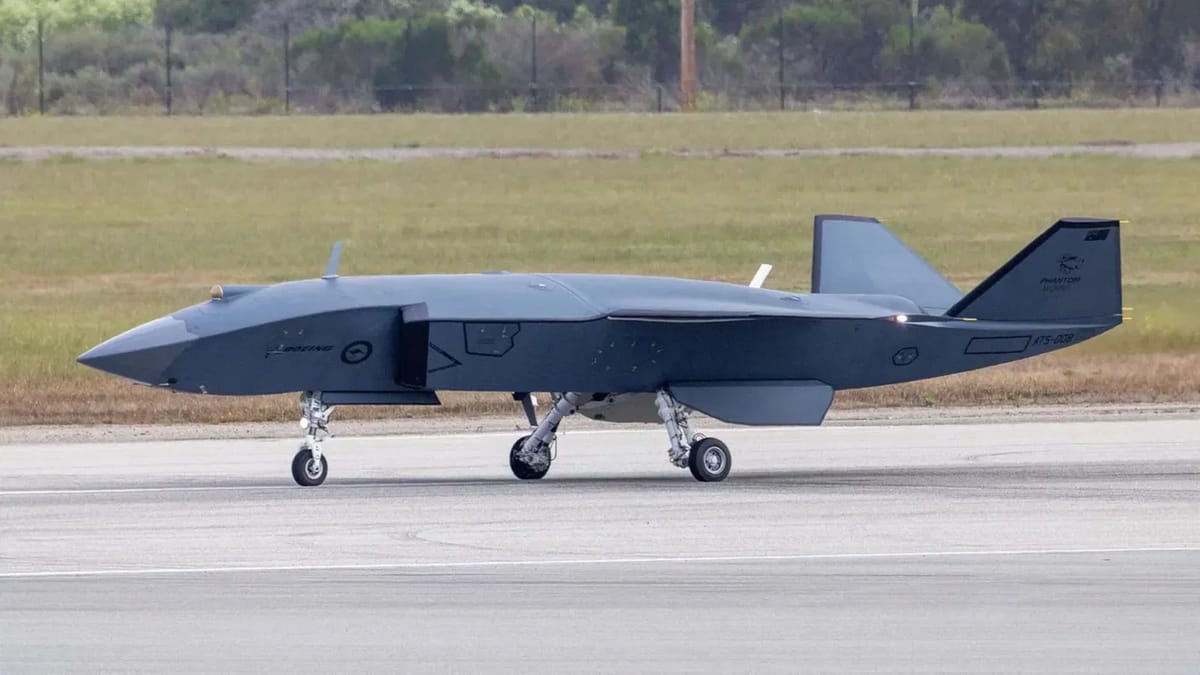
A major aerospace manufacturer has officially commenced a sophisticated series of operational test flights featuring its highly advanced MQ-28 Ghost Bat autonomous combat aircraft over the open waters of the Pacific Ocean. Operating directly from the Point Mugu naval facility located within Ventura County, California, the combat platform is undergoing rigorous evaluations designed to prove its immediate battlefield readiness. The comprehensive testing program is specifically engineered to demonstrate the platform's unique capabilities to the Pentagon and secure lucrative procurement contracts with elite international defense forces.
The choice of the California coastline provides the engineering teams with direct, unhindered access to highly controlled, sensitive maritime test ranges that are ideally suited for evaluating uncrewed flight characteristics. Representatives managing the initiative confirmed that the aircraft has successfully finalized multiple distinct long-range sorties within the designated military airspace. These initial milestones prove that the system can seamlessly integrate with the existing infrastructure and logistical networks maintained by global allied partners.
A primary driver behind the current evaluation window is the naval establishment's growing interest in its proprietary Collaborative Combat Aircraft initiative. The program seeks to pair highly capable, automated uncrewed wings alongside traditional manned fighter fleets during complex aerial engagements. Defense acquisition directors confirmed that the United States is deeply interested in leveraging the artificial intelligence architecture and modular structural design of the platform for all future air-to-air combat paradigms.
Visual documentation released from the recent maritime sorties indicates that the platform has received a comprehensive visual overhaul, trading its early high-visibility experimental paint scheme for a stealthy, multi-tone gray camouflage pattern. Furthermore, engineers have integrated an advanced infrared search and track sensor system directly into the modular nose cone. This specific technology enables the aircraft to passively identify, track, and target adversarial threats at long distances without emitting radar signals that could give away its position.
Simultaneously, manufacturing facilities are rapidly advancing the production of intermediate block designs, which serve as the direct structural stepping stones toward a fully operational third-generation variant. The upcoming production models are projected to be significantly larger, possessing expanded fuel capacities for extended deployment ranges. Most importantly, these definitive combat variants will feature internal weapons bays specifically designed to carry advanced air-to-air missiles and precision-guided munitions into contested environments.